AI use cases in manufacturing: Enhancing workflows and operational efficiency


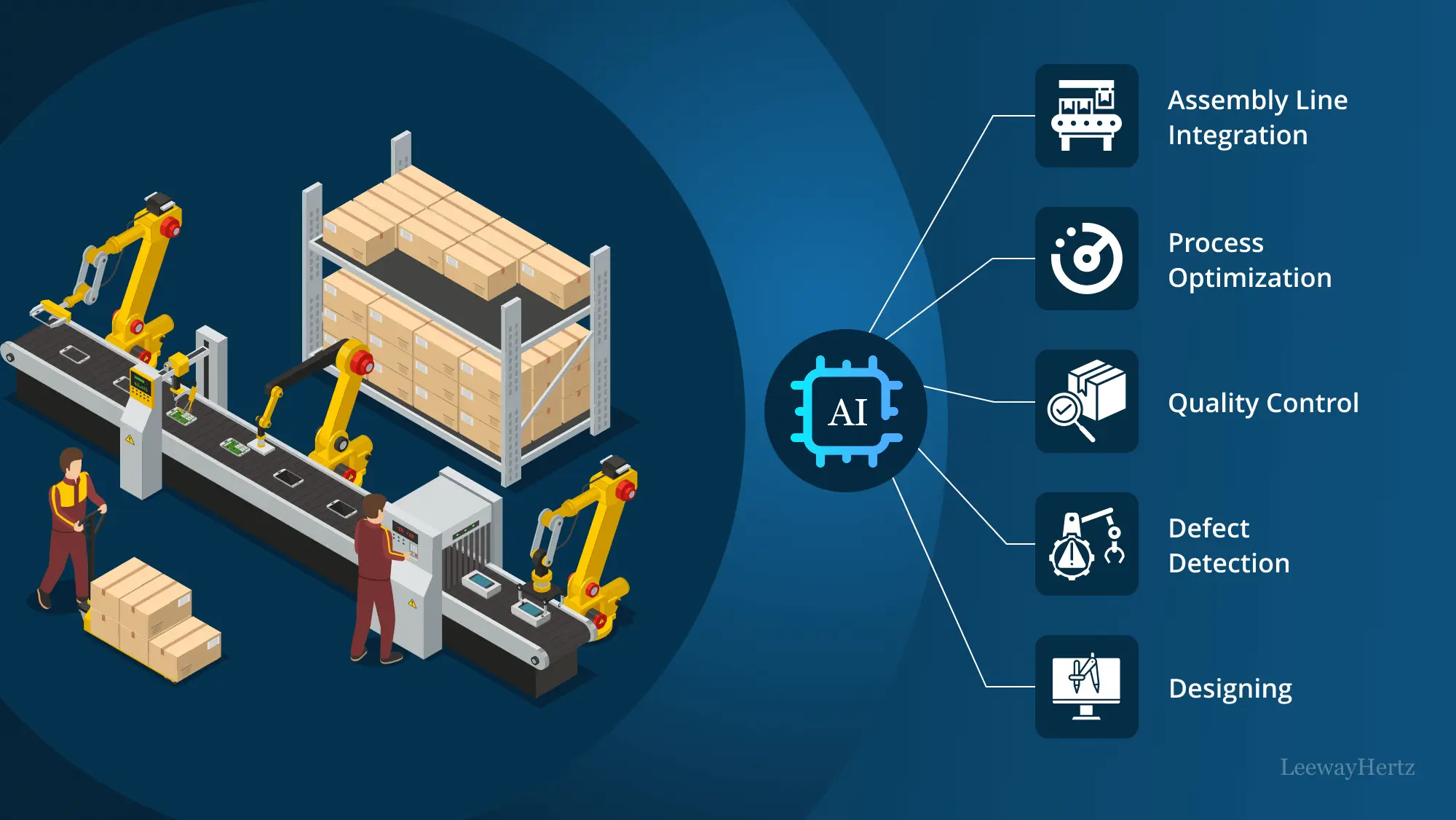
Manufacturing is one of the most complex industries for AI because manufacturing work sits at the intersection of data, documents, regulations, human expertise, operational execution, and supply chain coordination. A manufacturer does more than simply produce goods. It captures product requirements, designs and validates prototypes, manages engineering changes, plans production schedules, executes work orders, monitors quality, manages suppliers, tracks inventory, ensures compliance, and documents decisions.
These activities create an ideal environment for AI adoption across multiple forms, including predictive analytics, machine learning, and workflow automation. Traditional AI has already helped manufacturers predict maintenance needs, forecast demand, classify defects, optimize inventory, and monitor production performance. Advanced AI expands these opportunities by summarizing and interpreting documents, drafting test protocols, annotating work instructions, generating CAPA reports, recommending workflow improvements, and supporting human decision-making across functions.
The value of AI in manufacturing does not come from using a generic tool for ad hoc queries. It comes from embedding AI into real manufacturing workflows. An engineer preparing a design review, a quality manager drafting a CAPA report, a planner reconciling MRP exceptions, a maintenance technician reviewing procedures, a procurement manager evaluating supplier bids, or a production supervisor summarizing shift performance—all benefit from AI that understands the workflow, the underlying data, the regulatory and policy context, and the required output.
That is why AI use cases in manufacturing should be mapped at the operating-model level. Instead of asking, “Where can manufacturers use AI?”, leaders should ask, “Which function, process, and sub-process can AI improve, and what governed workflow should support it?” This article follows that approach. It breaks the manufacturing operating model into major functions, identifies the core processes and sub-processes within each function, and explains where AI can create practical value.
The goal is not to suggest that AI should replace engineers, operators, planners, quality managers, procurement teams, or compliance specialists. In regulated manufacturing, human accountability remains essential. AI’s role is to help teams work faster, improve consistency, reduce manual effort, strengthen documentation, and surface better insights, while keeping final judgment with the responsible human owner.
- How AI is transforming manufacturing operations
- Why manufacturing AI use cases must be mapped at the sub-process level
- Manufacturing operating model and AI opportunity mapping across manufacturing processes
- High-value AI use cases in manufacturing
- How agentic AI works in manufacturing workflows
- How to prioritize AI use cases in manufacturing operations
- Governance, risk, and responsible AI for manufacturing workflows
- How ZBrain operationalizes AI in manufacturing
- Future of AI in manufacturing
How AI is transforming manufacturing operations
Manufacturers have relied on statistical process control, predictive maintenance, planning algorithms, workflow automation, and machine learning for years. These technologies remain important, but advanced AI introduces new capabilities that extend beyond prediction and classification.
Traditional automation follows predefined rules, and machine learning predicts, scores, or classifies outcomes based on historical patterns. Generative AI can read, summarize, draft, compare, explain, and transform information, while agentic AI can plan and execute sequences of workflow steps, such as retrieving design requirements, classifying quality deviations, drafting work instructions, routing supplier exceptions, and updating enterprise systems after human review.

In manufacturing, AI changes how teams handle work that is:
-
Document-heavy, such as engineering drawings, work instructions, test protocols, inspection records, BOMs, CAPA reports, supplier contracts, invoices, and compliance documentation.
-
Narrative-heavy, such as validation summaries, gate-review packs, shift reports, audit narratives, supplier scorecards, incident reports, and sustainability updates.
-
Exception-heavy, such as MRP shortages, production delays, line stoppages, non-conformance reports, deviation handling, supplier quality issues, and inventory discrepancies.
-
Knowledge-heavy, such as regulatory standards interpretation (ISO, AIAG, FDA), process rules, operator guidance, design best practices, and preventive maintenance procedures.
-
Workflow-heavy, such as NPI gate reviews, CAPA cycles, maintenance schedules, supplier onboarding, RFQ-to-PO processes, monthly close cycles, and compliance reporting.
The most effective AI use cases in manufacturing do not remove humans from the workflow. Instead, AI prepares the case, retrieves evidence, drafts outputs, highlights risks, and routes work to the appropriate engineer, supervisor, or manager. Humans retain decision authority, while AI accelerates work, improves accuracy, reduces repetitive effort, and ensures consistent execution across functions.
What to look for in an AI solution for manufacturing
When evaluating an AI solution for manufacturing, organizations should look beyond generic automation capabilities and assess whether the solution can work within real manufacturing environments. The right solution should connect with operational systems, understand plant-level processes, support human decision-making, and deliver measurable improvements across production, quality, maintenance, supply chain, and compliance.
| Evaluation area | What to look for in an AI solution for manufacturing |
|---|---|
| Manufacturing process fit | The solution should support specific manufacturing processes such as production planning, demand-supply alignment, quality inspection, maintenance, inventory management, procurement, shop-floor operations, and compliance, rather than offering only generic automation. |
| Data connectivity | It should integrate with core systems such as ERP, MES, PLM, SCM, WMS, QMS, CMMS, IoT platforms, historian systems, and supplier portals to access the operational data needed for accurate analysis. |
| Real-time and historical analysis | The solution should be able to work with both real-time machine or sensor data and historical production, quality, maintenance, and inventory records. |
| Quality and defect detection | It should help identify quality deviations, defect patterns, process variations, inspection failures, and root-cause indicators using production and quality data. |
| Predictive maintenance capability | The solution should support equipment monitoring, failure prediction, maintenance prioritization, spare-part planning, and downtime-risk analysis. |
| Production planning support | It should help analyze capacity, constraints, material availability, labor availability, lead times, changeovers, and demand changes to support better planning decisions. |
| Supply chain visibility | The solution should provide visibility into supplier risks, material shortages, logistics delays, purchase order exceptions, and inventory imbalances. |
| Human review and control | It should clearly define which actions AI can recommend, which actions require human approval, and which decisions remain with planners, engineers, quality teams, maintenance teams, or plant leadership. |
| Explainability | The solution should explain why it identified a risk, exception, defect, delay, forecast variance, or maintenance issue, using traceable evidence from relevant data sources. |
| Governance and compliance | It should support audit trails, approval workflows, access controls, data security, model monitoring, and compliance with manufacturing, quality, safety, and regulatory requirements. |
| Scalability across plants | The solution should be able to scale across multiple plants, product lines, geographies, machines, suppliers, and operating models while allowing local process variations. |
| Integration with existing workflows | It should fit into existing planning, quality, maintenance, procurement, and production workflows instead of creating a separate disconnected tool. |
| Exception handling | The solution should identify exceptions such as production delays, machine anomalies, quality deviations, inventory shortages, supplier misses, and order-risk situations, then route them to the right owner. |
| Security and access management | It should protect sensitive manufacturing, supplier, product, pricing, engineering, and operational data through role-based access and secure integrations. |
| Measurable business impact | The solution should be evaluated against clear outcomes such as reduced downtime, improved yield, lower scrap, better forecast accuracy, faster issue resolution, improved OEE, reduced inventory risk, and stronger on-time delivery. |
Why manufacturing AI use cases must be mapped at the sub-process level
AI can unlock significant efficiency and accuracy gains in manufacturing, but only when applied to specific, well-defined workflows. “AI in manufacturing” is too broad to be useful. So are “AI in R&D,” “AI in production,” or “AI in quality management.” These high-level categories are insufficient to define data requirements, control mechanisms, approval paths, KPIs, and implementation scope.
A more effective approach is to map AI use cases to the manufacturing operating model:
-
Function: The major business area, such as R&D and product engineering, production planning, shop-floor operations, quality management, maintenance, procurement, supply chain, sales, HR, finance, or EHS.
-
Process: The workflow within that function, such as concept validation, master production scheduling, work-order execution, CAPA management, preventive maintenance planning, RFQ evaluation, inventory reconciliation, customer order processing, shift staffing, cost variance analysis, or incident reporting.
-
Sub-process: The specific work activity, such as requirement synthesis, line balancing, work-instruction surfacing, root-cause analysis, MTBF calculation, supplier audit review, cycle-count execution, RMA authorization, overtime planning, accrual reconciliation, or safety log drafting.
-
AI-enabled opportunity: The way AI supports that sub-process, such as extracting data, drafting narratives, classifying exceptions, assembling reports, predicting outcomes, or recommending corrective actions.
This granularity is critical because manufacturing workflows are tied to specific systems, documents, regulatory requirements, operational constraints, and decision rights. For example:
-
A workflow to draft a CAPA report differs significantly from a workflow for generating a gate-review NPI pack.
-
An operator guidance workflow on the shop floor is distinct from a maintenance exception-triage workflow.
-
A supplier audit review process differs from a procurement RFQ analysis workflow.
By mapping AI opportunities at the sub-process level, manufacturers can move from broad innovation ideas to executable workflows with clear business value, data requirements, governance, and implementation paths. This approach ensures that AI is applied precisely where it can augment human decision-making, reduce errors, improve compliance, and accelerate operational efficiency.
Build Intelligent Manufacturing Solutions
Transform high-impact processes into AI-driven workflows that enhance quality, automate operations, and enable faster, data-driven decisions.
Manufacturing operating model and AI opportunity mapping across manufacturing processes
The following sections map AI opportunities across the operating model of a modern manufacturing industry. Each function includes a short overview, a process and sub-process table, and a summary of the high-value AI opportunities in that function.
Function 1. R&D and product engineering
R&D and product engineering are the core functions of manufacturing. It manages the full lifecycle from product concept to manufacturable design, including requirements capture, prototyping, validation, and new product introduction (NPI). These workflows involve high volumes of design documentation, regulatory compliance, cross-functional coordination, and frequent engineering change management.
AI can support R&D by accelerating requirements synthesis, improving design exploration, drafting engineering documents, validating prototypes, and streamlining gate review processes. This allows engineers to focus on high-value design decisions while reducing errors and ensuring regulatory compliance.
|
Process |
Sub-process |
Key AI-enabled opportunities |
|---|---|---|
|
Concept & requirements |
Voice-of-customer synthesis |
Aggregate CRM notes, warranty claims, and field-service tickets to draft structured PRDs; detect conflicts across cost, weight, and regulatory requirements. |
|
Market & competitor scan |
Competitor specification extraction |
Extract specifications from datasheets, patents, and product pages; summarize regulatory requirements (FDA, CE, RoHS). |
|
Design & modeling |
Generative design exploration |
Generate CAD variants within constraints; draft DOE plans for engineer validation. |
|
CAD documentation |
Drawing pack & BOM |
Draft annotated drawings, GD&T callouts, and BOMs; verify completeness against the release checklist. |
|
Prototype & validation |
Test protocol drafting |
Draft test protocols aligned to product requirements; map coverage gaps; assemble validation evidence. |
|
Gate-review readiness |
EVT/DVT/PVT/MP pack |
Draft NPI gate-review packs; summarize prior program learnings. |
|
Engineering change management |
ECO drafting & impact |
Trace downstream effects on BOMs, drawings, work instructions; draft change-control board report. |
|
APQP phase outputs |
Manufacturer readiness |
Draft PFMEA, control plan, MSA plan, run-at-rate reports; assess production readiness. |
The highest-value opportunities in R&D and product engineering are requirements synthesis, competitor specification extraction, generative design exploration, CAD documentation, prototype validation, gate-review readiness, engineering change management, and APQP outputs. These workflows are repetitive, document-heavy, and well-suited to human-in-the-loop AI.
An example agentic workflow is drafting an NPI gate-review pack. An AI agent can aggregate prior program learnings, extract design data from CAD models, summarize test-protocol coverage, detect unresolved issues from earlier stages, draft the gate-review report, and route it to the appropriate engineering or quality team for validation and approval.
Function 2. Production planning and scheduling
Production planning and scheduling ensure that demand, capacity, and resources are aligned to optimize throughput while minimizing delays and waste. This function spans S&OP, master production scheduling, material requirements planning, line balancing, and workforce planning. Workflows involve high volumes of planning data, cross-functional coordination, and capacity constraints.
AI can support production planning by improving forecast consensus, identifying capacity gaps, proposing schedule adjustments, optimizing line balancing, and recommending workforce deployment. This reduces planning errors, improves OEE, and accelerates operational decision-making.
| High-value use case | Sub-process | Key AI-enabled opportunities |
|---|---|---|
| S&OP | Demand consensus | Consolidate forecasts, sales pipeline, and prior-period actuals; draft variance narratives. |
| Supply alignment | Capacity & sourcing | Identify capacity gaps; recommend sourcing actions (build, outsource, defer). |
| Master production scheduling | MPS build & rebalance | Generate weekly MPS; flag schedule violations; provide change-volume narrative. |
| Material requirements planning | Exception triage | Summarize shortages, past-due orders, and expedited requests; draft recommended actions. |
| Shop-floor scheduling | Line balancing & sequencing | Optimize line balance and Heijunka sequencing; draft setup-reduction recommendations. |
| Kanban & staffing | Replenishment & shift | Recommend Kanban-card sizing; generate shift schedules; detect cross-training gaps. |
| Rough-cut capacity planning | Critical-resource validation | Test MPS feasibility against bottleneck resources; flag overloads before MRP runs and draft load-leveling options. |
| Advanced planning & scheduling | Finite-capacity scheduling | Generate constraint-aware schedules across work centers; resolve resource contention and draft feasible sequences. |
| Bottleneck & constraint management | Identify shifting bottlenecks from load data; recommend offload, overtime, or rerouting actions. |
The highest-value opportunities in production planning and scheduling are demand consensus, capacity gap identification, master production scheduling, MRP exception triage, line balancing, Kanban sizing, shift scheduling, rough-cut capacity planning, finite-capacity scheduling, and bottleneck management. These workflows are repetitive, data-intensive, and well-suited to AI that can assist human planners.
An example agentic workflow is the master production schedule (MPS) build-and-rebalance. An AI agent can aggregate forecast data, sales orders, and prior production volumes; flag potential schedule violations; generate a proposed weekly MPS; draft a change-volume narrative; and route the schedule to planners for approval. This allows planners to focus on exception handling, capacity adjustments, and operational decision-making rather than repetitive schedule assembly.
Function 3. Shop-floor operations
Shop-floor operations manage work-order execution, traceability, OEE, and operator guidance. These workflows involve large volumes of operational data, cross-team coordination, and real-time decision-making to maintain productivity and quality.
AI can support shop-floor operations by surfacing work instructions, classifying Andon stops, generating shift summaries, analyzing downtime patterns, and providing genealogy tracking. This reduces errors, improves throughput, and enhances compliance.
| Process | Sub-process | Key AI-enabled opportunities |
|---|---|---|
| Work-order execution | Work-instruction surfacing | Retrieve SOPs and prior job notes; translate them into operator-friendly instructions. |
| In-process quality | First article & SPC monitoring | Flag out-of-control trends from inline measurement data; draft first-article reports and containment actions. |
| Defect capture & disposition | Classify operator-logged defects; recommend rework, scrap, or use-as-is dispositions with rationale. | |
| Material handling | Line-side replenishment | Trigger staging and replenishment from consumption signals; flag line-stoppage risk from material shortfalls. |
| Autonomous maintenance | TPM check adherence | Surface operator maintenance checklists; detect skipped checks; draft abnormality reports for the maintenance team. |
| Labour & resource tracking | Job time capture | Reconcile clock-on/clock-off against standard times; surface variance drivers and idle-time patterns. |
| Changeover execution | SMED step guidance | Guide operators through changeover steps; capture internal vs. external time; recommend setup-reduction actions. |
| Andon stop triage | Stop classification | Classify events, summarize daily stops and identify Kaizen opportunities. |
| Production tracking | Shift summary & OEE | Draft shift reports; track downtime and quality metrics; provide huddle packs. |
| OEE root-cause analysis | Loss classification | Classify downtime events; identify recurring-loss patterns for TPM/SMED improvement. |
| Traceability | Lot & serial genealogy | Trace finished goods through components; draft recall notifications. |
The highest-value opportunities in shop-floor operations are work-instruction surfacing, first-article and SPC monitoring, defect capture and disposition, line-side replenishment, TPM check adherence, job time capture, SMED guidance, Andon stop classification, shift summary and OEE reporting, OEE root-cause analysis, and lot/serial genealogy tracking. These workflows are repetitive, data-intensive, and well-suited to AI that can assist operators and supervisors.
An example agentic workflow is Andon stop triage. An AI agent can classify stop events in real time, summarize daily stops by type and severity, detect recurring patterns, highlight Kaizen opportunities, and generate a recommended action list for supervisors. This allows team leaders to focus on implementing improvements and resolving high-impact issues rather than manually reviewing every stop event.
Function 4. Quality management
Quality management ensures compliance, reliability, and customer satisfaction. The workflows cover inspection, non-conformance reporting, CAPA, FMEA, SPC, and audit preparation. High document volume and regulatory scrutiny make these processes prime candidates for AI augmentation.
AI can support quality by drafting inspection summaries, classifying defects, synthesizing root-cause analyses, preparing CAPA plans, refreshing FMEA documentation, and compiling audit-ready packs. This improves accuracy, speeds decision-making, and enhances audit readiness.
| Process | Sub-process | Key AI-enabled opportunities |
|---|---|---|
| Inspection | Inbound & in-process | Extract inspection data, classify results and draft out-of-spec narratives. |
| Visual defect classification | Digital image analysis | Classify defects; score severity; draft defect trends. |
| Non-conformance & CAPA | Root-cause analysis | Draft Five-Whys and fishbone analysis; retrieve prior cases. |
| Corrective & preventive action | CAPA plan drafting | Draft 8D/8-step containment, corrective, and preventive actions; track effectiveness. |
| Non-conformance & CAPA | NCR logging & disposition | Draft non-conformance reports; recommend rework, scrap, or use-as-is dispositions; track material segregation. |
| Quality engineering | FMEA & control plan | Refresh PFMEA/DFMEA; draft control plan updates; recommend actions for high-RPN lines. |
| SPC | Chart review & exceptions | Draft out-of-control narratives; classify special vs. common causes. |
| Audit & management review | Audit pack assembly | Compile ISO/IATF/medical audit packs; draft management-review deck and responses. |
The highest-value opportunities in quality management are inbound and in-process inspection, visual defect classification, root-cause analysis, CAPA drafting, NCR logging, FMEA and control plan updates, SPC chart review, and audit-pack assembly. These workflows are repetitive, document-heavy, and well-suited to AI that can assist quality engineers.
An example agentic workflow is CAPA plan drafting. An AI agent can aggregate defect data and non-conformance reports, generate root-cause analyses using prior cases, draft 8D or 8-step containment and corrective/preventive actions, track completion status, and summarize effectiveness for review. This allows quality engineers to focus on high-impact corrective actions and strategic quality improvements rather than manual document assembly.
Function 5. Maintenance and reliability
Maintenance and reliability ensure asset availability, uptime, and operational efficiency. Workflows include preventive and predictive maintenance, work order execution and spare parts inventory optimization, all of which are critical to minimizing downtime and production loss.
AI can support maintenance by drafting PM schedules, analyzing failure patterns, surfacing technician instructions, optimizing spares inventory, and generating reliability reports. This improves uptime, reduces costs, and enhances safety.
| Process | Sub-process | Key AI-enabled opportunities |
|---|---|---|
| Maintenance planning | Preventive maintenance | Draft PM schedules; recommend task frequency. |
| Autonomous maintenance | Operator tasks | Draft cleaning, inspection, minor adjustment tasks; generate OPLs. |
| Reactive maintenance | Breakdown diagnosis & repair | Diagnose faults from symptoms and history; retrieve fixes; draft breakdown reports. |
| Predictive maintenance | Failure pattern detection | Identify failure patterns; draft MTBF/MTTR narratives. |
| Equipment-log analysis | Anomaly detection | Detect alarm/log anomalies; draft failure-precursor narratives. |
| Root-cause & failure analysis | RCA & FMECA | Analyze recurring failures; draft RCA and FMECA reports; recommend reliability improvements. |
| Work-order execution | Technician guidance | Retrieve manuals, prior resolutions; assemble procedure packs. |
| Spares parts inventory optimization | Inventory optimization | Forecast spares consumption; draft critical-spares lists. |
| Reliability reporting | Management narrative | Draft monthly reliability report; highlight worst-performing assets. |
The highest-value opportunities in maintenance and reliability are preventive maintenance, operator-autonomous tasks, reactive maintenance, predictive maintenance, equipment log anomaly detection, root cause and failure analysis, work order execution, spares inventory optimization, and reliability reporting. These workflows are repetitive, data-intensive, and well-suited to AI-assisted automation.
An example agentic workflow is failure pattern detection. An AI agent can analyze historical equipment logs, maintenance records, and sensor data to identify recurring failure patterns, draft MTBF/MTTR narratives, highlight at-risk assets, and recommend preventive actions. This allows maintenance engineers to focus on critical repairs and reliability improvements rather than manually analyzing logs and compiling reports.
Function 6. Procurement and supplier management
Procurement and supplier management oversee sourcing, supplier qualification, contract management, and performance monitoring. Workflows involve large volumes of documents, regulatory compliance, and cross-functional coordination.
AI can support procurement by drafting RFQs, normalizing quotes, evaluating suppliers, preparing contracts, generating performance scorecards, and managing returns. This reduces manual effort, improves decision accuracy, and shortens sourcing cycles.
| Process | Sub-process | Key AI-enabled opportunities |
|---|---|---|
| Sourcing & RFQ | RFQ pack & shortlist | Draft RFQs; shortlist suppliers; summarize past spend. |
| Purchase order management | PO creation & acknowledgment | Draft POs from approved requisitions; validate against contract terms; track supplier acknowledgment. |
| Three-way match & exception | Match POs, goods receipts, and invoices; flag discrepancies; draft resolution narratives. | |
| Quote evaluation | Price & TCO analysis | Normalize quotes; draft should-cost and TCO narratives. |
| Supplier qualification | Audit & onboarding | Draft audit readiness; review PPAP and FAI packages. |
| Contract & master agreements | Drafting & clause check | Draft agreements; flag deviations; model rebates. |
| Supplier performance | Scorecard & CAR | Generate scorecards; draft corrective-action requests. |
| RMA & return-to-vendor | Authorization & return | Draft RMA letters; prepare return-to-vendor narratives. |
The highest-value opportunities in procurement and supplier management are RFQ drafting and supplier shortlisting, PO creation and acknowledgment, three-way match and exception handling, quote evaluation, supplier qualification, contract drafting and clause review, supplier performance scorecards, and RMA/return-to-vendor management. These workflows are repetitive, document-heavy, and well-suited to AI-assisted automation.
An example agentic workflow is three-way match and exception handling. An AI agent can automatically match purchase orders, goods receipts, and invoices; detect discrepancies in quantity, price, or delivery; draft resolution notes for review; and route exceptions to the appropriate procurement or finance team. This allows procurement specialists to focus on strategic supplier decisions and exception resolution rather than manual reconciliation.
Accelerate AI Solutions Development
Build fully functional solutions from your high-value use cases, based on specific operational needs and enterprise context.
Function 7. Inventory and warehouse operations
Inventory and warehouse operations ensure accurate material flow, storage, and order fulfillment. Workflows include inbound receiving, put-away, cycle counting, slow-moving inventory review, and outbound shipping. These workflows involve high volumes of material data, physical verification, and regulatory compliance.
AI can support inventory operations by reconciling packing slips, recommending optimal put-away locations, planning cycle counts, reviewing slow-moving inventory, and drafting shipping documentation. This reduces errors, improves inventory accuracy, and accelerates fulfillment.
| Process | Sub-process | Key AI-enabled opportunities |
|---|---|---|
| Inbound receiving | Packing-slip & ASN reconciliation | Extract data from supplier documents; reconcile against purchase orders; draft discrepancy narratives. |
| Goods receipt confirmation | Record received quantities; draft receipt postings; flag short or over-shipments against the ASN. | |
| Put-away & inspection | Location recommendation | Draft inspection records and suggest optimal put-away locations based on the slotting strategy. |
| Order picking & fulfillment | Pick-path & wave planning | Optimize pick paths; plan waves and batches; prioritize picks against shipping cut-offs. |
| Inventory accuracy checking | Cycle-count planning | Generate ABC-stratified cycle-count schedules; draft variance reports; recommend adjustments. |
| Stock reconciliation & adjustment | Investigate count variances; draft adjustment justifications; root-cause recurring discrepancies. | |
| Slow-moving & obsolete inventory | Reserve & write-off | Draft SLOB reports; propose reserve or write-off lists; tie recommendations to inventory valuation policy. |
| Outbound shipping | Pick-pack-ship documentation | Draft picking lists, bills of lading and commercial invoices; prepare export documentation. |
| Replenishment & slotting | Forward-pick replenishment | Trigger pick-face replenishment based on demand; recommend re-slotting based on velocity and order patterns. |
The highest-value opportunities in inventory and warehouse operations are packing-slip and ASN reconciliation, goods-receipt confirmation, put-away location recommendation, pick-path and wave planning, cycle-count planning, stock reconciliation and adjustment, SLOB reserve/write-off management, pick-pack-ship documentation, and forward-pick replenishment. These workflows are repetitive, document-heavy, and well-suited to AI-assisted automation.
An example agentic workflow is packing slip and ASN reconciliation. An AI agent can extract data from supplier documents, reconcile quantities against purchase orders, detect mismatches, draft discrepancy narratives, and route exceptions to warehouse or procurement teams for review. This allows warehouse staff to focus on operational handling and exception resolution instead of manually verifying every inbound shipment.
Function 8. Supply chain and logistics
Supply chain and logistics manage demand planning, distribution, transportation, and exceptions across the network. These workflows involve complex coordination between multiple plants, suppliers, and distribution centers, with strict service-level requirements.
AI can support supply chain operations by improving forecast quality, analyzing distribution requirements, normalizing carrier rates, and managing shipment exceptions. This reduces stockouts, improves delivery performance, and enhances cost visibility.
| Process | Sub-process | Key AI-enabled opportunities |
|---|---|---|
| Demand forecasting | Statistical forecast review | Draft forecast-quality narratives (MAPE, bias, tracking signal); attribute changes to promotions, seasonality, and new products. |
| Demand sensing & consensus | Adjust short-term signals; reconcile statistical forecast with sales and market input; draft consensus narratives. | |
| Inventory & network planning | Multi-echelon optimization | Recommend safety-stock positioning across echelons; model network/footprint trade-offs against service levels. |
| Transportation | Mode & route optimization | Recommend carrier and mode selection; consolidate loads; optimize routing against cost and transit time. |
| Carrier-rate analysis | Normalize lane and mode rates; draft rate-trend commentary; justify spot quotes. | |
| Distribution planning | DRP exception summary | Summarize stockouts, expiries, and transfers; draft recommended corrective actions. |
| Shipment exception management | Delay narratives | Draft delay reports from tracking and weather data; prepare customer notifications and claims. |
| Logistics execution/freight management | Tendering & freight audit | Tender loads to carriers; build loads; audit freight invoices, and flag billing discrepancies for payment. |
The highest-value opportunities in supply chain and logistics are statistical forecast review, demand sensing and consensus, multi-echelon inventory optimization, mode and route optimization, carrier-rate analysis, DRP exception management, shipment delay reporting, and freight tendering and audit. These workflows are repetitive, data-intensive, and well-suited to AI-assisted automation.
An example agentic workflow is DRP exception management. An AI agent can summarize stockouts, expiring inventory, and transfer requirements across multiple plants and distribution centers; generate recommended corrective actions; flag high-risk SKUs; and route the summary to planners and warehouse managers for approval. This allows supply chain teams to focus on decision-making and exception resolution instead of manually analyzing large volumes of network data.
Function 9. Sales and customer management
Sales and customer management handle lead-to-order, quotation, order intake, service, warranty, and RMA processes. Workflows involve customer communications, policy compliance, and high-volume documentation.
AI can support sales operations by drafting account briefs, validating CPQ configurations, extracting and confirming orders, triaging service tickets, and preparing warranty or RMA communications. This improves service quality, accelerates customer interactions, and ensures policy adherence.
| Process | Sub-process | Key AI-enabled opportunities |
|---|---|---|
| Lead & opportunity | Account brief & qualification | Draft account briefs from CRM history and prior orders; generate lead scoring; propose cross-sell and upsell opportunities. |
| Configure-price-quote | Quote drafting | Validate product configuration; flag non-standard options; draft quote letters. |
| Order intake & confirmation | PO processing | Extract customer PO data, flag any mismatches and draft order confirmation letters. |
| Customer service & after-sales | Ticket triage | Classify ticket intent; draft response letters and resolution summaries. |
| Warranty & RMA handling | Authorization & field failure | Draft RMA letters; summarize field-failure data for quality and service teams. |
The highest-value opportunities in sales and customer management are account brief drafting and lead qualification, quote drafting, PO processing, ticket triage, and warranty/RMA handling. These workflows are repetitive, document-heavy, and well-suited to AI-assisted automation.
An example agentic workflow is PO processing. An AI agent can extract customer purchase order data, validate it against product configurations and pricing rules, flag any mismatches or missing information, draft order confirmation letters, and route exceptions to the appropriate sales or operations team for review. This allows sales and customer service teams to focus on resolving complex exceptions, handling customer interactions, and ensuring policy compliance rather than on manual PO verification.
Function 10. HR and workforce management
HR and workforce management ensure alignment of the workforce with production demand, support skill development, and ensure compliance. Workflows include talent acquisition, training, certification tracking, shift planning, and workforce reporting.
AI can support HR by screening resumes, generating pre-screening questions, drafting training content, tracking certifications, recommending staffing for shifts, and analyzing absenteeism patterns. This optimizes labor deployment, accelerates recruitment, and enhances training effectiveness
| Process | Sub-process | Key AI-enabled opportunities |
|---|---|---|
| Talent acquisition | Resume screening | Extract candidate skills, certifications, and experience; generate match scores and pre-screening questions. |
| Training & certification | Skills matrix | Draft skills matrices; identify training needs; track certification expiries and recommend renewals. |
| Training content | Content drafting | Draft training decks; generate quizzes and assessments based on SOPs and manuals. |
| Workforce planning | Shift staffing & overtime | Recommend shift staffing; draft overtime narratives; detect absenteeism and coverage gaps. |
The highest-value opportunities in HR and workforce management are resume screening, pre-screening question generation, skills matrix creation, training content drafting, certification tracking and renewal, shift staffing, overtime management, and absenteeism detection. These workflows are repetitive, document-heavy, and well-suited to AI-assisted automation.
An example agentic workflow is skills matrix creation and certification tracking. An AI agent can extract employee skills and certifications from HR systems, identify gaps relative to required roles, draft training assignments, flag expiring certifications, and generate renewal recommendations. This allows HR teams to focus on strategic workforce planning, onboarding, and talent development rather than manual record-keeping.
Function 11. Finance and cost management
Finance and cost management covers product costing, variance analysis, accounts, financial close, and capital expenditure. Workflows involve high-volume financial data, compliance requirements, and cross-functional coordination.
AI can support finance by drafting standard-cost reports, variance analyses, invoice processing, collection letters, reconciliation narratives, and CapEx business cases. This improves accuracy, reduces manual effort, and enhances financial visibility.
| Process | Sub-process | Key AI-enabled opportunities |
|---|---|---|
| Product costing & margin | Standard-cost build | Draft material, labor, overhead, and freight costs per SKU; provide margin commentary. |
| Variance analysis | Cost & efficiency | Draft purchase-price variance, manufacturing variance, and period-over-period narratives. |
| Accounts payable & receivable | Invoice processing | Extract invoice data; perform three-way match; detect duplicates; draft exception summaries. |
| Collections | Customer payment chasing | Draft past-due letters; prioritize collections; summarize disputes. |
| Month-end close | Reconciliation & reporting | Draft accrual entries, account reconciliations and inventory revaluation memos; prepare management-report narratives. |
| Capital expenditure | Business-case drafting | Draft NPV, IRR, and payback analysis; provide sensitivity commentary; track in-flight projects. |
The highest-value opportunities in finance and cost management are standard-cost reporting, variance analysis, invoice processing, customer payment chasing (collections), month-end reconciliation, and CapEx business-case drafting. These workflows are repetitive, document-heavy, and well-suited to AI-assisted automation.
An example agentic workflow is collections – customer payment chasing. An AI agent can extract past-due invoices from the accounts receivable system, prioritize overdue accounts, generate past-due letters, summarize any disputes or exceptions, and route cases to the appropriate finance analyst for review. This allows finance teams to focus on resolving complex payment issues and improving cash flow instead of manually tracking overdue accounts.
Function 12. EHS, regulatory, and sustainability
EHS, regulatory, and sustainability ensure workplace
safety, environmental compliance, and ESG reporting. Workflows include incident management, corrective action tracking, regulatory reporting, product compliance, process safety, management of change, and sustainability reporting.
AI can support EHS by drafting OSHA logs, incident narratives, corrective-action plans, environmental reports, regulatory documentation, MoC requests, and sustainability metrics. This improves compliance, reduces risk, and accelerates reporting.
| Process | Sub-process | Key AI-enabled opportunities |
|---|---|---|
| Incident management | Safety reporting | Draft OSHA logs, incident narratives, and near-miss pattern commentary. |
| Corrective action tracking | Action completion | Draft corrective-action plans; track completion; escalate overdue items. |
| Regulatory reporting | Environmental submissions | Draft TRI, RCRA, wastewater, and other regulatory reports; reconcile against data sources. |
| Product compliance | Material & safety documentation | Draft RoHS/REACH declarations, SDS and country-of-origin documents. |
| Process safety | PHA/HAZOP/LOPA documentation | Draft PHA worksheets; scenario narratives; track recommendations. |
| Management of change | MoC drafting & impact | Draft MoC requests; assess downstream impact; check completeness. |
| Sustainability & ESG | Reporting & tracking | Draft scope 1/2/3 emissions narratives; generate GRI/CDP/SASB reports; track initiatives. |
| Audit & compliance | Audit prep & findings | Assemble audit packs; draft findings responses; maintain MoC documentation. |
The highest-value opportunities in EHS, regulatory, and sustainability are safety reporting, corrective-action tracking, environmental reporting, product compliance documentation, process safety reporting, management-of-change drafting, sustainability and ESG tracking, and audit preparation. These workflows are repetitive, document-heavy, and well-suited to AI-assisted automation.
An example agentic workflow is corrective-action tracking. An AI agent can aggregate incident reports, draft corrective-action plans, track completion status, flag overdue items, and escalate high-priority actions to supervisors. This allows EHS teams to focus on preventing workplace incidents and ensuring regulatory compliance rather than manually monitoring and updating action items.
Accelerate AI Solutions Development
Build fully functional solutions from your high-value use cases, based on specific operational needs and enterprise context.
High-value AI use cases in manufacturing
The manufacturing use-case map is broad, but not every workflow should be automated first. The most attractive early opportunities are usually high-volume, document-heavy, exception-heavy, or narrative-heavy workflows where AI can produce a draft, recommendation, or analysis for human review.
| High-value use case | Why it matters |
|---|---|
| CAPA report drafting | Reduces manual effort in assembling non-conformance evidence, drafting root cause analyses and preparing corrective and preventive action plans. |
| Work-instruction surfacing | Helps operators access SOPs, prior job notes and tribal knowledge efficiently, reducing errors and training time. |
| Shift summary and OEE reporting | Speeds compilation of shift production summaries, downtime analysis, and tiered huddle packs, improving real-time operational awareness. |
| NPI gate-review pack preparation | Automates consolidation of test results, supplier readiness, and risk assessments, accelerating stage-gate approvals. |
| Supplier scorecard generation | Reduces time spent on manually compiling supplier performance data and drafting corrective action requests. |
| RFQ-to-PO workflow | Drafts RFQs, normalizes quotes, recommends suppliers, and produces structured award recommendations, reducing procurement cycle time. |
| Predictive maintenance analysis | Identifies failure patterns, drafts MTBF/MTTR narratives, and prioritizes maintenance actions to minimize unplanned downtime. |
| Work-order exception triage | Summarizes production and maintenance exceptions; recommends resolution actions, accelerating response and reducing delays. |
| CAPA effectiveness review | Drafts 30/60/90-day effectiveness evaluations using post-CAPA defect data, improving audit readiness and continuous improvement tracking. |
| Audit-pack assembly | Compiles inspection, test, and quality records into audit-ready packs, reducing manual preparation time and errors. |
| Engineering change impact assessment | Drafts downstream-effect analyses for ECOs, improving change-management efficiency and reducing errors. |
| RMA and warranty processing | Drafts customer notifications and disposition recommendations to reduce manual review and improve service consistency. |
| Test protocol and validation summary drafting | Generates test protocols and validation summaries, ensuring compliance with standards while saving engineering time. |
| Inventory exception reporting | Summarizes slow-moving, obsolete, or mismatched inventory; recommends reserve, write-off, or transfer actions. |
| Safety and incident reporting | Draft OSHA logs, incident narratives, and near-miss reports, reducing reporting burden and improving compliance. |
These manufacturing use cases work best when they support human review rather than bypass it. They create measurable value through:
-
Reduced cycle time for reporting and document preparation
-
Increased productivity for engineers, operators, and planners
-
Improved documentation quality and consistency
-
Fewer backlogs in maintenance, quality, and procurement workflows
-
Stronger process controls and compliance adherence
-
Enhanced operational performance and employee experience
How agentic AI works in manufacturing workflows
AI can draft, summarize, classify, and retrieve information. Agentic AI goes further by orchestrating multi-step workflows that span systems, teams, policies, and approvals. This distinction is critical in manufacturing because many high-value use cases require coordination across multiple processes and stakeholders rather than a single task.
For example, a CAPA report workflow is not just a drafting task. It may involve:
-
Reviewing the non-conformance report
-
Collecting prior incident evidence
-
Performing root-cause analysis
-
Drafting containment and corrective actions
-
Assigning preventive actions
-
Routing documentation for managerial approval
-
Updating QMS records
An agentic AI workflow can coordinate these steps, while the quality manager and engineers remain accountable for the final decisions.
Examples of agentic AI workflows in manufacturing include:
-
Work-instruction surfacing agent – retrieves SOPs, prior shift notes, and tooling guidance; summarizes key steps; pre-populates operator instructions; routes updates to supervisors.
-
CAPA drafting agent – compiles NCR data, retrieves prior CAPAs, drafts root-cause analysis, generates corrective/preventive actions, and routes for review.
-
NPI gate-review agent – assembles design validation results, supplier readiness, test logs, and risk commentary; drafts gate pack; highlights items needing human approval.
-
Maintenance exception agent – reads CMMS work orders, identifies failure types, retrieves asset history, drafts recommended actions, and routes to technicians and planners.
-
Supplier evaluation agent – aggregates audit reports, performance metrics, and compliance documents; drafts scorecards; flags potential supplier risks.
-
Inventory exception agent – identifies slow-moving, obsolete, or misaligned stock; drafts corrective recommendations; routes for manager approval.
-
Safety and EHS reporting agent – classifies incidents, retrieves past event data, drafts incident narratives, checks compliance with regulatory requirements, and escalates critical issues.
Governance for agentic AI workflows
Agentic workflows should be designed with approval gates and human oversight:
-
The AI can prepare, recommend, route, and update, but the manufacturer must define:
-
Which steps require mandatory human review
-
What evidence or documentation must be retained
-
How exceptions are escalated
-
-
This ensures human accountability, regulatory compliance, and process integrity while still leveraging AI to accelerate repetitive, document-heavy, or multi-step work.
How to prioritize AI use cases in manufacturing operations
Manufacturers should not select AI use cases solely because they sound innovative. The most effective opportunities combine business value, workflow fit, data readiness, control readiness, and scalability.
| Prioritization criterion | What manufacturers should evaluate |
|---|---|
| Business value | Productivity gains, cost reduction, revenue impact, defect reduction, operational risk mitigation, compliance improvement, and cycle-time reduction. |
| Workflow fit | Whether the work is document-heavy (CAPA reports, SOPs), knowledge-heavy (regulatory guidance, operator instructions), exception-heavy (MRP shortages, quality deviations), narrative-heavy (shift summaries, audit reports), or repeatable. |
| Data readiness | Whether the required data is available, accurate, properly permissioned, and integrated with production, quality, maintenance, or supply chain systems. |
| Human review model | Whether a qualified engineer, quality manager, planner, or supervisor can review, approve, reject, or correct AI outputs. |
| Control impact | Whether the workflow improves documentation quality, auditability, policy adherence, traceability, and exception tracking. |
| Regulatory sensitivity | Whether the workflow impacts product safety, environmental compliance, ISO/AIAG standards, FDA/GMP requirements, or other regulatory obligations. |
| Integration complexity | How many systems, databases, enterprise tools, approval paths, and downstream actions are involved. |
| Scalability | Whether the workflow pattern can be reused across product lines, plants, shifts, or geographic regions. |
A practical first wave of AI adoption should focus on workflows with well-defined scope, high volume, and strong human review, such as:
-
CAPA report drafting
-
Work-instruction surfacing and shift summaries
-
NPI gate-pack preparation
-
Supplier scorecard generation
-
RFQ-to-PO workflows
-
Predictive maintenance exception triage
-
Inventory discrepancy reporting
More sensitive use cases—such as product release decisions, high-risk maintenance interventions, safety-critical recalls, regulatory filings, or environmental compliance approvals—require strong governance and should maintain final accountability with designated human owners.
Governance, risk, and responsible AI for manufacturing workflows
AI in manufacturing must operate within the organization’s existing governance, risk, compliance, and control framework. The most important principle is clear accountability: AI can assist, but the responsible human owner—engineer, quality manager, production supervisor, or compliance officer must remain accountable for all consequential decisions and regulatory outputs.
Key governance requirements include:
-
Human review of critical decisions such as product releases, CAPA approvals, maintenance interventions, safety escalations, supplier qualifications, recall actions, and regulatory compliance submissions.
-
Source-grounded outputs that cite or link back to approved SOPs, test protocols, inspection records, regulatory standards, and other evidence.
-
Audit trails capturing AI inputs, outputs, prompts, model versions, reviewer actions, approvals, rejections, and updates to ERP, MES, or PLM systems.
-
Role-based access control ensuring AI only retrieves information that the user and workflow are authorized to access.
-
Data protection controls for sensitive manufacturing data, employee records, supplier information, quality documentation, and regulatory materials.
-
Model and agent monitoring for accuracy, completeness, drift, hallucination, bias, latency, user adoption, and exception rates.
-
Escalation procedures for low-confidence outputs, conflicting process guidance, safety-critical deviations, or regulatory sensitivity.
-
Third-party and vendor risk review for AI platforms, LLM models, infrastructure, and enterprise system integrations.
-
Alignment with organizational standards, including quality system requirements (ISO/IATF/AS/ISO standards), EHS compliance, operational resilience, records retention, audit readiness, and supply chain risk management.
Governance should not be treated as a blocker. Properly designed AI governance enables usability, transparency, and accountability. A well-governed AI workflow in manufacturing can provide better documentation, stronger process consistency, faster approval cycles, and clearer accountability than purely manual workflows, while maintaining compliance and risk oversight.
How ZBrain operationalizes AI in manufacturing
Identifying AI opportunities in manufacturing is only the first step. Manufacturers need a controlled way to analyze existing workflows, define requirements, design integrations and review boundaries, build and validate solutions, deploy them across functions and plants, and govern them in operation. This is where ZBrain comes in.
ZBrain is an end-to-end AI enablement platform that provides enterprises with a structured pathway from identifying where artificial intelligence can deliver value to deploying it as a governed, scalable capability. ZBrain supports this lifecycle through four connected stages: ZBrain Analyzer, ZBrain Design, ZBrain Solution Builder, and ZBrain Governance. The platform provides a governed path from use case analysis to deployed agentic workflows while maintaining policies, permissions, approval points, monitoring, and runtime evidence.
ZBrain Analyzer
ZBrain Analyzer helps teams examine selected manufacturing processes, identify AI opportunities, and document the business context, systems, data, roles, controls, and review requirements needed to evaluate each use case. This can include workflows across production, quality, maintenance, supply chain, procurement, engineering, finance, and workforce operations, along with ERP, MES, PLM, QMS, CMMS, warehouse, and other operational systems that support them.
ZBrain Design
ZBrain Design creates a build-ready technical design for the selected manufacturing use case. It generates the BRD, functional requirements, user journeys, architecture, workflow logic, data details, integration context, and governance considerations needed before development begins. The design can define grounding sources, system interactions, approval checkpoints, output artifacts, and escalation paths for workflows such as production planning, quality review, maintenance analysis, supplier assessment, work-instruction generation, and exception management.
ZBrain Solution Builder
ZBrain Solution Builder enables teams to create, configure, and validate governed AI workflows for manufacturing based on the technical design provided by the ZBrain Design module. It supports integration with enterprise and plant systems, orchestrates workflow steps, and tests across normal, exception, and control scenarios before deployment. Teams can validate outputs against operational data, business rules, engineering documentation, and reviewer judgment to confirm accuracy, system behavior, and review boundaries before scaling.
ZBrain Governance
ZBrain Governance applies policies, access controls, human approval requirements, monitoring, and traceability throughout workflow execution. It provides guardrails, approval gates, escalation controls, kill switches, and audit trails to help manufacturers maintain oversight of AI outputs, user actions, exceptions, and authorized system updates as workflows scale across plants, production lines, functions, business units, and regions.
Accelerate AI Solutions Development
Build fully functional solutions from your high-value use cases, based on specific operational needs and enterprise context.
Future of AI in manufacturing
AI in manufacturing is expected to evolve from individual copilots assisting humans with drafting, summarizing, searching, and classifying information to fully agentic systems that coordinate multi-step workflows across systems, teams, and processes. Humans will remain essential at key review and decision points to ensure safety, quality, and compliance.
Several shifts are likely to define the next stage of AI adoption in manufacturing:
-
From generic assistants to specialized agents: AI will be built for specific workflows such as CAPA drafting, NPI gate packs, predictive maintenance, and inventory exception handling.
-
From standalone pilots to reusable AI components: Organizations will develop AI modules that can be reused across plants, product lines, or functional areas.
-
From manual review of every step to human approval at defined control points: Humans will focus on high-risk, regulatory-sensitive, or safety-critical decisions, while AI handles routine preparation and summarization.
-
From centralized AI experimentation to federated adoption: AI will be deployed across functions and locations under a central governance framework, ensuring consistency, compliance, and scalability.
-
From static knowledge retrieval to active workflow orchestration: AI agents will not just find information—they will execute sequences of tasks across production, quality, supply chain, and maintenance systems.
-
From productivity-only measurement to broader metrics: Success will be measured not just by speed and efficiency but also by quality, risk reduction, compliance, operational reliability, and customer or employee experience.
Manufacturers that succeed will not be those with the longest list of AI initiatives. Success will come to organizations that connect AI directly to how manufacturing operates at the function, process, and sub-process levels, ensuring that each AI workflow delivers measurable value, accountability, and operational insight.
Endnote
AI has the potential to transform manufacturing, but only if it is applied at the right level of detail. Broad statements such as “AI in manufacturing” or “AI in quality” are insufficient. Real value comes from mapping AI to specific workflows, such as CAPA report drafting, work instruction surfacing, NPI gate review pack preparation, predictive maintenance exception triage, supplier scorecard generation, RFQ-to-PO workflows, inventory discrepancy reporting, and safety incident reporting.
The manufacturing operating model is complex, spanning R&D, production planning, shop-floor operations, quality, maintenance, procurement, supply chain, sales, HR, finance, and EHS. Across all these functions, AI can extract information, summarize evidence, draft reports, classify exceptions, retrieve process guidance, and coordinate multi-step workflows. Agentic AI extends this value by connecting steps across systems, teams, and locations while maintaining human review and accountability.
For manufacturers, the path forward is clear: build a sub-process-level opportunity map; prioritize workflows with clear operational or compliance value and strong human-review models; connect AI to validated data and standards; run shadow tests; deploy with governance; and scale through reusable agents and components.
The future of manufacturing AI will not be defined by generic tools or chatbots. It will be defined by governed, workflow-specific AI agents that help manufacturers operate faster, improve product quality, strengthen compliance, optimize supply chain and maintenance operations, and give employees more time to focus on high-value decision-making.
Explore how AI can streamline your manufacturing workflows and unlock operational efficiency—start mapping your AI opportunities today with LeewayHertz!
Author’s Bio


Akash's ability to build enterprise-grade technology solutions has garnered the trust of over 30 Fortune 500 companies, including Siemens, 3M, P&G, and Hershey's. Akash is an early adopter of new technology, a passionate technology enthusiast, and an investor in AI and IoT startups.
Related Products

AI Agent
Discover the right AI agent for your use case! Explore our extensive range of AI agents tailored to tackle specific challenges.
Start a conversation by filling the form
Once you let us know your requirement, our technical expert will schedule a call and discuss your idea in detail post sign of an NDA.
All information will be kept confidential.
FAQs
What types of AI are most relevant for manufacturing?
Manufacturing can leverage multiple types of AI, including predictive analytics, machine learning, workflow automation, and generative AI. Predictive analytics helps forecast maintenance needs and production demand. Machine learning identifies defect patterns and optimizes process parameters. Generative AI can summarize documents, draft test protocols, annotate work instructions, and support CAPA reporting. Agentic AI coordinates multi-step workflows across systems, teams, and functions, ensuring operational tasks are executed efficiently while maintaining human accountability.
How does AI improve productivity on the manufacturing floor?
AI accelerates repetitive and document-heavy workflows, reduces errors, and provides actionable insights. For example, AI can automatically surface work instructions, draft shift summaries, classify quality deviations, and recommend corrective actions. By offloading these tasks, engineers, operators, and planners can focus on high-value decision-making, improving throughput, reducing downtime, and optimizing resource allocation across the plant.
Can AI replace human workers in manufacturing?
No. AI in manufacturing is designed to augment human expertise, not replace it. Humans remain accountable for critical decisions, regulatory compliance, and safety-sensitive actions. AI assists by preparing information, summarizing data, generating drafts, and coordinating workflows, but final approvals, judgments, and exception handling remain with trained personnel.
What are the key workflows where AI provides the most value?
High-value workflows are typically document-heavy, exception-heavy, knowledge-intensive, or repetitive. Examples include: CAPA report drafting, NPI gate-review pack preparation, work-instruction surfacing, predictive maintenance exception triage, supplier scorecard generation, RFQ-to-PO processing, inventory discrepancy reporting, and safety/incident reporting. These workflows benefit from AI’s ability to organize information, generate draft outputs, highlight risks, and route tasks to the appropriate human reviewer.
How should manufacturers prioritize AI implementation?
Prioritization should be based on a combination of business value, workflow suitability, data readiness, control requirements, and scalability. High-volume, clearly defined workflows with strong human review models are ideal starting points. More sensitive or safety-critical processes require additional governance. Manufacturers should build a sub-process-level opportunity map, run shadow tests, and deploy AI incrementally to ensure measurable impact and compliance.
What role does agentic AI play in manufacturing?
Agentic AI orchestrates multi-step workflows across teams, systems, and processes. Unlike generative AI, which can summarize or draft content, agentic AI coordinates tasks end-to-end, such as assembling CAPA evidence, routing maintenance exceptions, or preparing NPI gate-review packs. It ensures that tasks are executed in sequence, flags anomalies, and routes approvals while keeping humans accountable at predefined control points.
How does AI support regulatory and quality compliance?
AI improves compliance by standardizing documentation, tracking exceptions, and ensuring process traceability. For example, AI can draft CAPA reports, generate audit packs, prepare regulatory filings, and ensure adherence to ISO, AIAG, FDA, or GMP standards. By maintaining audit trails, role-based access, and evidence citations, AI helps manufacturers reduce risk while accelerating documentation and review processes.
What are the governance requirements for AI in manufacturing?
Effective governance ensures that AI operates within the manufacturer’s risk, compliance, and operational frameworks. This includes: human-in-the-loop review for critical decisions, audit trails of AI inputs and outputs, role-based access, monitoring for accuracy and bias, data protection for sensitive operational information, and escalation procedures for low-confidence outputs. Governance ensures that AI adoption improves transparency, accountability, and consistency across workflows.
Which manufacturing functions benefit most from generative AI?
AI can add value across most manufacturing functions, particularly those involving high-volume documents, exceptions, review packs, and operational evidence. Key areas include:
-
Product development and New Product Introduction (NPI) – requirements synthesis, design exploration, NPI gate-review packs, and engineering change documentation.
-
Manufacturing engineering and industrialization – process planning, routings, work instructions, PFMEA, control plans, and launch readiness.
-
Production planning and scheduling – demand consensus, master production scheduling, MRP exception triage, line balancing, and workforce planning.
-
Shop-floor operations – work instruction surfacing, defect classification, shift summaries, OEE commentary, and traceability.
-
Quality management – inspection summaries, CAPA preparation, FMEA updates, SPC chart review, and audit-ready packs.
-
Maintenance and reliability – preventive and predictive maintenance, work-order execution, spares inventory optimization, and reliability reporting.
-
Procurement and supplier management – RFQ drafting, supplier evaluation, PO processing, contract management, and supplier scorecards.
-
Inventory and warehouse operations – inbound/outbound reconciliation, cycle-count planning, slow-moving inventory review, and replenishment recommendations.
-
Supply chain and logistics – demand forecasting, network planning, transportation optimization, and shipment exception management.
-
Finance and cost management – standard-cost reporting, variance analysis, invoice processing, collections, month-end close, and CapEx business cases.
-
HR and workforce management – talent acquisition, training and certification tracking, shift planning, and workforce analytics.
-
EHS, regulatory, and sustainability – incident reporting, corrective-action tracking, regulatory submissions, MoC management, and ESG reporting.
-
Development, openings, conversions, and PIP management – pre-opening readiness, renovations, PIP compliance, and system cutover planning.
-
Legal, contracts, insurance, and enterprise shared services – contract review, claims documentation, policy governance, and audit preparation.
This structure reflects the functions, processes, and sub-processes mapped in the operating model of modern manufacturers, emphasizing AI opportunities in document-heavy, exception-prone, and repetitive workflows while keeping human accountability intact .
How does ZBrain support AI use cases in manufacturing?
ZBrain helps manufacturers identify, design, build, and deploy AI workflows across key functions such as R&D, production, quality, maintenance, supply chain, and EHS. It operationalizes AI through a structured lifecycle spanning six stages:
-
Preparation (Foundation): Understand enterprise processes, systems, workforce, and KPIs to pinpoint where AI can deliver value.
-
Ideation & prioritization (Discovery): Identify and prioritize AI opportunities based on feasibility, ROI, and integration potential.
-
Solution design (Validation): Translate opportunities into KPI-mapped, ROI-validated solution blueprints, defining AI roles in workflows.
-
Technical design (Build-ready): Generate detailed technical artifacts, including architectures, schemas, user stories, and agentic workflows for development.
-
Proof of concept (Validation): Test AI solutions in controlled environments to validate business value and implementation readiness.
-
Scaled product: Deploy production-grade AI solutions with performance tracking and continuous improvement across the enterprise.
With ZBrain AI XPLR and ZBrain Builder, manufacturers can implement AI use cases such as CAPA report drafting, work instruction surfacing, NPI gate-review pack preparation, predictive-maintenance exception triage, supplier scorecard generation, inventory discrepancy reporting, and safety/incident reporting, ensuring AI is governed, scalable, and embedded into operational workflows.
Related Services/Solutions
AI Development
Unlock AI’s full potential for your business through our comprehensive AI development services, designed to tackle intricate tech challenges, streamline business workflows, and achieve operational excellence.
ZBrain: Generative AI Platform for Manufacturing
Maximize your manufacturing efficiency with ZBrain, a generative AI platform for building LLM-based apps, designed to optimize production processes, enhance decision-making, and foster innovation.
AI Consulting
From conducting needs assessments to identifying key areas for AI-driven improvement, our AI consulting services empower businesses to harness the full potential of AI for sustainable growth and innovation.
Related Insights

AI in Enterprise Risk Management: Processes and Use Cases Across the Operating Model
In engineering change management, AI is most valuable when it works within the controlled environment of product and configuration records.

AI in Regulatory Change Management: Enterprise Use Cases Across Operating Model
AI in regulatory change management should be designed as a governed evidence and orchestration layer around the existing change pipeline.
AI in MRO: Processes and Use Cases Across the Operating Model
High-value AI use cases in MRO are the ones that improve recurring, evidence-heavy decisions across maintenance planning, scheduling, execution, reliability, spare-parts management, and asset governance
AI in Engineering Change Management: Enterprise Use Cases Across Operating Model
In engineering change management, AI is most valuable when it works within the controlled environment of product and configuration records.
AI in Transportation Management: Processes and Use Cases Across Operating Model
AI is changing transportation management by helping teams convert fragmented shipment records into reviewable work packets.

Generative AI Use Cases in Manufacturing: Improving Workflows and Operational Efficiency
Manufacturing is a well-suited field for generative AI and agentic AI because its work depends on engineering documents, shop-floor records, quality evidence, supplier submissions, compliance requirements, and operational decisions.

Building AI-powered defect detection systems: Shaping the future of quality control
Building an AI-powered defect detection system for quality control involves several steps, ranging from data collection and preprocessing to model development and deployment.

How to build enterprise AI solutions for manufacturing?
AI in manufacturing leverages technologies like machine learning and deep learning neural networks to analyze vast data from various sources and facilitates improved decision-making by enhancing data analysis capabilities.

Predictive ML models for manufacturing: Use cases, benefits, development and implementation
In today’s modern manufacturing landscape, predictive machine learning models have emerged as powerful tools that transform decision-making, optimize processes, and drive efficiency.
- How AI is transforming manufacturing operations
- Why manufacturing AI use cases must be mapped at the sub-process level
- Manufacturing operating model and AI opportunity mapping across manufacturing processes
- High-value AI use cases in manufacturing
- How agentic AI works in manufacturing workflows
- How to prioritize AI use cases in manufacturing operations
- Governance, risk, and responsible AI for manufacturing workflows
- How ZBrain operationalizes AI in manufacturing
- Future of AI in manufacturing
- Contact us