


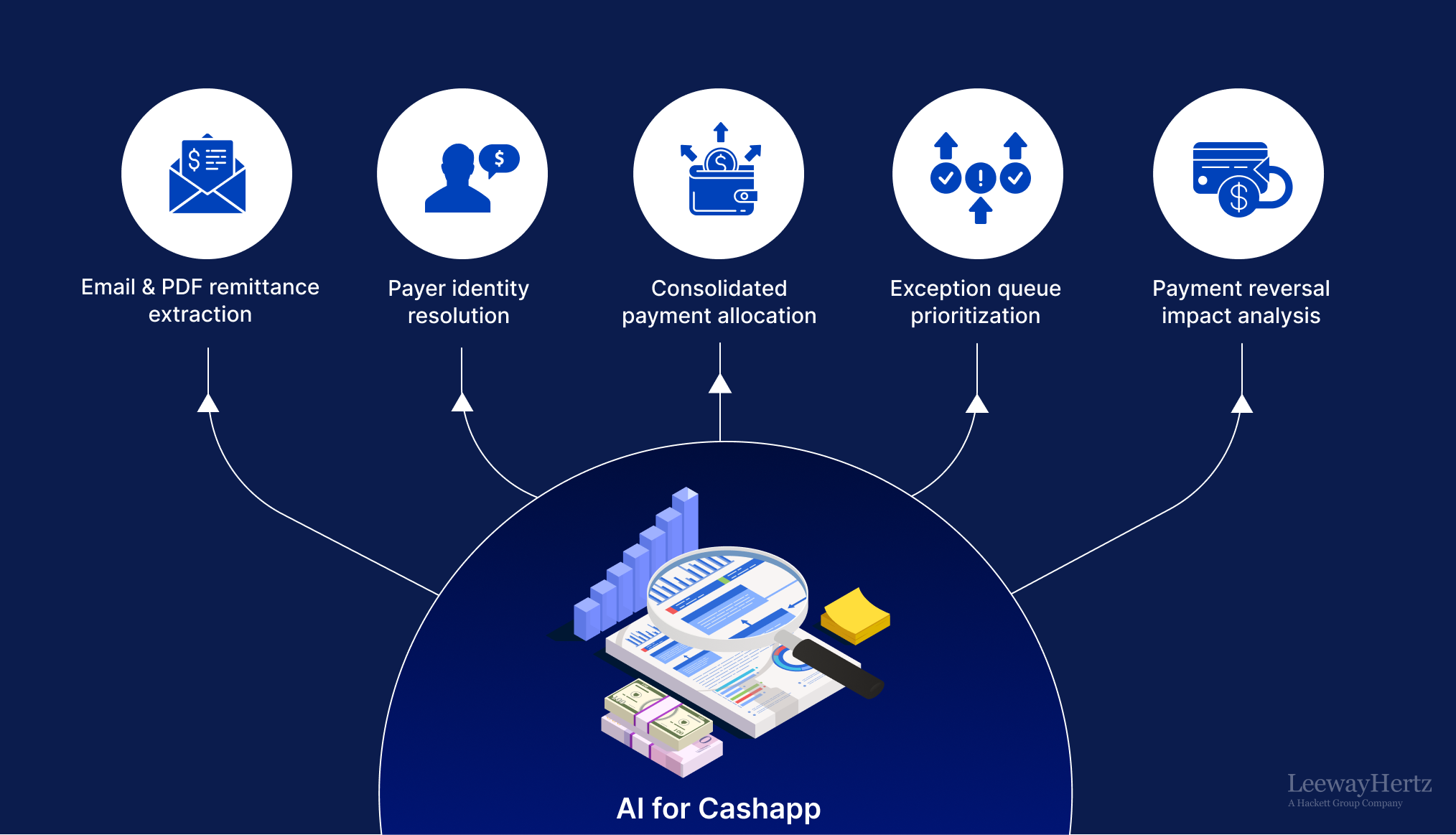
Cash application is one of the most operationally important parts of accounts receivable because it determines when customer payments become usable, auditable financial records. A payment that has reached the bank but has not been correctly matched to the customer, invoice, deduction, credit memo, or clearing account still creates friction across collections, deductions, reconciliation, treasury, and close. For controllers and shared services leaders, the issue is not only speed. It is whether the subledger, bank position, customer balance, and management reporting all tell the same story.
The scale of payment activity makes the problem larger. Nacha reported that ACH Network volume reached 35.2 billion payments in 2025, with total value reaching $93 trillion. As corporates receive payments through ACH, wires, checks, lockbox, cards, virtual cards, real-time payment channels, customer portals, and cross-border bank files, cash application teams face more fragmented data, more remittance formats, and more exception paths.
That fragmentation is exactly why AI in cash application cannot be treated as a generic chatbot sitting beside the AR analyst. It is a set of capabilities embedded into governed work. Document intelligence extracts invoice numbers, deduction codes, and payment references from remittance emails. Classification separates short pays, overpayments, chargebacks, unapplied cash, and unidentified payments. Predictive matching recommends invoice-to-payment pairings for an AR cash application specialist to approve before posting. Natural-language generation drafts an exception note for a deductions analyst, but the analyst still decides the disposition.
The operating model matters because cash application is not one task. It is a chain of sub-processes that begins with payment and remittance intake, moves through normalization, payer identification, invoice matching, exception triage, deductions, unapplied cash, posting, reconciliation, controls, and performance management.
This article uses the cash application operating model to break work into functions, processes, sub-processes, AI-enabled opportunities, human review boundaries, and agentic workflow patterns. AI for cash application helps finance teams match incoming payments to open receivables faster, reduce unapplied cash, improve AR visibility, and strengthen control over the order-to-cash cycle.
- How AI is transforming cash application operations
- Why AI use cases for cash application must be mapped at the sub-process level
- Cash application operating model and AI opportunity mapping across cash application processes
- High-value AI use cases in cash application
- How agentic AI works in cash application workflows
- How to prioritize AI use cases in cash application
- Governance, risk, and responsible AI in cash application
- How ZBrain operationalizes AI use cases in cash application
- Future of AI in cash application
How AI is transforming cash application operations
AI is transforming cash application by moving the function from manual reference lookup and spreadsheet-based matching toward evidence-linked, exception-driven work. The core change extends beyond faster payment matching. AI can bring together payment records, remittance advice, open AR, customer master data, deduction history, bank statement lines, lockbox outputs, and ERP posting rules to give human reviewers the context needed to make accurate posting or disposition decisions.
A common enterprise example is an ACH receipt with incomplete remittance information. The payment arrives in a bank file, the remittance advice is sent by email, the open invoices sit in SAP or Oracle, a deduction code appears in a customer portal, and the customer hierarchy is maintained in a separate master data tool. AI can normalize these records, extract invoice references, compare the payment amount with open items, identify probable deductions, prepare a match recommendation, and route the case to the right cash application analyst or deductions analyst for approval.
Cash application work can be grouped into five work types:
- Document-heavy work: Bank statements, lockbox files, remittance advice, EDI 820 files, customer portal screenshots, credit memos, debit memos, deduction backup, check images, and open-item extracts can be checked for missing context and inconsistencies before a reviewer opens them.
- Narrative-heavy work: Exception notes, customer follow-up messages, deduction summaries, unapplied cash explanations, month-end variance commentary, and audit support narratives can be drafted from approved source material while showing where evidence is thin.
- Exception-heavy work: Unidentified payments, short pays, overpayments, duplicate payments, chargebacks, returns, rejected payments, unearned discounts, invalid deductions, and blocked postings can be classified and prioritized so specialists work the highest-impact cases first.
- Knowledge-heavy work: Cash application policy, tolerance rules, write-off thresholds, deduction reason codes, customer-specific payment behavior, banking formats, and audit control requirements improve when AI retrieves the relevant rule and flags conflicts.
- Workflow-heavy work: Payment intake, remittance capture, matching, exception routing, posting, reconciliation, close reporting, and audit evidence preparation benefit when AI assembles the next work packet and reduces rework between AR, treasury, deductions, collections, and controllership.
The practical design rule is clear: AI opportunities in cash application become visible only when the operating model is mapped below the function level. “Automate cash application” is too broad to define the required data, source systems, matching logic, exception paths, and human review boundaries. Payment matching, remittance interpretation, deduction handling, and unapplied-cash resolution each involve different artifacts and decision points.
Why AI use cases for cash application must be mapped at the sub-process level
A cash application leader does not manage one generic workflow. The team manages a sequence of very different work items: ACH receipts with remittance addenda, checks from lockbox providers, wire receipts with sparse references, virtual card payments, customer portal remittances, partial payments, trade deductions, payment reversals, intercompany receipts, and unapplied cash aging. A broad AI use case such as “automate payment matching” hides too many control points.
A better approach is to map to the cash application operating model:
- Function: A governed operational domain with its own accountability, such as remittance capture, invoice matching, deductions, ERP posting, bank reconciliation, or cash application controls.
- Process: A workflow area inside a function, such as bank file ingestion, remittance extraction, open-item matching, short-pay triage, suspense clearing, or month-end cutover.
- Sub-process: The atomic work activity where AI can be safely designed, tested, reviewed, and governed, such as extracting invoice numbers from an EDI 820 file, matching an ACH payment to open invoices, classifying a customer short pay, or preparing a clearing entry.
- AI-enabled opportunity: A specific AI capability applied to a specific artifact to change the work, such as document intelligence extracting invoice references from remittance advice, anomaly detection flagging duplicate receipts, or retrieval-grounded answering comparing an exception against cash application policy.
Sub-process mapping matters because each activity uses different inputs, systems, rules, and reviewers. A payment match recommendation uses bank line details, remittance references, customer master data, and open invoices. A deduction disposition requires trade promotion agreements, customer claims, debit memos, proof of delivery, pricing records, and deduction policy. A bank reconciliation exception depends on statement lines, subledger postings, general ledger clearing accounts, and treasury cutoffs. Each use case therefore requires a different combination of data, rules, and AI capabilities.
The distinction also prevents governance gaps. AI may recommend that a payment be applied to a group of invoices, but the cash application analyst or AR supervisor approves the posting. AI may draft a deduction explanation, but the deductions analyst decides whether to accept, dispute, or route it. AI may identify a likely duplicate receipt, but the controller or shared services manager determines the correction path when financial reporting is affected.
Accelerate governed cash application with ZBrain Builder
Design, orchestrate, and monitor AI workflows that connect remittance data, bank files, open AR, ERP posting, exception queues, and manual approval checkpoints.
Cash application operating model and AI opportunity mapping across cash application processes
The operating model below decomposes cash application into core functions across the full lifecycle, from payment intake to controls, analytics, data governance, and continuous improvement. Each function names the teams involved, what AI can support, what humans continue to own, high-value opportunities, and an example agentic workflow.
Function 1: Payment channel intake and bank connectivity
Turns raw payment-channel activity into normalized receipt records ready for remittance pairing and matching.
Payment channel intake is the starting point for cash application. It receives payment data from banks, lockbox providers, merchant acquirers, payment gateways, customer portals, ACH files, wire notices, card settlement files, and real-time payment notifications. This function feeds remittance capture, payer identification, matching, treasury visibility, and reconciliation.
Teams involved: Treasury operations, cash application, bank connectivity teams, shared services, payment operations, IT integration, and banking partners run this function.
What AI helps with: AI supports multi-source aggregation by reading bank files, lockbox feeds, card settlement files, and payment notifications into a normalized intake queue. Classification can separate ACH, wire, check, card, virtual card, and portal receipts. Anomaly detection can flag duplicate deposits, missing files, unexpected bank accounts, and unusual receipt patterns.
What humans continue to own: Treasury and AR leaders own bank account governance, channel acceptance rules, bank relationship decisions, and cutoff policies. Cash application supervisors approve changes to intake rules and resolve file-level failures that affect posting completeness. AI normalizes, classifies, and flags payment data but does not decide, approve, or attest.
| Process | Sub-process | Key AI-enabled opportunities |
|---|---|---|
| Bank and payment file ingestion | Bank statement and intraday file intake | Multi-source aggregation normalizes BAI2, MT940, camt.053, camt.054, and CSV bank files into a receipt queue. Anomaly detection flags missing daily statements, duplicate file loads, and unexpected bank account activity. |
| Bank and payment file ingestion | Lockbox and check image intake | Document intelligence extracts payer names, check numbers, MICR details, deposit references, and image metadata from lockbox outputs. Classification separates clean lockbox batches from exceptions requiring cash application review. |
| Digital payment intake | ACH, wire, card, and virtual card receipt capture | Classification identifies payment rail, payer reference, transaction fees, chargeback exposure, and settlement timing. Predictive analytics estimates whether remittance is likely to arrive through email, portal, EDI, or ACH addenda. |
| Digital payment intake | Customer portal and gateway receipt ingestion | Retrieval-grounded answering checks portal payment records against approved portal instructions. Anomaly detection flags mismatches between gateway settlement records and bank deposits. |
Highest-value opportunities: Bank statement and intraday file intake are high value because missing or duplicate files affect the full downstream chain. ACH, wire, card, and virtual card receipt capture is high value because payment rails carry different remittance quality, fee treatment, and exception patterns. Lockbox and check image intake is high value, where check volume still creates manual image review.
Example agentic workflow
- The workflow starts with bank statement file intake from a camt.053 file, BAI2 file, or lockbox feed.
- AI validates file completeness, normalizes fields, detects duplicates, and prepares a receipt intake exception report.
- A treasury operations reviewer confirms whether missing or duplicate files require bank follow-up.
- Approved receipt records move to remittance pairing under existing bank connectivity and AR controls.
Function 2: Remittance capture and enrichment
Turns remittance documents, messages, and portal records into structured payment application evidence.
During remittance capture, the cash application team identifies what the customer intended to pay. The source may be an EDI 820 file, ACH CTX addenda, email attachment, PDF, spreadsheet, customer portal download, webform, or free-text email. This function feeds payer identification, invoice matching, deduction coding, and exception management.
Teams involved: Cash application analysts, EDI specialists, customer service, AR automation teams, customer portal administrators, and deductions analysts run this function.
What AI helps with: Document intelligence extracts invoice numbers, payment amounts, discount amounts, debit memo references, claim numbers, purchase order numbers, and reason codes. Natural-language processing interprets free-text remittance notes. Retrieval-grounded answering compares remittance instructions with customer-specific formats and prior payment behavior.
What humans continue to own: Cash application analysts confirm extracted remittance evidence before it supports a financial posting. EDI and portal owners approve mapping changes for recurring customers. Deductions analysts determine whether short-pay evidence is valid. AI extracts and enriches remittance data but does not decide, approve, or attest.
| Process | Sub-process | Key AI-enabled opportunities |
|---|---|---|
| Structured remittance processing | EDI 820 and ACH addenda extraction | Document intelligence extracts the invoice, amount, adjustment, and reason code fields from EDI 820 and ACH CTX addenda. Classification separates clean remittance from malformed or incomplete segments. |
| Unstructured remittance processing | Email, PDF, spreadsheet, and image extraction | Document intelligence reads remittance advice from PDFs, spreadsheets, scanned images, and email bodies. Confidence scoring highlights uncertain invoice references before analyst review. |
| Portal remittance processing | Customer portal remittance retrieval and normalization | Document intelligence follows approved portal playbooks to identify the correct remittance download. Multi-source aggregation aligns portal records with bank receipts and open AR. |
| Remittance enrichment | Missing reference enrichment | Predictive analytics uses customer history, payment amount, invoice aging, PO references, and prior remittance patterns to propose missing invoice references. |
Highest-value opportunities: Email and PDF remittance extraction is high value because it removes manual reading from high-volume queues. EDI 820 and ACH addenda extraction is high value too because structured remittance can enable higher straight-through matching when mappings are accurate. Missing reference enrichment is of high value because it reduces unidentified cash and downstream customer follow-up.
Example agentic workflow
- The workflow starts with an email remittance advice containing a PDF and a spreadsheet.
- AI extracts invoice references, discount lines, deduction notes, and customer identifiers, then links them to a bank receipt.
- A cash application analyst reviews low-confidence fields and confirms the remittance record.
- The approved remittance packet moves to invoice matching under existing AR controls.
Function 3: Customer and payer identification
Turns payment and remittance clues into the correct sold-to, bill-to, payer, and customer hierarchy context.
Payer identification resolves who paid, who the payment belongs to, and how the receipt should be applied across customer hierarchies. This is especially important when customers pay through shared service centers, buying groups, distributors, franchise structures, parent companies, third-party payment processors, or lockbox remitters.
Teams involved: Cash application, customer master data, credit management, collections, shared services, customer service, and sales operations support this function.
What AI helps with: Entity resolution matches payer names, bank account details, email domains, portal identifiers, remittance signatures, and historical payment patterns to customer records. Classification separates direct customer payments, third-party processor payments, intercompany receipts, and unidentified receipts. Anomaly detection flags payer-bank-account changes and unusual remitter behavior.
What humans continue to own: Customer master stewards approve customer hierarchy changes and payer mapping updates. Credit and AR managers decide whether ambiguous receipts can be applied or must remain in suspense. AI resolves, scores, and recommends payer identity but does not decide, approve, or attest.
| Process | Sub-process | Key AI-enabled opportunities |
|---|---|---|
| Payer identity resolution | Sold-to, bill-to, payer, and ship-to matching | Entity resolution compares payment names, remittance details, customer aliases, and historical payment behavior to the customer master. Confidence scoring separates high-confidence payer matches from ambiguous records. |
| Customer hierarchy handling | Parent, subsidiary, distributor, and buying-group mapping | Graph-based matching maps receipts to customer hierarchies and shared service payment centers. Entity resolution checks hierarchy rules against approved customer master policies. |
| Unknown payer management | Unidentified payer triage | Classification groups unknown payments by remitter, bank account, reference pattern, and amount. Natural-language generation drafts customer or bank inquiry notes from available evidence. |
| Payer risk and change monitoring | New bank account or remitter pattern detection | Anomaly detection flags new payer bank accounts, unusual remitter names, or changed payment behavior before application. |
Highest-value opportunities: Payer identity resolution is high value because a wrong customer match creates incorrect balances and collection noise. Unknown payer triage is also high value because it directly reduces unapplied cash aging. New remitter pattern detection is of high value because it protects against misapplied receipts and payment fraud risk.
Example agentic workflow
- The workflow starts with an ACH receipt whose payer name does not exactly match the customer master.
- AI compares remittance references, bank account history, customer aliases, and prior payment behavior to propose a payer match.
- A cash application supervisor reviews the confidence score and supporting evidence.
- The confirmed payer mapping is handed off to matching and master data governance under existing approval rules.
Function 4: Open AR extraction and invoice readiness
Turns ERP receivable records into clean open-item data that AI can match against incoming payments.
Open AR readiness determines whether payment matching has usable invoice data. The function extracts open invoices, credit memos, debit memos, unapplied items, residual items, installment schedules, dispute flags, payment terms, discounts, tax lines, and customer balances from ERP and billing systems.
Teams involved: AR operations, billing, ERP finance support, credit management, deductions, collections, and controllership run this function.
What AI helps with: Multi-source aggregation assembles open-item data across ERP instances, billing platforms, and customer account records. Anomaly detection flags duplicate invoices, blocked invoices, invalid payment terms, stale credits, and inconsistent customer balances. Retrieval-grounded answering compares payment terms and discount logic with the approved billing policy.
What humans continue to own: Billing and AR leaders own invoice correction, credit memo issuance, account maintenance, and customer balance decisions. Controllers own the accounting implications of open-item corrections. AI checks, enriches, and flags open AR records but does not decide, approve, or attest.
| Process | Sub-process | Key AI-enabled opportunities |
|---|---|---|
| Open-item extraction | ERP open invoice and credit memo pulling | Multi-source aggregation extracts invoices, credit memos, debit memos, residuals, and on-account items from ERP systems. Anomaly detection flags missing customer keys and duplicate open items. |
| Invoice readiness checking | Payment terms, discount, and due-date validation | Anomaly detection identifies mismatches between payment dates, discount periods, due dates, and approved customer terms. Classification separates valid discounts from potential payment variances requiring review, and identifies invoices that need billing or credit review before matching. |
| Dispute and block visibility | Dispute, hold, and collection status enrichment | Multi-source aggregation links open invoices to disputes, collection notes, promise-to-pay records, and delivery issues. Predictive analytics estimates whether a short pay is likely tied to an active dispute. |
| Multi-ERP consolidation | Cross-entity and multi-currency open AR alignment | Entity resolution aligns open items across ERP instances, company codes, and currencies. Anomaly detection flags intercompany or cross-entity misalignment before matching. |
Highest-value opportunities: ERP open invoice and credit memo extraction is high value because matching quality depends on clean open-item data. Dispute and block enrichment is highly valuable because it prevents the incorrect escalation of valid deductions or disputes. Cross-entity alignment is of high value in shared services environments with multiple ERP instances.
Example agentic workflow
- The workflow starts with an ERP open-item extract for a customer hierarchy.
- AI checks invoice status, credit memos, dispute flags, discount windows, and customer hierarchy alignment.
- An AR operations reviewer confirms whether flagged items should be included in the matching pool.
- The approved open-item dataset moves to payment matching under existing AR master data controls.
Function 5: Payment matching and confidence scoring
Turns receipt, remittance, payer, and open AR evidence into recommended invoice application decisions.
Payment matching is the core of cash application. It compares incoming payment amounts and remittance references with open invoices, credit memos, deductions, discounts, and customer balances. The function produces recommended applications, residual items, partial matches, and exception queues.
Teams involved: Cash application analysts, AR supervisors, ERP finance support, deductions analysts, collections, and controllership run this function.
What AI helps with: Predictive analytics scores candidate invoice matches using invoice numbers, PO numbers, amounts, dates, customer history, payment behavior, remittance quality, and tolerance rules. Optimization can propose an allocation across multiple invoices when a single payment covers many items. Anomaly detection flags suspicious or inconsistent matches.
What humans continue to own: Cash application analysts approve match recommendations before posting when confidence or policy requires review. AR supervisors own the tolerance policy and exception routing. Controllers own accounting treatment for material or unusual postings. AI scores, ranks, and prepares matches but does not decide, approve, or attest.
| Process | Sub-process | Key AI-enabled opportunities |
|---|---|---|
| Exact and reference-based matching | Invoice-number and amount matching | Predictive matching scores payment-to-invoice candidates using remittance references, invoice numbers, payment amount, and customer identity. Anomaly detection flags duplicate invoice references and conflicting matches. |
| Multi-invoice allocation | Batch payment and consolidated remittance matching | Optimization allocates lump-sum payments across multiple invoices, credits, discounts, and residual items. Confidence scoring shows which allocations require analyst approval. |
| Tolerance-based matching | Small variance, discount, tax, and bank fee handling | Classification separates permitted tolerance differences from deductions, discounts, tax variances, and payment discrepancies. Anomaly detection flags transactions where payment differences exceed approved cash application tolerance rules. |
| Partial and residual matching | Partial payment and residual item recommendation | Predictive analytics identifies likely residual reasons using payment behavior, deduction history, and dispute status. Natural-language generation prepares an exception note for analyst review. |
Highest-value opportunities: Batch payment allocation is high value because consolidated remittances create the most manual effort. Tolerance-based matching is high value because small differences can either be approved efficiently or misclassified into deductions. Partial and residual matching is also high value because it determines whether collections, deductions, or customer service must act next.
Example agentic workflow
- The workflow starts with a consolidated ACH receipt and structured remittance advice listing 60 invoices.
- AI ranks invoice-match candidates, applies approved tolerance logic, and separates low-confidence residuals.
- A cash application analyst reviews the proposed application packet and approves or rejects each exception.
- Approved matches are handed to ERP posting under existing segregation-of-duties controls.
Function 6: Short-pay and deduction identification
Turns payment variances into classified deductions, discounts, disputes, or residual work items.
Short-pay and deduction identification determines why a customer paid less than the invoiced amount. The variance may be an early payment discount, pricing claim, shortage, freight claim, returns allowance, trade promotion deduction, tax difference, chargeback, unauthorized debit memo, or unresolved dispute.
Teams involved: Deductions analysts, cash application, trade promotion management, customer service, credit, collections, sales operations, and controllership run this function.
What AI helps with: Classification maps short-pay reasons to deduction codes and dispute categories. Document intelligence extracts deduction details, claim numbers, promotion references, proof-of-delivery records, pricing adjustments, and supporting evidence from customer submissions. Classification categorizes deductions by reason code, while natural-language generation drafts deduction packets with supporting evidence for analyst review.
What humans continue to own: Deductions analysts decide whether a deduction is valid, invalid, recoverable, or requires a customer dispute. Sales, trade, and finance approvers own settlement, write-off, and credit memo decisions. AI classifies, compares, and prepares deduction evidence but does not decide, approve, or attest.
| Process | Sub-process | Key AI-enabled opportunities |
|---|---|---|
| Variance classification | Short-pay reason identification | Classification separates discounts, deductions, tax variance, freight claims, shortages, returns, chargebacks, and pricing disputes. Predictive analytics suggests likely reason codes using customer history and remittance text. |
| Deduction evidence assembly | Debit memo and backup matching | Document intelligence extracts claim numbers, debit memo details, proof-of-delivery references, and promotion IDs from customer backup. Anomaly detection identifies inconsistencies between deduction backup, approved agreements, and historical dispositions, while classification categorizes the deduction outcome for analyst review. |
| Discount validation | Earned and unearned discount review | Predictive analytics checks payment date, invoice terms, grace periods, and customer-specific agreements to identify earned versus unearned discounts. Anomaly detection flags repeated discount abuse patterns. |
| Deduction routing | Deduction validation and ownership assignment | Classification routes deductions to trade, pricing, logistics, tax, customer service, or collections queues. Natural-language generation prepares a concise exception summary for the assigned reviewer. |
Highest-value opportunities: Short-pay reason identification is high value because it determines the next owner and cycle time. Debit memo and backup matching is also high value because deduction resolution depends on evidence. Earned and unearned discount review is of high value because leakage often hides inside high-volume, low-value differences.
Example agentic workflow
- The workflow starts with a payment variance and a remittance note indicating a debit memo.
- AI extracts deduction backup, classifies the reason, compares evidence with promotion and pricing records, and prepares a deduction packet.
- A deductions analyst confirms validity, owner routing, and next action.
- The approved deduction case moves to the deductions workflow under existing finance approval limits.
Function 7: Exception management and work queue routing
Turns unmatched or uncertain cases into prioritized queues with evidence, owners, and next actions.
Exception management controls what happens when cash cannot be applied cleanly. It handles missing remittance, conflicting invoice references, unidentified payers, partial payments, duplicate references, disputed invoices, blocked customers, posting errors, and policy exceptions.
Teams involved: Cash application analysts, AR supervisors, deductions teams, collections, customer service, treasury, ERP support, and controllership run this function.
What AI helps with: Classification sorts exception types. Predictive analytics prioritizes exceptions by amount, aging, close impact, customer risk, and likelihood of quick resolution. Natural-language generation prepares notes for customer outreach, internal routing, or reviewer disposition.
What humans continue to own: AR supervisors own work queue design, escalation rules, and exception prioritization policy. Analysts decide how each case is resolved and whether customer contact is appropriate. AI triages, prioritizes, and drafts exception work packets but does not decide, approve, or attest.
| Process | Sub-process | Key AI-enabled opportunities |
|---|---|---|
| Exception classification | Unmatched receipt and mismatch categorization | Classification groups exceptions into missing remittance, payer ambiguity, invoice conflict, short pay, overpay, duplicate, and posting-block categories. Confidence scoring shows why a case could not be matched. |
| Queue prioritization | Aging, materiality, and close-impact scoring | Predictive analytics scores exceptions by amount, days unapplied, customer risk, close deadline, and downstream collections impact. Optimization suggests queue sequencing for analysts. |
| Case packaging | Evidence packet preparation | Multi-source aggregation assembles receipt, remittance, open AR, customer notes, deduction history, and prior cases into a reviewer packet. Natural-language generation drafts an exception summary. |
| Escalation management | Owner and SLA routing | Classification routes cases to cash application, deductions, collections, treasury, billing, or ERP support. Anomaly detection flags repeated escalation loops or SLA breaches. |
Highest-value opportunities: Unmatched receipt categorization is high value because it turns an undifferentiated backlog into addressable work. Evidence packet preparation is also high value because analysts spend significant time gathering context. Aging and close-impact scoring is equally important because not all exceptions carry the same reporting risk.
Example agentic workflow
- The workflow starts with an unmatched receipt in the cash application exception queue.
- AI classifies the exception, assembles evidence, scores materiality, and recommends an owner.
- An AR supervisor reviews the routing recommendation and approves the queue assignment.
- The case is handed off to the assigned work queue under existing SLA and escalation rules.
Function 8: Unapplied cash and suspense management
Turns unapplied receipts and suspense balances into cleared applications, refunds, credits, or controlled exceptions.
Unapplied cash management governs receipts that have reached the company but are not yet applied to invoices or accounts. These items may sit as unapplied cash, on-account cash, unidentified receipts, suspense account balances, residual items, or clearing account entries.
Teams involved: Cash application, AR supervisors, controllership, treasury, collections, customer service, and internal audit support this function.
What AI helps with: Predictive analytics identifies likely application paths for aged unapplied items. Classification separates unknown payer, missing remittance, overpayment, duplicate payment, customer credit, and accounting suspense cases. Anomaly detection flags unusual aging, repeated unapplied patterns, and control-risk items.
What humans continue to own: Controllers and AR leaders own suspense account policy, write-off approvals, refund approvals, and clearing decisions. Cash application analysts confirm the application path before posting. AI analyzes, groups, and recommends clearing actions but does not decide, approve, or attest.
| Process | Sub-process | Key AI-enabled opportunities |
|---|---|---|
| Unapplied cash aging | Aging bucket and materiality analysis | Predictive analytics scores unapplied items by likely owner, aging risk, materiality, and close impact. Anomaly detection flags items exceeding policy thresholds. |
| Suspense clearing | Suspense-to-customer and suspense-to-invoice recommendation | Entity resolution matches suspense receipts to customers and invoices using payment references, remittance history, bank account data, and prior clearing patterns. Confidence scoring supports analyst review. |
| Customer follow-up | Missing remittance inquiry preparation | Document intelligence extracts receipt amount, payment date, bank references, and missing remittance details from transaction records. Natural-language generation drafts customer inquiry emails. Classification routes cases based on missing information type and escalation rules. |
| Write-off and reclass preparation | Policy-based small balance and residual review | Anomaly detection identifies residual items that exceed approved write-off thresholds, aging limits, or unusual balance patterns. Classification separates potential write-off candidates from deductions, refunds, credits, or further investigation cases. |
Highest-value opportunities: Suspense-to-customer recommendation is high value because it directly reduces unapplied cash. Aging and materiality analysis is of high value because it supports close readiness and control review. Missing remittance inquiry preparation is of high value too because it reduces repetitive analyst communication.
Example agentic workflow
- The workflow starts with a 45-day unapplied cash item in suspense.
- AI matches the receipt against payer history, remittance patterns, open AR, and prior exceptions, then prepares a clearing recommendation.
- A cash application supervisor reviews the evidence and approves the next action.
- The approved case moves to posting, customer inquiry, refund review, or controlled suspense retention under existing policy.
Accelerate AI Solutions Development
Build fully functional solutions from your high-value use cases, based on specific operational needs and enterprise context.
Function 9: Overpayments, credits, and refunds
Turns excess receipts into controlled credit, refund, offset, or customer account decisions.
Overpayments and credits arise when customers pay more than open receivables, pay invoices already settled, remit duplicate payments, prepay future invoices, or request refunds. This function determines whether the excess amount becomes an on-account credit, refund, offset, credit memo application, or investigation item.
Teams involved: Cash application, customer service, credit management, treasury, accounts payable refund processing, controllership, tax, and legal support for this function.
What AI helps with: Classification separates overpayments, prepayments, duplicate payments, customer credits, refund requests, and offset opportunities. Retrieval-grounded answering checks refund policy, approval limits, customer agreements, and tax considerations. Anomaly detection flags repeated duplicate payments or suspicious refund patterns.
What humans continue to own: AR managers, controllers, and refund approvers own customer credit, refund, and offset decisions. Treasury owns payment execution controls for refunds. AI classifies, validates, and prepares refund or credit evidence but does not decide, approve, or attest.
| Process | Sub-process | Key AI-enabled opportunities |
|---|---|---|
| Overpayment identification | Excess payment and duplicate payment detection | Anomaly detection flags payments exceeding open AR, repeated reference numbers, duplicate bank receipts, and previously settled invoices. Classification separates true overpayments from remittance or invoice data issues. |
| Credit and offset review | On-account credit and future invoice offset recommendation | Predictive analytics evaluates customer payment history, open orders, invoice patterns, and account behavior to recommend whether excess cash is likely to apply toward future invoices. Classification separates excess cash into future invoice offsets, customer credits, refunds, duplicate payments, or investigation cases based on approved treatment rules. |
| Refund preparation | Customer refund packet assembly | Multi-source aggregation assembles receipt evidence, customer balance, duplicate payment proof, tax considerations, and approval limits into a refund packet. Natural-language generation drafts the refund approval note. |
| Customer communication | Credit or refund status response | Natural-language generation drafts customer-facing responses using approved templates, account status, and reviewer disposition. |
Highest-value opportunities: Duplicate payment detection is high value because it prevents improper application and refund errors. Refund packet assembly is also high value because refunds require evidence and approvals across AR, treasury, and controllership. On-account credit recommendation is of high value because it reduces customer friction while preserving control.
Example agentic workflow
- The workflow starts with a payment greater than the customer’s open balance.
- AI checks duplicate receipt history, open orders, customer credits, and refund policy, then prepares an overpayment disposition packet.
- An AR manager reviews the recommendation and approves credit, offset, refund review, or investigation.
- The approved outcome is handed off to ERP posting or refund processing under existing approval controls.
Function 10: Returns, reversals, chargebacks, and payment failures
Turns negative cash events and payment reversals into controlled AR and accounting actions.
Cash application must also manage payment failures and reversal events. These include ACH returns, wire recalls, card chargebacks, NSF items, stop payments, lockbox adjustments, rejected receipts, refund reversals, and processor settlement discrepancies.
Teams involved: Cash application, treasury, payment operations, customer service, credit, collections, merchant services, legal, and controllership run this function.
What AI helps with: Classification identifies return reason codes, chargeback categories, reversal types, and processor settlement issues. Anomaly detection flags unusual failure patterns by customer, bank account, processor, or payment channel. Natural-language generation drafts case summaries for customer contact or internal review.
What humans continue to own: Treasury and AR leaders decide whether to reverse an application, rebill, escalate to collections, accept a chargeback, or dispute a payment failure. Controllers own accounting treatment for reversals and chargebacks. AI identifies, summarizes, and routes failure events but does not decide, approve, or attest.
| Process | Sub-process | Key AI-enabled opportunities |
|---|---|---|
| Payment return processing | ACH return, NSF, and rejected payment classification | Classification maps return reason codes to AR actions, customer contact paths, and reversal requirements. Anomaly detection flags repeated payment failures by the customer or the bank account. |
| Chargeback handling | Card and virtual card chargeback case setup | Document intelligence extracts processor notices, chargeback reason codes, transaction references, dispute deadlines, and supporting evidence from chargeback records. Classification categorizes chargebacks by reason, urgency, and ownership. Anomaly detection identifies inconsistencies between transaction records, customer claims, and available dispute evidence. |
| Reversal posting support | Applied payment reversal packet preparation | Multi-source aggregation assembles original receipts, applied invoices, bank reversals, customer balances, and accounting impacts. Confidence scoring flags material reversals for controller review. |
| Settlement discrepancy handling | Processor deposit and fee variance review | Anomaly detection compares gateway settlement files, card fees, chargebacks, and bank deposits. Classification separates fee differences from missing deposits or reversals. |
Highest-value opportunities: Applied payment reversal packet preparation is high value because incorrect reversals distort AR and customer balances. Chargeback case setup is also high value because of deadlines and evidence control outcomes. Processor settlement variance review is of high value because card and virtual card payments often create fees and settlement complexity.
Example agentic workflow
- The workflow starts with an ACH return notice for a payment already applied to invoices.
- AI identifies affected invoices, customer balance impact, return reason, and required reversal steps.
- A controller or AR supervisor reviews the reversal packet and approves the accounting action.
- The approved reversal is handed off to ERP posting and collections follow-up under existing controls.
Function 11: Lockbox, EDI, and customer portal operations
Turns third-party and customer-specific remittance channels into controlled, repeatable cash application inputs.
Many cash application teams depend on lockbox providers, EDI networks, bank portals, customer portals, and third-party payment platforms. This function manages the operational rules, mappings, file schedules, access controls, and exception paths for those channels.
Teams involved: Cash application, treasury, EDI support, customer onboarding, IT integration, bank relationship managers, portal administrators, and shared services run this function.
What AI helps with: Document intelligence extracts remittance details from portal exports, EDI files, and non-standard portal outputs where structured downloads are unavailable. Anomaly detection identifies file delays, extraction failures, mapping drift, and unusual remittance patterns, while classification categorizes channel issues for resolution by the appropriate support team.
What humans continue to own: Channel owners approve portal credentials, EDI mapping changes, bank instructions, and provider issue escalation. IT and treasury own access management and bank communication. AI monitors, extracts, and prepares mapping evidence but does not decide, approve, or attest.
| Process | Sub-process | Key AI-enabled opportunities |
|---|---|---|
| Lockbox operations | Lockbox batch validation and exception review | Anomaly detection flags missing lockbox batches, duplicate batch IDs, unusual deposit totals, and image-quality issues. Document intelligence extracts check and remittance details from lockbox records. |
| EDI operations | EDI 820 mapping and error triage | Classification groups EDI errors by missing segments, invalid customer references, malformed adjustment codes, and mapping failures. Anomaly detection identifies mapping deviations and unexpected transaction structures. Document intelligence extracts error details from EDI validation reports and integration logs. |
| Portal operations | Customer portal remittance retrieval | Document intelligence extracts remittance data from portal exports, screenshots, and downloaded reports. Multi-source aggregation aligns portal records with bank receipts and open AR. Classification identifies incomplete or mismatched remittance information requiring review. |
| Channel onboarding | New customer remittance channel setup | Natural-language generation prepares onboarding notes from customer instructions, EDI specifications, portal access needs, and remittance format requirements. |
Highest-value opportunities: EDI mapping and error triage are high-value because mapping failures can block high-volume customers. Portal remittance retrieval is high value because customer portals create repetitive, manual work. Lockbox batch validation is high value because missing batches affect daily receipt completeness.
Example agentic workflow
- The workflow starts with an EDI 820 file error for a high-volume customer.
- AI classifies the error, retrieves approved mapping documentation, and identifies affected remittance lines.
- An EDI support analyst reviews the recommended fix and confirms whether mapping changes are needed.
- The approved correction is handed to IT integration and cash application under existing change-control rules.
Function 12: ERP posting and subledger clearing
Turns approved match and exception decisions into controlled ERP postings and cleared receivables.
ERP posting is where approved cash application decisions update the financial system of record. It posts receipts, clears invoices, applies credits, records residuals, creates deduction items, assigns reason codes, updates customer balances, and supports subledger-to-general-ledger integrity.
Teams involved: Cash application, AR supervisors, ERP finance support, controllership, shared services, and internal controls run this function.
What AI helps with: AI prepares posting packets, validates mandatory fields, checks reason codes, and flags posting blocks before ERP submission. Retrieval-grounded answering compares posting choices with policy and account determination rules. Anomaly detection identifies unusual clearing patterns, duplicate postings, and blocked documents.
What humans continue to own: Authorized AR and finance users approve postings, reversals, clearing entries, and reason codes according to segregation-of-duties policy. Controllers own material accounting judgments. AI prepares and validates posting packets but does not decide, approve, or attest.
| Process | Sub-process | Key AI-enabled opportunities |
|---|---|---|
| Posting packet preparation | Approved match-to-posting translation | Multi-source aggregation prepares customer numbers, invoice references, payment amounts, discounts, residuals, deductions, and reason codes for ERP posting. Validation checks identify missing or conflicting fields. |
| Subledger clearing | Invoice clearing and residual creation | Predictive analytics validates whether the clearing pattern aligns with approved match evidence and customer history. Anomaly detection flags duplicate clearing or unusual residual creation. |
| Posting error handling | ERP block and posting failure triage | Classification groups posting errors by customer block, company code mismatch, currency issue, closed period, missing reason code, or authorization failure. Natural-language generation prepares an error-resolution note. |
| Segregation of duties support | Approval and posting control check | Anomaly detection identifies posting actions that deviate from approved approval matrices, user roles, tolerance limits, or period status. Classification categorizes posting exceptions by control type, such as authorization issues, tolerance breaches, closed-period restrictions, or missing approvals. |
Highest-value opportunities: Approved match-to-posting translation is high value because it reduces rekeying and posting errors. ERP block triage is of high value because errors often delay cleared cash even after matching. Approval and posting control checks are high value because posting updates to financial records.
Example agentic workflow
- The workflow starts with an approved payment match packet.
- AI validates ERP posting fields, reason codes, customer accounts, invoice status, tolerance treatment, and period status.
- An authorized cash application analyst reviews and approves the posting packet.
- The approved packet is submitted to ERP posting under existing segregation-of-duties controls.
Function 13: Bank reconciliation and treasury handoff
Turns posted cash and bank activity into reconciled cash, subledger, and treasury records.
Bank reconciliation connects cash application with treasury and the general ledger. It compares bank statement lines with ERP receipts, clearing accounts, deposits in transit, lockbox batches, processor settlements, fees, reversals, and unapplied cash. This function supports cash visibility and period-end close.
Teams involved: Treasury operations, cash application, bank reconciliation teams, controllership, shared services, and ERP finance support run this function.
What AI helps with: Multi-source aggregation compares bank statements, ERP cash receipts, lockbox files, gateway settlements, and general ledger clearing accounts. Anomaly detection flags unreconciled items, duplicate deposits, settlement timing issues, and unexplained differences. Natural-language generation drafts reconciliation commentary.
What humans continue to own: Treasury and controllership own reconciliation sign-off, bank adjustment decisions, clearing account reclassifications, and close certification. AI compares, flags, and drafts reconciliation support but does not decide, approve, or attest.
| Process | Sub-process | Key AI-enabled opportunities |
|---|---|---|
| Bank-to-ERP reconciliation | Bank line to cash receipt matching | Predictive analytics matches bank statement lines to ERP receipts, lockbox batches, and processor settlements. Anomaly detection flags missing postings, duplicate deposits, and unusual timing differences. |
| Clearing account review | Cash clearing and suspense account variance analysis | Multi-source aggregation compares subledger postings, GL clearing accounts, suspense balances, and bank deposits. Natural-language generation drafts variance explanations for reviewer approval. |
| Treasury visibility | Daily cash position support | Predictive analytics estimates pending applications, deposits in transit, and the delayed posting impact on cash visibility. Classification separates timing items from true exceptions. |
| Reconciliation evidence | Reconciliation support packet preparation | Document intelligence and multi-source aggregation assemble statement lines, ERP records, approval notes, exception dispositions, and supporting files into an audit-ready packet. |
Highest-value opportunities: Bank line to cash receipt matching is high value because it connects bank cash to AR accounting. Clearing account variance analysis is of high value because unresolved balances affect the close. Reconciliation packet preparation is also high value because audit and close teams need inspectable evidence.
Example agentic workflow
- The workflow starts with an unreconciled bank statement line.
- AI searches ERP receipts, lockbox records, gateway settlements, and suspense accounts, then proposes a reconciliation explanation.
- A treasury or reconciliation reviewer confirms the explanation and required action.
- The approved item is handed off to close, posting correction, or bank follow-up under existing controls.
Function 14: Close, reporting, and cash forecasting support
Turns cash application status into period-end reporting, close readiness, and cash visibility.
Close and reporting translate cash application work into management and financial reporting. The function tracks unapplied cash, aged exceptions, posting completeness, reconciliation status, cleared invoices, daily cash applied, DSO impact, deduction aging, and close cutoffs.
Teams involved: Controllership, AR operations, treasury, FP&A, shared services, credit and collections, and internal audit support this function.
What AI helps with: Predictive analytics estimates close-risk items and expected cash application completion. Natural-language generation drafts close commentary, backlog explanations, and variance narratives. Anomaly detection flags unusual KPI movement, such as sudden increases in unapplied cash, deductions, or reconciliation breaks.
What humans continue to own: Controllers own financial close sign-off, reporting conclusions, materiality judgments, and disclosure implications. AR leaders own the KPI interpretation and operational response. AI forecasts, summarizes, and drafts reporting support but does not decide, approve, or attest.
| Process | Sub-process | Key AI-enabled opportunities |
|---|---|---|
| Close readiness | Cutoff and posting completeness review | Predictive analytics identifies receipts at risk of missing the close cutoff due to missing remittance, posting blocks, or reconciliation exceptions. Anomaly detection flags unexplained gaps in receipts or postings. |
| KPI reporting | Unapplied cash, auto-match, DSO, and exception reporting | Multi-source aggregation prepares KPI views from ERP, bank files, exception queues, and reconciliation systems. Natural-language generation drafts KPI commentary tied to evidence. |
| Cash forecast support | Applied cash and pending application forecast | Predictive analytics estimates expected application timing and cash visibility impact using historical queue resolution and receipt patterns. |
| Management reporting | Executive cash application narrative preparation | Natural-language generation drafts leadership-ready commentary on backlog drivers, channel issues, deductions, and close risks. |
Highest-value opportunities: Cutoff and posting completeness review is high value because it affects period-end accuracy. KPI commentary is high value because leaders need reasons, not only metrics. Pending application forecasting is high value because treasury and FP&A need visibility into usable cash.
Example agentic workflow
- The workflow starts with the period-end unapplied cash and exception queue report.
- AI identifies high-risk items, groups drivers, compares current KPIs with historical patterns, and drafts commentary.
- A controller and AR leader review the evidence and approve the final close explanation.
- The approved reporting packet is handed to finance leadership under existing close governance.
Function 15: Controls, compliance, and audit readiness
Turns cash application activity into inspectable, controlled, and audit-ready evidence.
Controls and audit readiness ensure that cash application supports financial reporting integrity. Relevant control areas include segregation of duties, posting approval, tolerance policy, suspense clearing, write-off approval, refund approval, reconciliation review, access control, audit trails, and evidence retention. Public companies also operate within internal control over financial reporting expectations under SOX Section 404 and related audit standards.
Teams involved: Controllership, internal audit, SOX compliance, AR operations, treasury, IT controls, ERP security, and external audit support this function.
What AI helps with: Retrieval-grounded answering compares cash application actions with policy, control matrices, approval thresholds, and audit requirements. Anomaly detection flags control exceptions such as unusual write-offs, repeated manual overrides, late suspense clearing, or user-role conflicts. Natural-language generation drafts audit support narratives.
What humans continue to own: Controllers, internal audit, SOX owners, and process control owners approve controls, attest to control operation, and sign off on remediation. AI checks, flags, and prepares control evidence but does not decide, approve, or attest.
| Process | Sub-process | Key AI-enabled opportunities |
|---|---|---|
| Control operation testing | Evidence collection for cash application controls | Multi-source aggregation assembles posting approvals, exception dispositions, reconciliation reviews, user actions, and policy references into a control evidence package. Anomaly detection identifies missing artifacts, approval gaps, and control deviations. Classification maps evidence to applicable control categories. |
| Segregation-of-duties monitoring | User role and posting activity review | Anomaly detection flags users who both approve and post restricted transactions or exceed role-based limits. Classification separates access issues from procedural exceptions. |
| Override and tolerance review | Manual adjustment and tolerance exception analysis | Anomaly detection identifies unusual override frequency, high-value tolerance usage, and repeated reason-code patterns. Natural-language generation drafts control exception summaries. |
| Audit response support | Auditor request packet preparation | Multi-source aggregation assembles source records, policies, approvals, and transaction evidence into audit request packages. Document intelligence extracts relevant details from supporting artifacts. Classification organizes evidence by control area and audit requirement. |
Highest-value opportunities: Evidence collection for cash application controls is high value because it turns manual audit prep into a repeatable process. Segregation-of-duties monitoring is high value because access conflicts create real financial reporting risk. Auditor request packet preparation is of high value because it shortens audit response cycle time.
Example agentic workflow
- The workflow starts with the period-end cash application control report, unapplied cash aging report, exception queue, and reconciliation records.
- AI reviews transaction activity, identifies control exceptions, classifies exception drivers, compares current patterns against historical trends, and prepares an audit evidence summary with supporting source records.
- A cash application manager and finance control owner review the identified exceptions, validate the supporting evidence, and approve the final control assessment and remediation actions.
- The approved control documentation, exception disposition, and supporting evidence are retained and handed off under existing finance governance and audit processes for this function. For example, an auditor’s request for a sample of high-value manual cash applications is handled by AI retrieving the bank record, remittance, match recommendation, approval, ERP posting log, and reconciliation evidence; the SOX control owner reviews the packet and confirms completeness before sharing; and approved evidence is handed to the audit under existing evidence-retention and access-control procedures.
Function 16: Data, integration, and master data governance
Turns fragmented payment, customer, bank, and ERP data into reliable inputs for governed cash application.
Data and integration governance support the operating model by maintaining data quality, system connectivity, mappings, customer aliases, bank account references, reason codes, tolerance tables, ERP posting configuration, EDI mappings, and audit logs. Without this function, AI matching quality decays over time.
Teams involved: Finance data governance, customer master data, IT integration, ERP support, AR operations, treasury systems, security, and data engineering run this function.
What AI helps with: Anomaly detection identifies mapping drift, stale customer aliases, inconsistent reason codes, missing bank account references, and interface failures. Entity resolution supports customer and payer mapping. Retrieval-grounded answering compares configuration changes with approved policy and system documentation.
What humans continue to own: Data stewards, IT owners, and finance process owners approve master data changes, interface changes, data retention rules, and access privileges. AI profiles, detects, and recommends data improvements but does not decide, approve, or attest.
| Process | Sub-process | Key AI-enabled opportunities |
|---|---|---|
| Customer and payer master governance | Alias, hierarchy, and payer mapping maintenance | Entity resolution identifies customer aliases, payer-bank-account links, parent-child hierarchies, and duplicate customer records. Confidence scoring routes changes to master data stewards. |
| Reference data governance | Reason code, tolerance, and posting-rule maintenance | Anomaly detection flags unused, duplicate, conflicting, or outdated reason codes, tolerance tables, and posting rules. Classification categorizes configuration issues and identifies reference data changes requiring finance review. |
| Integration monitoring | Bank, ERP, EDI, portal, and gateway interface health | Anomaly detection identifies missing files, delayed interfaces, schema changes, failed jobs, and abnormal record counts. Natural-language generation drafts incident summaries for IT review. |
| Data quality management | Completeness, accuracy, and lineage checks | Multi-source aggregation profiles key fields such as customer number, invoice reference, payer bank account, currency, entity, and remittance source. |
Highest-value opportunities: Customer alias and payer mapping maintenance is high value because identity errors drive misapplied cash. Interface health monitoring is also high value because file failures block the full workflow. Reference data governance is high value because tolerance and reason-code rules shape posting behavior.
Example agentic workflow
- The workflow starts with repeated low-confidence matches for a customer remitter alias.
- AI compares historical receipts, remittance signatures, customer master records, and bank account references, then proposes a new alias mapping.
- A customer master data steward reviews and approves or rejects the mapping change.
- Approved data updates are handed to master data management under existing change-control procedures.
Function 17: Policy, performance management, and continuous improvement
Turns operational outcomes into policy updates, performance insights, and better AI-enabled workflows.
Policy and performance management keep cash application aligned with business goals, risk appetite, control requirements, and service-level expectations. It defines auto-match thresholds, review rules, write-off limits, tolerance policies, refund approval limits, deduction routing rules, queue SLAs, channel strategy, and process improvement priorities.
Teams involved: AR leadership, shared services leadership, controllership, treasury, credit and collections, deductions, IT, internal audit, and transformation teams run this function.
What AI helps with: Predictive analytics identifies backlog drivers, exception patterns, customer behaviors, and process bottlenecks. Simulation tests how threshold changes may affect match rate, exception volume, review workload, and control risk. Natural-language generation drafts policy update proposals and performance narratives.
What humans continue to own: Finance leadership owns policy, thresholds, operating model changes, staffing, customer strategy, and control acceptance. Process owners approve AI model changes and monitor outcomes. AI analyzes, simulates, and drafts improvement options but does not decide, approve, or attest.
| Process | Sub-process | Key AI-enabled opportunities |
|---|---|---|
| Performance management | Auto-match, exception, unapplied cash, and SLA analysis | Predictive analytics identifies drivers of failed matches, aged exceptions, and SLA breaches. Natural-language generation drafts performance commentary tied to customer, channel, and process evidence. |
| Policy management | Tolerance, write-off, refund, and routing policy review | Simulation evaluates how policy changes may affect match rates, manual review workload, control exposure, and customer impact. Predictive analytics estimates operational outcomes. Anomaly detection flags proposed changes that may create unexpected risks or process deviations. |
| Continuous improvement | Root-cause analysis of recurring exceptions | Classification groups recurring failures by customer, channel, remittance format, invoice data, EDI mapping, or posting rule. Anomaly detection flags emerging patterns before they become backlog drivers. |
| AI model governance | Match model monitoring and reviewer feedback loop | Multi-source aggregation captures reviewer dispositions, overrides, false positives, false negatives, and model drift indicators. Predictive analytics identifies where retraining or rule adjustment may be needed. |
Highest-value opportunities: Root-cause analysis is high value because it prevents exception recurrence. Policy simulation is of high value too because threshold changes affect risk and workload. Model monitoring is of high value because AI performance must remain visible after deployment.
Example agentic workflow
- The workflow starts with a monthly cash application performance pack.
- AI identifies recurring exception drivers, simulates policy changes, and prepares improvement options with risk notes.
- AR leadership, controllership, and internal controls review the recommendations.
- Approved process changes move into controlled implementation, monitoring, and reviewer feedback loops.
Accelerate AI Solutions Development
Build fully functional solutions from your high-value use cases, based on specific operational needs and enterprise context.
High-value AI use cases in cash application
High-value cash application use cases are not simply the most visible ones. They are the sub-processes where volume is high, artifacts are available, reviewer accountability is clear, and downstream impact is significant. The strongest use cases usually sit where payment data, remittance data, open AR, customer identity, and financial posting rules intersect.
| Use case | Function | How AI creates high-value impact |
|---|---|---|
| Bank file normalization and missing file detection | Payment channel intake and bank connectivity | Multi-source aggregation standardizes BAI2, MT940, camt.053, lockbox, and gateway files, while anomaly detection flags missing or duplicate files before matching begins. |
| Email and PDF remittance extraction | Remittance capture and enrichment | Document intelligence extracts invoice, deduction, discount, and PO references from unstructured remittance artifacts, reducing manual reading and improving match readiness. |
| Payer identity resolution | Customer and payer identification | Entity resolution links payer names, bank accounts, aliases, portal IDs, and customer hierarchies to reduce unidentified payments and misapplied cash. |
| Open AR readiness checking | Open AR extraction and invoice readiness | Multi-source aggregation and anomaly detection identify missing customer keys, blocked invoices, stale credits, and inconsistent payment terms before matching. |
| Consolidated payment allocation | Payment matching and confidence scoring | Predictive matching and optimization allocate lump-sum receipts across invoices, credits, discounts, and residuals with confidence scores for analyst review. |
| Short-pay reason classification | Short-pay and deduction identification | Classification separates discounts, deductions, chargebacks, tax differences, and disputes, then routes each case to the right owner. |
| Exception queue prioritization | Exception management and work queue routing | Predictive analytics scores exceptions by amount, aging, close impact, customer risk, and likely resolution path. |
| Suspense clearing recommendation | Unapplied cash and suspense management | Entity resolution and predictive analytics recommend the likely customer, invoice, or clearing path for aged unapplied cash. |
| Duplicate payment and refund packet preparation | Overpayments, credits, and refunds | Anomaly detection identifies duplicate or excess receipts, while multi-source aggregation prepares evidence for credit or refund review. |
| Payment reversal impact analysis | Returns, reversals, chargebacks, and payment failures | Classification and multi-source aggregation identify affected invoices, customer balances, and accounting reversal requirements. |
| EDI 820 error triage | Lockbox, EDI, and customer portal operations | Classification groups EDI mapping errors and retrieves mapping documentation so EDI support can resolve high-volume customer failures. |
| ERP posting packet validation | ERP posting and subledger clearing | Validation and retrieval-grounded checks identify missing posting fields, period issues, reason-code conflicts, and approval requirements before ERP posting. |
| Bank-to-ERP reconciliation support | Bank reconciliation and treasury handoff | Predictive analytics matches bank statement lines to ERP receipts and prepares reconciliation evidence for treasury review. |
| Close-risk exception forecasting | Close, reporting, and cash forecasting support | Predictive analytics identifies receipts and exceptions likely to miss the close cutoff, supporting earlier intervention by AR and controllership. |
| Control evidence preparation | Controls, compliance, and audit readiness | Multi-source aggregation assembles source records, approvals, posting logs, reconciliation evidence, and policy references for audit review. |
| Master data drift detection | Data, integration, and master data governance | Anomaly detection identifies stale customer aliases, mapping drift, failed interfaces, and inconsistent reference data that degrade match quality. |
| Policy simulation and root-cause analysis | Policy, performance management, and continuous improvement | Simulation tests threshold and routing changes, while classification identifies recurring exception drivers across customers, channels, and systems. |
A cash application use case becomes high value when it improves the quality of the next decision. AI should reduce manual artifact gathering, make match evidence more visible, prioritize exceptions more intelligently, and strengthen auditability without bypassing the reviewer who owns the financial action.
How agentic AI works in cash application workflows
Agentic AI in cash application works best as a governed sequence of software steps. The agent is not an autonomous finance decision-maker. It gathers approved data, applies scoped logic, prepares evidence, recommends next actions, routes work, and waits for human confirmation before any posting, refund, write-off, reversal, or customer-impacting action.
Here are some examples:
Consolidated payment matching workflow
- Agent role: Prepare a match packet for a lump-sum ACH payment covering multiple invoices.
- It ingests the bank receipt, EDI 820 file, ACH addenda, remittance PDF, customer master record, and ERP open-item extract.
- It scores invoice-match candidates, identifies deductions and discounts, and separates low-confidence residuals.
- The cash application analyst reviews the proposed allocation and confirms the match.
- Only after approval does the workflow hand off the posting packet to ERP.
Unapplied cash clearing workflow
- Agent role: Analyze aged unapplied cash and recommend a clearing path.
- It reads suspense account items, bank references, payer aliases, customer payment history, remittance records, and open AR.
- It classifies the item as missing remittance, unknown payer, overpayment, duplicate payment, or probable invoice match.
- The AR supervisor reviews the recommendation and selects the approved action.
- The workflow routes the case to posting, customer inquiry, refund review, or continued suspense monitoring.
Deduction identification workflow
- Agent role: Prepare a short-pay deduction packet for analyst review.
- It extracts debit memo details, customer claim references, proof-of-delivery records, promotion agreements, pricing records, and remittance notes.
- It classifies the deduction reason and compares evidence with approved policy and prior dispositions.
- The deductions analyst confirms whether the deduction is valid, invalid, recoverable, or requires escalation.
- The workflow hands the case to deductions resolution, collections, trade finance, or credit memo review.
Control evidence workflow
- Agent role: Assemble audit support for a sample of manual cash applications.
- It retrieves the bank receipt, remittance advice, match recommendation, approval note, posting log, user activity, reconciliation evidence, and applicable control description.
- It checks whether required evidence is complete and flags missing approvals or unusual overrides.
- The SOX control owner reviews and approves the evidence packet.
- The workflow prepares the approved packet for audit response under existing access and retention rules.
A clear human review boundary provides the safety control, allowing AI to coordinate the workflow while requiring a designated reviewer to validate every risk-bearing decision before any posting, clearing, reversal, refund, write-off, or attestation occurs.
How to prioritize AI use cases in cash application
Prioritization should begin at the sub-process level. A use case that looks attractive in a demo may fail in production if remittance data is inaccessible, ERP open items are inconsistent, reviewer ownership is unclear, or posting control is bypassed. The strongest first projects are usually high-volume, artifact-rich, and bounded by clear review rules.
| Criterion | What to ask |
|---|---|
| Volume and frequency | Does this sub-process recur often enough for AI support to reduce manual effort at scale? |
| Artifact availability | Are the needed source artifacts available in usable systems with sufficient quality for AI analysis? |
| Review boundary | Can a defined role confirm the AI output before it affects a regulated or risk-bearing decision? |
| Blast radius | If the output is wrong, is the impact limited to a draft or triage queue rather than a live financial posting or customer-impacting action? |
| Business impact | Can the function tie the use case to a credible outcome such as reduced unapplied cash, faster posting, lower exception effort, fewer reconciliation breaks, or lower compliance risk? |
The classic failure patterns are misaligned scope, missing data, bypassed governance, and premature quantified savings. Cash application teams should avoid starting with a broad promise to “automate AR.” Stronger first projects include remittance extraction, payer identity resolution, consolidated payment matching, unapplied cash triage, exception packet preparation, posting validation, and reconciliation evidence assembly.
Accelerate AI Solutions Development
Build fully functional solutions from your high-value use cases, based on specific operational needs and enterprise context.
Governance, risk, and responsible AI in cash application
AI in cash application touches financial records, customer balances, bank data, payment references, deduction evidence, refunds, write-offs, and audit evidence. Governance must therefore be designed around finance controls, data security, reviewer accountability, and traceability. The NIST AI Risk Management Framework provides a voluntary, use-case-agnostic approach for managing AI risks, and it can be mapped to cash application controls and financial reporting requirements.
Human-in-the-loop (HITL) oversight: AI may extract remittance data, score invoice matches, classify deductions, prepare posting packets, and draft exception notes. Cash application analysts, deductions analysts, AR supervisors, treasury reviewers, controllers, and SOX control owners confirm outputs before posting, clearing, refunding, reversing, writing off, or submitting audit evidence.
Regulatory and standards alignment: Cash application governance should align AI controls with internal control over financial reporting, SOX control expectations where applicable, bank and payment rules, data protection requirements, and internal finance policies. Nacha’s rules, for example, include requirements related to ACH data security and account validation for certain WEB debit contexts, which highlights why payment data controls matter in finance workflows.
Bias mitigation and evidence retention: Bias in cash application may appear through customer-specific treatment, exception prioritization, deduction routing, or risk scoring. Each recommendation should retain the source artifacts that shaped it: bank file, remittance advice, open AR extract, customer master record, deduction backup, approval note, and posting log. This keeps recommendations inspectable and testable.
Key governance requirements: Finance teams need a use-case inventory that separates low-risk summarization from higher-risk scoring, matching, posting preparation, refund preparation, or write-off recommendation. Each use case should have risk tiering, approval gates, escalation paths, model monitoring, reviewer feedback capture, and change-control rules.
Design principles: AI should be grounded in approved sources, constrained by least-privilege access, and limited to scoped tools. A cash application workflow should not let an agent post to ERP, initiate a refund, modify master data, or reverse a payment without human confirmation and system-level permission checks.
Traceability and data security: Each AI-supported workflow should log prompt, source artifacts, model version, retrieved records, confidence score, reviewer disposition, approvals, overrides, and system updates. Sensitive data such as bank account information, customer identifiers, payment references, and remittance attachments should be protected under role-based access and recognized security controls.
How ZBrain operationalizes AI use cases in cash application
Identifying cash application use cases is only the first step. Finance organizations need a way to design, build, validate, deploy, govern, and scale AI workflows across payment channels, remittance sources, ERP systems, customer master data, exception queues, reconciliation processes, and control evidence. This is where ZBrain helps.
ZBrain is an end-to-end AI enablement platform with two dimensions: strategy and execution. It supports the AI lifecycle across six connected stages, helping teams move from opportunity discovery to governed workflow deployment. For cash application, that means AI use cases can be tied to specific functions, artifacts, systems, KPIs, reviewer roles, and control points rather than remaining abstract automation ideas.
Preparation
In the preparation stage, finance teams define the cash application scope, including payment channels, ERP systems, bank file formats, remittance sources, customer hierarchy data, deduction categories, posting controls, and reconciliation requirements. This foundation helps separate what AI can safely prepare from what finance teams must approve.
Ideation and prioritization
In the ideation and prioritization stage, ZBrain AI XPLR can help identify sub-process-level AI opportunities across remittance extraction, payer identification, payment matching, deduction classification, exception routing, unapplied cash clearing, ERP posting validation, and reconciliation support. These opportunities can be evaluated based on data readiness, reviewer ownership, business impact, and control risk.
Solution design
In the solution design stage, teams translate a prioritized use case into a workflow design. For example, a consolidated payment matching workflow would define source artifacts, ERP fields, matching logic, confidence thresholds, exception categories, review roles, approval points, and output artifacts. This keeps the AI design tied to the actual cash application sub-process.
Technical design
In the technical design stage, ZBrain Builder can help orchestrate the workflow across bank files, remittance repositories, ERP open items, customer master records, deduction systems, email, ticketing, and review interfaces. The design can define which tools the workflow may call, which records it may retrieve, what it may draft, and where it must stop for approval.
Proof of concept
In the proof-of-concept stage, teams validate the workflow against real or representative cash application cases. They can test extraction accuracy, match recommendation quality, exception routing, reviewer experience, audit trail completeness, and false-positive behavior before scaling. Reviewer feedback becomes part of the improvement loop.
Scaled product
In the scaled product stage, the workflow moves into production governance. Monitoring should track match confidence, reviewer overrides, aged exceptions, unapplied cash movement, posting failures, control exceptions, and model drift. The goal is not unmanaged automation. The goal is a controlled operating model where AI prepares work, and humans retain accountability for financial decisions.
Future of AI in cash application
The future of AI in cash application will be shaped by federated finance platforms with shared orchestration, governance, and observability. Today, cash application often breaks at handoffs: bank to ERP, remittance to receipt, customer portal to analyst queue, deduction to collections, posting to reconciliation, and close reporting to audit evidence. AI-enabled orchestration can reduce these breaks by assembling the work packet before each handoff and showing what evidence supports the next action.
Long-horizon agentic workflows will become more useful as the function matures. A workflow may begin with a bank receipt, search for remittance, identify the payer, score invoice matches, classify deductions, prepare an exception packet, route work to the right owner, validate posting fields, and monitor reconciliation. The important design principle is that the workflow can hold the multi-step goal while a reviewer confirms each risk-bearing judgment.
The advantage will shift from choosing one model to designing the workflow around the decision. A high-performing cash application workflow will combine document intelligence for remittance, retrieval for policy and evidence, predictive matching for invoice candidates, anomaly detection for suspicious or unusual items, and natural-language generation for analyst notes. The value comes from connecting those capabilities to cash application artifacts, not from exposing analysts to a generic chat interface.
The future of cash application depends on workflow design, not only on better models.
Endnote
Cash application is where the customer payment intent becomes a financial record. That makes it more than a back-office task. It affects customer balances, collection accuracy, treasury visibility, deduction resolution, reconciliation, close timing, and control evidence.
AI creates value when it is mapped to the real cash application operating model, including payment intake, remittance capture, payer identification, open AR readiness, matching, deductions, exceptions, unapplied cash, refunds, reversals, lockbox and EDI operations, posting, reconciliation, reporting, controls, data governance, and continuous improvement.
A generic automation view misses these distinctions because each area involves different artifacts, systems, decisions, and human review requirements.
The best use cases are artifact-rich and reviewable. Remittance extraction, payer matching, consolidated payment allocation, short-pay classification, suspense clearing, ERP posting validation, and reconciliation evidence preparation are strong candidates because they have clear inputs, measurable outputs, and identifiable human reviewers.
Governance must remain central. Cash application workflows update financial records, touch bank and customer data, and support audit evidence. AI should prepare, classify, recommend, summarize, and route, while cash application analysts, AR supervisors, deductions analysts, treasury reviewers, controllers, and control owners continue to approve decisions.
The organizations that scale AI successfully in cash application will be the ones that combine process depth with disciplined controls. They will not treat AI as a shortcut around finance governance. They will use it to make every reviewer faster, better informed, and better supported by evidence.
Author’s Bio


Akash's ability to build enterprise-grade technology solutions has garnered the trust of over 30 Fortune 500 companies, including Siemens, 3M, P&G, and Hershey's. Akash is an early adopter of new technology, a passionate technology enthusiast, and an investor in AI and IoT startups.
Related Products

AI Agent
Discover the right AI agent for your use case! Explore our extensive range of AI agents tailored to tackle specific challenges.
Start a conversation by filling the form
Once you let us know your requirement, our technical expert will schedule a call and discuss your idea in detail post sign of an NDA.
All information will be kept confidential.
FAQs
What is AI for cash application?
AI for cash application is the use of AI capabilities such as document intelligence, predictive analytics, classification, anomaly detection, retrieval-grounded answering, optimization, and natural-language generation to support the matching of customer payments to open receivables. It helps prepare payment application evidence, identify exceptions, recommend matches, route work, and support posting review.
Which AI use cases are most vital in cash application?
The most vital use cases are those that reduce unapplied cash, improve match quality, and strengthen control over financial posting:
- Payment and remittance intake: Bank file normalization, lockbox validation, EDI 820 extraction, ACH addenda extraction, and email remittance capture.
- Matching and exception handling: Payer identity resolution, consolidated payment allocation, tolerance-based matching, short-pay classification, and exception queue prioritization.
- Unapplied cash and deductions: Suspense clearing recommendations, deduction evidence assembly, earned discount validation, and customer inquiry drafting.
- Posting, reconciliation, and controls: ERP posting packet validation, bank-to-ERP reconciliation, close-risk reporting, control evidence preparation, and audit request support.
- Data and governance: Customer alias maintenance, interface monitoring, reason-code governance, policy simulation, and AI model monitoring.
Can AI fully automate cash application?
AI can support straight-through processing for clean, well-documented cases, but full automation should not be the default goal for every receipt. Many cash application cases involve ambiguous remittance, deductions, customer disputes, refunds, reversals, write-offs, or financial reporting implications. Those cases require human review before a posting or customer-impacting action.
What data is needed for an AI cash application?
Core data includes bank statement files, payment records, lockbox files, remittance advice, EDI 820 files, ACH addenda, ERP open invoices, credit memos, debit memos, customer master records, payer aliases, deduction history, dispute status, posting rules, reason codes, reconciliation records, and approval logs.
What controls are needed before using AI in cash application?
Finance teams need role-based access, source-system traceability, approval checkpoints, posting controls, exception escalation, reviewer override logging, segregation-of-duties checks, data retention rules, and model monitoring. AI outputs should be reviewable and tied to source artifacts.
How does ZBrain operationalize AI use cases in cash application?
ZBrain provides a structured lifecycle to move cash application AI opportunities from identification to governed production workflows. It helps finance teams define the process scope, identify sub-process-level opportunities, design workflows around specific artifacts and systems, build and validate solutions, and apply governance controls during execution.
For cash application, this means AI workflows can be designed around activities such as remittance interpretation, payment matching, exception handling, unapplied cash resolution, and reconciliation support while maintaining clear human ownership of posting decisions, adjustments, and financial controls. ZBrain helps connect each use case with its required data sources, ERP records, review roles, approval points, and audit requirements so AI supports the process without replacing finance accountability.
How should a company start with AI for cash application?
Start with a narrow, high-volume sub-process where the data is accessible and the reviewer role is clear. Good first candidates include remittance extraction, payer identity resolution, exception classification, unapplied cash triage, consolidated payment matching, and posting packet validation. Start with a reviewed workflow, measure reviewer overrides and exception outcomes, then scale only after control and data issues are resolved.
Insights
AI use cases in MedTech: Mapping high-value opportunities across the operating model
By grounding AI opportunities in specific sub-processes, MedTech organizations can prioritize use cases more effectively, design appropriate governance, and build implementation roadmaps that align with regulated workflows.

AI in telemedicine: Use cases, technologies, implementation and development
AI in telemedicine has a broad impact, encompassing improved diagnosis accuracy, remote monitoring, streamlined patient interactions, and enhanced care quality.

AI for financial compliance: Applications, benefits, technologies and solution
AI applications are redefining financial regulatory compliance by offering unparalleled precision, efficiency, and adaptability.




