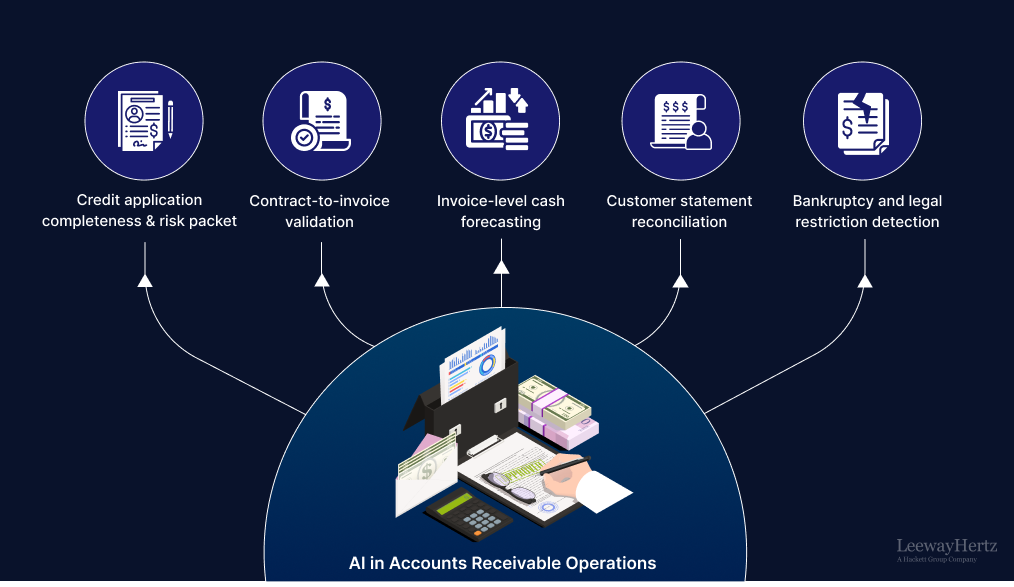
Accounts receivable (AR) is no longer only a back-office ledger function. It has evolved into a business-critical discipline that influences working capital, cash conversion, customer risk, compliance, and customer relationships. Delivering these outcomes requires coordinated execution across sales, credit, billing, collections, treasury, revenue accounting, customer service, legal,
The scale of receivables work is substantial because open invoices, customer balances, revolving credit, deductions, chargebacks, payment arrangements, refunds, and delinquency management all generate recurring operating volume. The Federal Reserve’s G.19 release [1] reported that U.S. consumer credit increased at a seasonally adjusted annual rate of 4.8 percent in April 2026, with revolving credit increasing at an annual rate of 10.4 percent and nonrevolving credit increasing at a rate of 2.9 percent. While consumer credit is not the same as business-to-business trade receivables, it illustrates the broader credit, repayment, delinquency, and receivables environment in which AR, collections, and cash operations function.
That operating volume underscores why AI needs to be applied to specific AR work, not positioned as a generic finance chatbot. Receivables teams do not need broad answers in isolation; they need support that can read the right artifact, compare it with the right system record, prepare the right work packet, and route it to the right reviewer. In credit onboarding, document intelligence can extract fields from credit applications, W-9s, resale certificates, trade references, and bank references before a credit analyst reviews the packet. In cash application, predictive matching can compare remittance advice, EDI 820 records, lockbox files, ACH references, customer aliases, and open invoices to prepare application proposals for a cash application analyst. In collections, predictive analytics can prioritize past-due accounts by payment propensity, dispute status, promise-to-pay reliability, and balance at risk, while collectors and collections managers still own treatment strategy and customer contact decisions.
This article uses the accounts receivable operating model to break work into functions, processes, sub-processes, AI-enabled opportunities, accountable reviewers, and governance boundaries. This is because AI in accounts receivable creates value when it is mapped to specific AR functions, source artifacts, reviewer roles, and control points rather than treated as a generic finance assistant.
- How AI is transforming accounts receivable operations
- Why AI use cases in accounts receivable must be mapped at the sub-process level
- Accounts receivable operating model and AI opportunity mapping across AR processes
- High-value AI use cases in accounts receivable
- How agentic AI works in accounts receivable workflows
- How to prioritize AI use cases in accounts receivable operations
- Governance, risk, and responsible AI in accounts receivable operations
- How ZBrain operationalizes AI use cases in accounts receivable
- Future of AI in accounts receivable operations
How AI is transforming accounts receivable operations
AI is transforming accounts receivable by changing how teams read documents, classify exceptions, prioritize risk, match payments, prepare customer communications, assemble evidence, and support financial reporting. The strongest opportunities are not broad claims such as “automate AR.” They are specific workflows tied to AR artifacts such as credit applications, invoices, purchase orders and remittance advices to name a few.
A practical AR example spans order-to-cash. AI can assemble a credit hold review packet by comparing the blocked sales order with credit exposure, payment history, open invoices, dispute status, hold reason, and customer hierarchy, enabling the credit manager to assess release risk faster and with stronger evidence. If the order is released and billed, AI can later compare the invoice, PO, contract terms, delivery evidence, remittance advice, bank receipt, deduction code, and customer claim backup to prepare a cash application or dispute packet. The system prepares and routes evidence, but the credit manager, deduction analyst, cash application lead, collector, controller, or compliance reviewer remains accountable for the decision.
AR work generally falls into five AI-relevant work types:
-
Document-heavy work: Credit applications, invoices, purchase orders, remittance advices, EDI 810 invoices, EDI 820 remittance records, debit memos, proof of delivery records, bills of lading, customer statements, refund requests, credit memos, settlement letters, and write-off packets can be checked for missing context and inconsistencies before a reviewer opens them.
-
Narrative-heavy work: Collection notes, dunning messages, dispute explanations, deduction denial responses, reconciliation commentary, cash forecast commentary, reserve memos, and audit support narratives can be drafted from approved source material while showing where evidence is thin.
-
Exception-heavy work: Short pays, unauthorized deductions, unapplied cash, residual balances, blocked orders, broken promises to pay, duplicate payments, tax mismatches, freight claims, pricing disputes, stale credits, and aged reconciling items can be classified and prioritized so specialists take the highest-impact cases first.
-
Knowledge-heavy work: Payment term interpretation, credit policy checks, delegation-of-authority routing, contract billing clauses, tolerance write-off rules, dispute reason-code taxonomy, Regulation F contact boundaries, Regulation V furnishing obligations, and internal control requirements improve when AI retrieves the relevant rule and flags conflicts.
-
Workflow-heavy work: Credit hold release, invoice correction, portal resubmission, remittance matching, customer statement reconciliation, deduction validation, third-party agency placement, month-end AR close, and reserve support benefit when AI assembles the next work packet and reduces rework between functions.
The practical design rule is straightforward: every AR AI use case should name the sub-process, the source artifact, the system of record, the AI capability, the reviewer, and the output artifact. AI prepares, compares, classifies, scores, drafts, and routes. People decide, approve, contact, post, furnish, write off, or attest.
Turn accounts receivable AI opportunities into governed workflows
Apply AI across credit, billing, collections, cash application, disputes, deductions, reconciliation, reporting, and compliance processes while keeping finance reviewers accountable for risk-bearing decisions.
Why AI use cases in accounts receivable must be mapped at the sub-process level
A broad use case, such as “AI for accounts receivable,” is too vague to build, govern, or measure. Even “AI for collections” may include dunning cadence, collector queue prioritization, promise-to-pay monitoring, dispute routing, credit hold escalation, settlement review, agency placement, bankruptcy handling, cease-and-desist treatment, and legal escalation. Each activity has different artifacts, systems, controls, regulatory boundaries, and reviewer roles.
A better approach is to map AI use cases to the accounts receivable operating model:
-
Function: A governed AR domain, such as customer credit onboarding, billing, collections, cash application, dispute management, compliance, or AR close.
-
Process: A workflow area within a function, such as credit limit review, invoice validation, remittance matching, deduction validation, dunning strategy, or bad debt reserve support.
-
Sub-process: The atomic work activity that starts from a specific artifact and ends with a specific output, such as validating a credit application, matching an EDI 820 remittance line to an open invoice, classifying a short-pay reason code, or preparing a write-off approval packet.
-
AI-enabled opportunity: A specific use of AI capability against a specific AR artifact that changes the work, such as document intelligence extracting remittance fields from lockbox files, anomaly detection flagging duplicate customer payments, or natural-language generation drafting a customer dispute response from approved evidence.
This level of mapping matters because accounts receivable is controlled work. A missed PO requirement can delay cash. An incorrect tax exemption can create billing and compliance exposure. A misclassified deduction can leak revenue. An unapplied payment can trigger an unnecessary collection call. An unsupported credit memo, refund, write-off, or credit-bureau update can create audit, customer, or regulatory risk.
These risks are precisely why AI use cases in AR cannot be treated as interchangeable. Each use case operates on different artifacts, applies different logic, and must align with specific controls and reviewer responsibilities. For example, document intelligence that validates deduction backup from a debit memo, invoice, PO, proof of delivery, pricing agreement, and promotion record is different from predictive analytics that scores payment propensity. Both are different from retrieval-grounded answering, which helps a collector interpret an approved payment plan policy. Treating all three as one “AR assistant” hides the control design that makes each use case buildable.
The sub-process map also helps define where automation should stop, and human judgment should begin. AI can read documents, extract data, classify cases, assess risk, compare records, draft recommendations, summarize evidence, and prepare actions for review. However, decisions with financial, legal, compliance, or customer consequences remain with accountable professionals. These include extending credit, releasing orders, rejecting deductions, issuing credit memos, approving refunds, assigning accounts to collection agencies, writing off balances, correcting reported information, and certifying close results.
Accounts receivable operating model and AI opportunity mapping across AR processes
The operating model below maps accounts receivable into core governed functions. Each function includes the operating purpose, teams involved, AI support areas, human ownership boundaries, granular sub-process opportunities, high-value areas, and an example agentic workflow.
Function 1: Customer credit onboarding and master data setup
Turns a customer request into an approved credit profile, customer master record, payment terms, tax setup, and initial exposure control.
This function sits at the entry point of the AR lifecycle. It determines whether a customer can transact on open account terms, what credit limit applies, how the customer hierarchy is structured, which bill-to, ship-to, payer, and parent account relationships apply, and which master data fields control billing, tax, payment, and collections downstream.
Teams involved: Credit analysts, credit managers, customer master data teams, AR operations, sales operations, tax, legal, treasury, compliance, and finance systems.
What AI helps with: Document intelligence can extract fields from credit applications, W-9s, tax exemption certificates, resale certificates, bank references, trade references, financial statements, and guaranty documents. Classification can map customers to risk tiers, payment term families, industry codes, account hierarchies, and required document checklists. Retrieval-grounded answering can compare requested terms with credit policy, approval matrices, contract clauses, and tax rules.
What humans continue to own: Credit managers approve credit limits, risk class overrides, payment terms, credit hold exceptions, and onboarding decisions. Tax and legal teams approve exemption treatment, restricted customer handling, contract deviations, and compliance exceptions. AI validates, compares, scores, and prepares onboarding packets but does not approve credit, establish legal terms, or attest to master data accuracy.
| Process | Sub-process | Key AI-enabled opportunities |
|---|---|---|
| Customer intake | Credit application completeness check |
|
| Customer hierarchy and payer setup | Multi-source aggregation compares CRM account data, ERP customer master records, bill-to, ship-to, payer, and parent account relationships to flag duplicate or misaligned customer records. | |
| Tax exemption validation | Policy-aware validation compares exemption certificate fields, ship-to state, resale status, tax code, and internal tax policy to prepare an exception list for tax reviewer approval. | |
| Credit policy setup | Payment term assignment | AI- powered classification maps requested terms against credit policy, contract terms, customer risk tier, channel, and delegation-of-authority thresholds to prepare a term code recommendation. |
| Credit limit calculation | Predictive analytics evaluates credit bureau data, trade payment history, bank references, financial statements, order forecast, and existing exposure to propose a credit limit range. | |
| Risk class assignment | AI- powered classification assigns customer risk classes using payment behavior, industry, geography, external risk data, litigation indicators, and financial signals. | |
| Account control | Restricted-party screening handoff | Multi-source aggregation prepares customer identity, address, ownership, and external screening evidence for compliance review before account activation. |
| Delegation-of-authority routing | Approval-matrix validation checks requested limit, payment terms, risk rating, and exposure against approval matrices and routes the packet to the correct approver. |
Highest-value opportunities: Credit application completeness checking reduces rework before account activation. Credit limit calculation has a downstream impact because it affects order release, exposure, DSO, and bad debt risk. Customer hierarchy and duplicate detection prevent billing, collections, cash application, and statement reconciliation issues that can persist across the O2C (order to cash) lifecycle.
Example agentic workflow:
- Start with the customer credit application package from CRM, including tax, bank, trade reference, and requested payment term artifacts.
- Extract key fields and compare them with ERP customer master records, external risk records, and customer hierarchy data.
- Retrieve credit policy, payment term rules, tax requirements, and approval matrix thresholds.
- Prepare a credit onboarding packet with missing items, risk indicators, proposed term code, and approval path.
- Human checkpoint: the credit manager confirms the credit decision, limit, terms, and routing.
- The workflow hands approved setup instructions to the customer master data governance under existing controls.
Function 2: Credit risk monitoring and exposure management
Turns open receivables, orders, payments, disputes, and external risk signals into credit exposure decisions and portfolio controls.
This function monitors credit risk after onboarding. It sits across sales order release, open AR, collections, treasury, and portfolio risk because customer exposure changes as orders, invoices, payments, disputes, credits, and external conditions change.
Teams involved: Credit risk managers, credit analysts, order management, sales operations, AR managers, treasury, legal, and commercial leadership.
What AI helps with: Predictive analytics can estimate payment delay risk, default risk, and cash conversion probability at the customer, parent, portfolio, and segment levels. Anomaly detection can flag sudden exposure jumps, order spikes, aging migration, concentration risk, dispute growth, and credit line overuse. Simulation can compare outcomes under temporary limit increases, payment plans, credit holds, and collateral scenarios.
What humans continue to own: Credit and finance leaders own credit hold release, limit increases, temporary exceptions, collateral requests, account restrictions, and customer treatment strategy. Sales may support the commercial context, but finance owns risk approval. AI scores and prepares exposure scenarios but does not release orders, increase credit, or override policy.
| Process | Sub-process | Key AI-enabled opportunities |
|---|---|---|
| Exposure monitoring | Open exposure consolidation | Multi-source aggregation combines open invoices, open orders, shipment details, unapplied cash, disputes, credit memos, and parent exposure to present total credit exposure. |
| Credit utilization monitoring | Anomaly detection flags limit breaches, rapid utilization changes, excessive open order exposure, and customer or parent concentration shifts. | |
| Risk trend monitoring | Predictive analytics uses aging bucket migration, DSO movement, payment behavior, dispute trend, external scores, and industry signals to identify accounts likely to deteriorate. | |
| Hold management | Credit hold trigger review | Classification explains whether a blocked order is driven by past due balance, credit limit breach, dispute status, missing document, tax issue, or manual risk flag. |
| Credit hold release packet preparation | Multi-source aggregation assembles credit policy, open AR, promise-to-pay status, dispute barriers, margin details, order value, and customer history for credit manager review. | |
| Temporary limit exception review | Simulation compares temporary limit scenarios against cash forecast, payment behavior, exposure, aging risk, and approval thresholds to validate accuracy, identify discrepancies, and assess credit risk. | |
| Portfolio controls | Concentration monitoring | Anomaly detection flags customer, parent, segment, region, or industry concentration changes that create portfolio credit risk. |
| Collateral and guarantee tracking | Classification identifies expiring letters of credit, deposits, guarantees, security instruments, and collateral conditions from contract and treasury records. |
Highest-value opportunities: Open exposure consolidation reduces fragmented credit decisions. Hold release packet preparation shortens sales-finance cycle time without bypassing approval. Concentration monitoring improves portfolio risk oversight for companies with large strategic customers or sector exposure.
Example agentic workflow:
- Start with a blocked sales order and the current customer exposure record from ERP.
- Aggregate open invoices, aging orders, open orders, disputes, unapplied cash, payments, credit memos, and credit limit utilization.
- Retrieve credit policy and approval limits tied to the hold reason.
- Prepare a hold release packet with exposure, cash risk, dispute barriers, payment commitments, and policy references.
- Human checkpoint: the credit manager approves, denies, or escalates the hold release.
- The workflow hands the approved decision to order management personnel and preserves evidence for audit.
Function 3: Contract, pricing, and order-to-bill controls
Turns sales orders, contracts, price agreements, fulfillment events, and customer requirements into billable transactions that can withstand customer and audit review.
This function protects invoice accuracy before billing. It connects sales contracts, purchase orders, pricing tables, tax rules, fulfillment evidence, order entry, milestone acceptance, and revenue-sensitive billing rules.
Teams involved: Billing operations, sales operations, revenue accounting, pricing, contract management, tax, order management, legal, and AR control teams.
What AI helps with: Document intelligence can compare customer purchase orders, sales orders, contracts, price books, delivery records, and billing schedules. Classification can identify billing blocks, PO errors, customer item mismatches, invalid pricing, and missing acceptance evidence. Retrieval-grounded answering can surface clauses for milestone billing, retainage, acceptance, escalation pricing, freight terms, and invoice submission rules.
What humans continue to own: Billing leads, pricing owners, contract managers, tax reviewers, and revenue accounting teams approve billing rule interpretations, price overrides, invoice corrections, and revenue-sensitive treatment. AI compares and flags discrepancies but does not change contract terms, approve billing exceptions, or determine revenue recognition treatment.
| Process | Sub-process | Key AI-enabled opportunities |
|---|---|---|
| Order validation | Purchase order requirement check | Document intelligence compares the customer PO, sales order, customer master, contract, and portal requirements to flag missing PO numbers, invalid PO formats, exhausted PO value, or incorrect buyer reference. |
| Billing block classification | Classification groups billing blocks by missing shipment confirmation, credit hold, tax issue, pricing mismatch, customer data error, incomplete acceptance, or invalid customer item number. | |
| Contract billing rule check | Contract intelligence extracts and classifies billing frequency, milestones, retainage terms, acceptance criteria, invoice backup requirements, and submission conditions from contract text. | |
| Pricing controls | Price agreement match | Anomaly detection compares order price, contract price, promotion, rebate, surcharge, and customer-specific price list to flag variance risk. |
| Tax and freight charge validation | Multi-source aggregation compares ship-to addresses, exemption records, tax codes, freight terms, shipment route, and order charges to prepare billing exceptions. | |
| Discount authorization check | Approval-rule validation compares discounts with contract clauses, pricing approval matrices, and delegation-of-authority thresholds. | |
| Billable event controls | Fulfillment evidence review | Document intelligence matches proof of delivery, goods issue, service completion, time sheet, milestone acceptance, and order status to confirm billable-event evidence. |
| Unbilled receivables review | Predictive analytics flags fulfilled but unbilled items that may become revenue leakage, close issues, or delayed cash conversion. |
Highest-value opportunities: PO requirement checking prevents avoidable invoice rejections. Contract billing rule checks reduce rebill and dispute volume in services, project, subscription, and milestone environments. Unbilled receivables review protects revenue completeness and working capital timing.
Example agentic workflow:
- Start with an order ready for billing, along with its related contract, PO, fulfillment record, and customer master.
- Compare PO, pricing, tax, contract billing rules, and fulfillment evidence.
- Classify billing blocks and retrieve relevant contract clauses.
- Prepare a billing readiness packet with exceptions, evidence, and correction owners.
- Human checkpoint: the billing lead or revenue accounting reviewer approves the release or correction.
- The workflow hands approved billing instructions to ERP billing under existing controls.
Function 4: Invoice generation, presentment, and delivery
Turns approved billable transactions into invoices delivered through the correct customer channel with required support.
This function creates the invoice artifact that drives payment, dispute, deduction, cash application, and aging outcomes. It includes invoice generation, EDI 810 validation, portal submission, email delivery, statement support, attachment assembly, delivery failure triage, credit and rebill activity, and customer-specific submission rules.
Teams involved: Billing analysts, AR operations, EDI teams, customer portal teams, tax, revenue accounting, customer service, and finance systems.
What AI helps with: Document intelligence can validate invoice fields, tax, PO references, line detail, attachments, and customer backup requirements. Classification can map invoices to the portal, EDI, email, AP network, or customer-specific delivery rules. Natural-language generation can prepare customer-facing explanations for corrected invoices, rebills, or resubmissions.
What humans continue to own: Billing owners approve invoice release, cancellation, rebills, credit, and rebill actions, portal resubmissions, and sensitive customer messages. Tax and revenue accounting teams own tax-sensitive and accounting-sensitive outcomes. AI validates and drafts but does not issue unsupported invoices, cancel invoices, or approve rebills.
| Process | Sub-process | Key AI-enabled opportunities |
|---|---|---|
| Invoice creation | Invoice field validation | Document intelligence checks invoice number, customer ID, PO number, tax details, currency, due date, payment terms, line description, customer item number, and supporting reference fields. |
| Credit and rebill candidate detection | Anomaly detection flags duplicate invoices, incorrect pricing, tax mismatches, address errors, quantity issues, and invalid bill-to or payer records. | |
| Invoice backup assembly | Multi-source aggregation attaches proof of delivery, bill of lading, packing list, service report, time sheet, milestone acceptance, or contract backup based on the customer rule. | |
| Presentment | Customer portal submission | Classification maps each invoice to portal, EDI, email, AP network, or manual upload requirements and prepares portal data fields. |
| EDI 810 validation | Document intelligence validates EDI invoice segments against customer implementation guides and flags missing PO, ship-to, tax, or line-level references. | |
| Delivery failure triage | Classification groups rejected, bounced, or failed invoices by invalid PO, inactive supplier profile, missing attachment, tax error, portal rule, or EDI mapping issue. | |
| Customer communication | Invoice correction explanation | Natural-language generation drafts customer-facing correction notes using invoice records, rebill reason, supporting evidence, and approved templates. |
| Statement attachment preparation | Multi-source aggregation assembles invoice copies, aging details, credits, payments, deductions, and open items for statement delivery. |
Highest-value opportunities: Invoice backup assembly is high value in industries where missing documentation delays payment. EDI 810 validation prevents systematic rejection. Delivery failure triage stops invoices from silently aging before the customer receives them.
Example agentic workflow:
- Start with an invoice batch and a customer delivery profile.
- Validate invoice fields, backup documents, delivery channel, EDI rules, and portal requirements.
- Classify invoice failures and assemble missing evidence.
- Prepare the release, resubmission, or correction packet.
- Human checkpoint: the billing lead approves invoice release, correction, or resubmission.
- The workflow submits only approved packets through the established delivery channel.
Function 5: Collections strategy and customer treatment management
Turns aging, customer value, risk, dispute status, contact policy, and payment behavior into prioritized collections treatment paths.
This function determines which accounts collectors should work, what evidence they need, when outreach should occur, what message should be used, when accounts should be escalated, and when collections should pause due to dispute, bankruptcy, legal hold, protected treatment, or customer relationship sensitivity.
Teams involved: Collections managers, collectors, AR shared services, customer success, sales, legal, compliance, credit risk, and third-party agencies.
What AI helps with: Predictive analytics can estimate payment propensity, promise-to-pay reliability, broken-promise risk, and next-best queue priority. Optimization can recommend contact sequencing within approved policies. Natural-language generation can draft dunning notices, account summaries, call preparation notes, and escalation packets from approved templates and account evidence.
What humans continue to own: Collections leaders own treatment strategy, escalation approval, settlement recommendations, agency placement, and sensitive customer handling. Compliance teams own contact policy controls. AI prioritizes, drafts, and prepares but does not decide treatment, contact customers outside policy, or approve settlements.
| Process | Sub-process | Key AI-enabled opportunities |
|---|---|---|
| Collections segmentation | Aging bucket prioritization | Predictive analytics ranks current, 1-30, 31-60, 61-90, and 90-plus day balances by payment likelihood, balance at risk, dispute status, and customer value. |
| Customer value and risk segmentation | Classification groups accounts by strategic value, margin, credit exposure, payment behavior, dispute pattern, and escalation sensitivity. | |
| Treatment path assignment | Optimization proposes soft reminder, statement resend, collector call, dispute handoff, sales escalation, credit hold review, legal review, or agency placement for approval. | |
| Contact execution | Dunning notice preparation | Natural-language generation drafts notices from approved templates, open invoice data, payment terms, aging bucket, and prior contact history. |
| Call preparation packet assembly | Multi-source aggregation prepares open invoices, prior notes, promises to pay, disputes, credits, delivery evidence, and contact history for collector review. | |
| Promise-to-pay capture and monitoring | Classification extracts promise amount, date, payment method, and conditions from call notes or emails, then tracks broken-promise risk. | |
| Escalation management | Sales escalation packet preparation | Natural-language generation summarizes aging, account history, disputed balances, payment barriers, and requested sales action for account owner review. |
| Credit hold escalation review | Predictive analytics provides visibility into customer exposure, payment risk, aging trends, and potential order impact, while retrieval-grounded answering provides access to relevant policies, contracts, and account information to support credit manager decisions. |
Highest-value opportunities: Aging bucket prioritization helps collections teams focus their efforts on balances with the highest likelihood of timely recovery. Promise-to-pay monitoring reduces leakage from missed follow-ups. Call preparation packets reduce research time while improving consistency and customer context.
Example agentic workflow:
- Start with the daily collections queue and aged trial balance.
- Score payment likelihood, dispute blockers, balance risk, customer value, and promise behavior.
- Prepare prioritized collector work packets with invoices, notes, prior promises, and policy references.
- Draft approved template outreach for collector review.
- Human checkpoint: the collector confirms the contact, message, escalation, or hold recommendation.
- The workflow records approved notes and next actions in the collection system.
Function 6. Dispute intake, deduction management, and short-pay resolution
Turns short payments, debit memos, customer claims, chargebacks, and deduction backup into validated dispute outcomes and recovery actions.
This function is central in industries with frequent pricing claims, trade promotion deductions, freight disputes, shortage claims, tax issues, service-level credits, customer compliance chargebacks, and unauthorized short pays. It links cash application, collections, billing, pricing, tax, logistics, sales, and customer service.
Teams involved: Deduction analysts, dispute analysts, AR specialists, customer service, sales, pricing, trade promotion teams, logistics, tax, legal, and collections.
What AI helps with: Classification can identify dispute reason codes and root causes from remittance advice, debit memos, emails, customer portals, and claim backup. Document intelligence can compare invoices, POs, proof of delivery, bills of lading, contracts, pricing agreements, promotion records, and customer claim documents. Natural-language generation can draft claim approval, denial, or information request messages.
What humans continue to own: Deduction analysts and dispute owners approve claim validity, denial, credit memo request, rebill, recovery action, and write-off recommendation. Sales, pricing, tax, and logistics owners approve root-cause corrections in their domains. AI classifies and assembles evidence but does not approve deductions, issue credits, or deny customer claims.
| Process | Sub-process | Key AI-enabled opportunities |
|---|---|---|
| Dispute intake | Short-pay reason classification | Classification maps remittance codes, debit memo text, and claim notes to pricing, quantity, tax, freight, damage, promotion, service, compliance, or customer portal reasons. |
| Deduction backup completeness check | Document intelligence verifies claim form, debit memo, invoice, PO, proof of delivery, bill of lading, contract, promotion, or chargeback backup before analyst review. | |
| Duplicate claim detection | Anomaly detection compares debit memo, invoice, amount, customer, reason code, claim reference, and prior deductions to flag duplicates. | |
| Validation | Price discrepancy validation | Multi-source aggregation compares invoice price, customer PO, contract, price list, rebate, trade promotion, approved discount, and surcharge records. |
| Quantity and delivery claim validation | Document intelligence compares invoice quantity, shipment record, bill of lading, proof of delivery, shortage claim, warehouse record, and customer receiving data. | |
| Tax and freight claim validation | AI-assisted record comparison evaluates tax exemption records, freight terms, shipment routes, invoice charges, and internal policies to identify inconsistencies or unsupported charges. | |
| Resolution | Credit memo request packet preparation | Natural-language generation prepares credit memo justification from validated evidence, dispute reason, root cause, and approval policy. |
| Deduction denial response drafting | Natural-language generation drafts a denial or information request using evidence, invoice details, claim gaps, and approved customer communication templates. | |
| Root cause analysis | Dispute root-cause trend analysis | Predictive analytics identifies recurring pricing, shipping, tax, master data, compliance, customer portal, or trade promotion causes by customer and product. |
Highest-value opportunities: Short-pay reason classification improves queue routing immediately. Price discrepancy validation reduces deduction leakage. Duplicate claim detection prevents repeated credit losses and improves control.
Example agentic workflow:
- Start with a short-paid remittance line and attached debit memo.
- Extract claim details, classify reason code, and collect invoice, PO, contract, delivery, pricing, and promotion evidence.
- Compare claim evidence with approved source records and prior deductions.
- Prepare a validation packet with recommended approval, denial, recovery, rebill, or information request.
- Human checkpoint: the deduction analyst approves the disposition and any credit memo request.
- The workflow hands the approved outcome to ERP dispute, credit memo, or collections processes.
Function 7. Cash application and remittance matching
Matches bank receipts, lockbox files, payment references, remittance advices, and open invoices to apply payments, resolve exceptions, and maintain accurate customer balances.
Cash application determines whether cash reduces the correct open item. Poor matching creates unapplied cash, residual balances, customer disputes, misstated aging, duplicate collection activity, and close delays.
Teams involved: Cash application analysts, treasury, AR operations, bank lockbox teams, EDI teams, shared services, customer service, and finance teams.
What AI helps with: Document intelligence can extract payer, invoice, deduction, discount, payment, and remittance fields from emails, PDFs, images, spreadsheets, bank files, lockbox data, and EDI 820 records. Anomaly detection can flag duplicate payments, suspicious offsets, unusual discount use, mismatched payer identities, and duplicate remittance. Predictive matching can propose invoice-to-payment matches with confidence scores.
What humans continue to own: Cash application leads approve low-confidence matches, tolerance write-offs, on-account postings, customer account reclassification, offset treatment, and exception disposition. The treasury team owns bank reconciliation controls. AI proposes matches and exceptions but does not apply uncertain cash, write off differences, or change customer balances without approval.
| Process | Sub-process | Key AI-enabled opportunities |
|---|---|---|
| Payment intake | Bank file ingestion | Document intelligence extracts ACH, wire, card, check, lockbox, and bank reference fields and prepares payer identity candidates. |
| Remittance advice extraction | Document intelligence reads EDI 820, email text, PDF remittance, portal remittance, and spreadsheet remittance to extract invoice-level payment detail. | |
| Payer identification | Classification maps payer names, bank references, remittance aliases, parent accounts, and customer IDs to customer master records. | |
| Matching | Invoice-level matching | Predictive matching compares payment amount, invoice number, customer, payer, due date, discounts, and remittance details to propose open-item matches. |
| Short-pay and overpay routing | Classification routes differences to deductions, unapplied cash, refund review, credit memo review, offset, or tolerance write-off review. | |
| Discount tolerance validation | AI-assisted validation compares discounts taken against payment terms, grace periods, customer policies, and approval thresholds to identify unauthorized or incorrectly applied discounts. | |
| Exception handling | Unapplied cash classification | Classification groups unapplied cash by missing remittance, unknown payer, partial payment, duplicate payment, offset, residual balance, or customer master issue. |
| Duplicate payment detection | Anomaly detection compares payment amount, payer, bank reference, invoice, date, and remittance detail to flag duplicate receipts. | |
| On-account payment review | Multi-source aggregation prepares customer open items, remittance history, prior notes, credits, disputes, and account balance for analyst disposition. |
Highest-value opportunities: Remittance extraction and invoice-level matching directly reduce unapplied cash and manual keying. Payer identification solves one of the hardest recurring exceptions. Duplicate payment detection protects customer trust and cash controls.
Example agentic workflow:
- Start with a bank lockbox file and remittance email batch.
- Extract payment and invoice details, identify the payer, and match remittance lines to open invoices.
- Classify short pays, overpays, missing remittances, residual balances, and duplicate payment risks.
- Prepare high-confidence match proposals and exception queues.
- Human checkpoint: the cash application analyst approves low-confidence matches and exception disposition.
- The workflow posts approved applications and preserves match evidence for reconciliation.
Accelerate AI Solutions Development
Build fully functional solutions from your high-value use cases, based on specific operational needs and enterprise context.
Function 8. Customer account reconciliation and statement management
Turns customer ledgers, open items, payments, credits, deductions, unapplied cash, and customer AP statements into reconciled account positions.
This function supports customer conversations, dispute closure, collector accuracy, month-end reporting, and audit readiness. It is especially important for large customers, complex account structures (including parent–child hierarchies), customers with self-billing arrangements, and portal-based AP environments.
Teams involved: AR analysts, account reconciliation teams, collections, customer service, cash application, sales, customer success, and customer AP contacts.
What AI helps with: Multi-source aggregation can compare customer statements, ERP open items, payments, credits, deductions, unapplied cash, and account hierarchies. Document intelligence can extract statement line items from customer portals, AP remittance files, and PDF statements. Natural-language generation can prepare reconciliation explanations and customer account summaries.
What humans continue to own: AR analysts approve reconciliation adjustments, customer statement positions, refund recommendations, offset recommendations, balance corrections, and write-off requests. Account owners confirm customer-facing explanations for strategic accounts. AI reconciles and drafts but does not change balances or approve adjustments.
| Process | Sub-process | Key AI-enabled opportunities |
|---|---|---|
| Statement preparation | Open item statement generation | Multi-source aggregation prepares invoices, credits, payments, unapplied cash, deductions, residual balances, and aging detail for customer statement review. |
| Customer-specific statement formatting | Classification maps customers to statement frequency, format, currency, portal, parent-child hierarchy, and supporting document rules. | |
| Statement exception check | Anomaly detection flags negative balances, stale credits, duplicate invoices, unapplied cash, disputed items, and aged residual balances before statement release. | |
| Account reconciliation | Customer statement comparison | Document intelligence extracts customer AP statement lines and compares them with ERP open AR by invoice, amount, date, PO, and reference. |
| Parent-child account reconciliation | Multi-source aggregation aligns invoices, payments, credits, deductions, and unapplied cash across bill-to, ship-to, payer, and parent customer levels. | |
| Self-billing reconciliation | Document intelligence compares customer self-billing records, shipment data, price agreements, remittance lines, and ERP invoices to identify variances. | |
| Adjustment support | Credit balance review | Classification identifies refund, offset, unapplied cash, duplicate payment, credit memo, tolerance write-off, or customer correction paths. |
| Reconciliation adjustment packet preparation | Natural-language generation prepares adjustment justification with ledger evidence, variance reason, and approval threshold references. |
Highest-value opportunities: Customer statement comparison resolves what the customer believes it owes. Self-billing reconciliation reduces systematic payment variance. Parent-child reconciliation improves large-account accuracy and prevents misdirected collection activity.
Example agentic workflow:
- Start with a customer AP statement and an ERP open-item extract.
- Extract customer statement lines and match them to invoices, payments, credits, deductions, unapplied cash, and residual balances.
- Classify variances and prepare supporting evidence by variance reason.
- Draft a reconciliation summary and proposed adjustment packet.
- Human checkpoint: the AR analyst approves the reconciliation position and any adjustment request.
- The workflow hands approved items to cash application, deductions, billing, or refund processing.
Function 9. Customer disputes, service requests, and AR customer experience
Turns customer inquiries, invoice questions, payment claims, portal messages, and service tickets into resolved AR service outcomes.
This function manages AR as a customer-facing service operation. It covers invoice copies, payment status, dispute status, portal access, statement support, refund questions, credit hold questions, remittance clarification, and contact updates.
Teams involved: AR customer service, billing support, collections, cash application, dispute teams, customer success, sales, IT service desk, and finance teams.
What AI helps with: Classification can route customer requests by intent, urgency, account status, and required owner. Retrieval-grounded answering can surface invoice status, payment status, remittance status, dispute policy, portal instructions, and approved response content. Natural-language generation can draft customer responses with invoice references and evidence links.
What humans continue to own: AR service leads approve sensitive customer responses, refund commitments, settlement messages, balance corrections, service-level exceptions, and account changes. Customer-facing decisions that affect balances, terms, disputes, or legal position remain with the responsible owner. AI drafts and routes, but does not commit company action or change balances.
| Process | Sub-process | Key AI-enabled opportunities |
|---|---|---|
| Inquiry intake | Email and portal intent classification | Classification groups messages into invoice copy, payment status, remittance clarification, dispute, deduction, refund, portal access, credit hold, statement, or contact update. |
| Customer identity and account verification | Multi-source aggregation compares sender, account, contact role, domain, payer record, and customer master to flag identity or authorization gaps. | |
| SLA and priority assignment | Predictive analytics assigns priority using customer value, aging impact, dispute deadline, escalation history, and service-level commitment. | |
| Inquiry resolution | Invoice copy response preparation | Invoice document retrieval locates approved invoice copies, supporting documents, proof of delivery, and relevant statement references to prepare a complete response. |
| Payment status response preparation | Multi-source aggregation checks bank receipt, cash application, open item status, unapplied cash, and remittance match before drafting a status update. | |
| Dispute resolution | Dispute status response drafting | Natural-language generation drafts status responses using dispute owner notes, evidence status, target resolution date, and approved templates. |
| Escalation management | Sensitive account escalation | Classification identifies legal threats, executive complaints, bankruptcy references, discrimination claims, regulatory language, or data privacy concerns for specialist routing. |
| Cross-functional handoff | Natural-language generation prepares handoff notes for billing, tax, logistics, sales, customer success, or IT support. |
Highest-value opportunities: Email and portal intent classification reduces service backlog. Payment status response improves customer experience and reduces repeat contacts. Sensitive account escalation protects legal and compliance boundaries.
Example agentic workflow:
- Start with an inbound AR customer email or portal case.
- Classify intent, verify sender authorization, and retrieve invoice, payment, dispute, statement, or portal records.
- Draft a response and identify whether escalation is required.
- Prepare a response packet with source evidence.
- Human checkpoint: the AR service analyst approves the response or escalates the case.
- The workflow sends the approved response and updates the case record.
Function 10: Payment processing, refunds, credits, and adjustments
Turns approved payments, credit balances, credit memos, refunds, offsets, reversals, and write-off adjustments into controlled financial postings.
This function handles balance movements after billing and cash application. It includes credit memos, customer refunds, offsets, small-balance write-offs, overpayments, residual balances, payment reversals, NSF returns, and customer credits.
Teams involved: AR operations, cash application, billing, treasury, tax, revenue accounting, customer service, controllership, and finance approvers.
What AI helps with: Classification can route adjustment types and required approvals. Anomaly detection can flag duplicate refunds, suspicious credits, repeated small-balance write-offs, unusual offsets, and new bank detail risks. Retrieval-grounded answering can compare adjustment requests with approval thresholds, tax policy, and credit memo rules.
What humans continue to own: Finance approvers own credit memo approval, refund approval, offset approval, write-off approval, and payment reversal approval. Treasury owns the payment method and bank detail controls. AI prepares adjustment packets and risk flags but does not post unauthorized credits, issue refunds, or write off balances.
| Process | Sub-process | Key AI-enabled opportunities |
|---|---|---|
| Credit processing | Credit memo request validation | Document intelligence compares credit requests, invoices, dispute dispositions, pricing evidence, tax impact, and approval policies. |
| Credit memo duplicate check | Anomaly detection compares customer, invoice, amount, reason, dispute ID, prior credits, and credit memo history to flag duplicates. | |
| Tax-sensitive credit review | Retrieval-grounded answering identifies tax implications, exemption evidence, tax code changes, and required reviewer routing. | |
| Refund processing | Credit balance eligibility review | Classification separates refund, offset, unapplied cash, duplicate payment, billing correction, residual balance, and write-off candidates. |
| Refund fraud and duplicate risk checking | Anomaly detection flags new bank details, repeated refund requests, unusual payees, duplicate payments, or high-risk customer changes. | |
| Refund approval packet preparation | Natural-language generation prepares refund justification, ledger evidence, customer request, payment history, and approval path. | |
| Adjustments | Small-balance write-off review | Classification maps balances to tolerance policy, customer segment, aging, dispute status, materiality, and approval threshold. |
| Payment reversal review | Multi-source aggregation assembles bank return, NSF notice, chargeback, payment application, and customer balance impact. |
Highest-value opportunities: Refund fraud and duplicate risk review protect cash and customer trust. Credit memo duplicate checks reduce revenue leakage. Small-balance write-off review improves close efficiency without weakening controls.
Example agentic workflow:
- Start with a credit balance or refund request.
- Retrieve invoice, payment, credit memo, customer request, bank reference, and account history.
- Classify the credit balance reason and run duplicate, fraud, tax, and policy checks.
- Prepare a refund, offset, or denial approval packet.
- Human checkpoint: the finance approver confirms the refund, offset, or denial.
- The workflow hands approved posting instructions to the ERP and treasury controls.
Function 11. Collections compliance, legal, bankruptcy, and protected treatment
Turns legal events, restricted account conditions, and protected customer indicators into compliant account handling.
This function is critical when AR activity touches consumer collections, third-party debt collection, attorney representation, bankruptcy, insolvency, cease-and-desist requests, deceased customers, disputed debt, hardship, military status, or protected treatment.
Teams involved: Collections compliance, legal, bankruptcy specialists, agency management, collectors, customer service, credit reporting teams, and AR operations.
What AI helps with: Classification can identify bankruptcy notices, attorney representation, hardship indicators, cease-and-desist requests, deceased status, legal threats, and dispute language. Retrieval-grounded answering can surface contact rules, validation notice requirements, and internal handling playbooks. Natural-language generation can draft internal case summaries for specialist review.
What humans continue to own: Legal, compliance, and bankruptcy specialists own restricted account treatment, litigation decisions, bankruptcy handling, settlement authority, contact restrictions, and regulatory interpretations. AI flags, routes, and drafts but does not decide legal status, contact eligibility, settlement, or litigation action.
| Process | Sub-process | Key AI-enabled opportunities |
|---|---|---|
| Legal flag intake | Bankruptcy notice classification | Classification identifies bankruptcy filings, automatic stay references, case numbers, court details, debtor identity, and filing date for specialist review. |
| Attorney representation detection | Classification detects attorney contact, representation claims, power of attorney, legal threat language, or third-party authorization in emails, letters, and call notes. | |
| Cease-and-desist and contact restriction detection | Policy-aware classification compares the request language with the contact policy and prepares routing flags for compliance review. | |
| Protected treatment | Deceased customer handling | Classification identifies deceased notifications, estate references, death certificates, executor language, and authorized contact questions. |
| Hardship and vulnerability routing | Classification identifies hardship, disaster, military, medical, natural disaster, or vulnerability cues for policy-based specialist routing. | |
| Language and accessibility accommodation | Classification flags language preference, accessibility request, communication accommodation, or alternate channel request for service review. | |
| Legal escalation | Litigation packet preparation | Multi-source aggregation assembles contracts, invoices, payment history, disputes, correspondence, promises, demand letters, and account notes. |
| Settlement authority review support | Simulation compares settlement options, recovery probability, cost, aging, dispute strength, and approval thresholds for human review. |
Highest-value opportunities: Bankruptcy and contact restriction detection prevent high-risk compliance failures. Litigation packet preparation reduces legal handoff friction. Settlement review support improves consistency while preserving approval ownership.
Example agentic workflow:
- Start with an inbound letter, email, or case note containing possible legal, bankruptcy, or contact restriction language.
- Classify the legal condition and retrieve account records, contact history, open balances, disputes, and prior notices.
- Surface applicable policy references and required restrictions.
- Prepare a specialist review packet and pause non-approved workflow recommendations.
- Human checkpoint: legal or compliance confirms the account treatment.
- The workflow updates approved flags and hands off under existing legal governance.
Function 12. Credit reporting, furnishing, and consumer dispute support
Turns account performance data and consumer disputes into accurate, verifiable reporting and dispute responses where furnishing applies.
This function applies when an organization furnishes consumer account data to credit reporting agencies or supports consumer dispute investigations.
Teams involved: Credit reporting operations, compliance, legal, customer service, collections, data governance, and dispute investigation teams.
What AI helps with: Data quality analytics can compare account status, balance, delinquency, dispute flags, bankruptcy flags, charge-off status, and correction history. Classification can route direct and indirect disputes by reason. Natural-language generation can prepare investigation summaries and consumer response drafts from verified evidence.
What humans continue to own: Furnishing compliance owners approve Metro 2 reporting changes, dispute responses, corrections, suppressions, and policy interpretations. Legal and compliance teams own adverse or contested treatment. AI checks, compares, and drafts but does not furnish, suppress, correct, or certify consumer reporting data.
| Process | Sub-process | Key AI-enabled opportunities |
|---|---|---|
| Furnishing controls | Account status validation | Data quality analytics compares account status, payment rating, balance, past due amount, charge-off status, closed date, and date of first delinquency before furnishing. |
| Dispute and bankruptcy flag check | Classification validates consumer disputes, bankruptcy, deceased, fraud, and special comment indicators before reporting. | |
| Metro 2 data exception review | Anomaly detection flags inconsistent status codes, balance logic, date fields, compliance condition codes, and suppression indicators for reviewer action. | |
| Dispute intake | Direct dispute classification | Classification groups consumer disputes by identity, balance, payment history, fraud, account ownership, duplicate reporting, legal status, or bankruptcy treatment. |
| Indirect dispute packet preparation | Multi-source aggregation assembles bureau dispute records, account data, payment history, correspondence, and supporting evidence. | |
| Dispute investigation | Verification evidence review | Multi-source aggregation: surfaces contract, statements, payment records, disputes, adjustments, charge-off history, and prior corrections for investigator review. |
| Furnishing correction management | Furnishing a correction packet | Natural-language generation prepares correction rationale, evidence summary, field-level change list, and approval routing for compliance review. |
| Consumer dispute response management | Consumer response draft | Natural-language generation drafts consumer response language using approved templates and investigation findings. |
Highest-value opportunities: Metro 2 exception review reduces systemic reporting errors. Dispute packet preparation accelerates investigation. Verification evidence review supports defensible outcomes.
Example agentic workflow:
- Start with a direct consumer dispute record and account furnishing history.
- Classify dispute type and collect contract, statements, payment records, adjustments, and prior dispute outcomes.
- Check account status and Metro 2 fields for consistency.
- Prepare investigation findings and correction options.
- Human checkpoint: the furnishing compliance reviewer approves the response and any data correction.
- The workflow updates only approved reporting instructions and preserves evidence.
Function 13. Third-party agency, outsourcing, and placement management
Turns eligible past-due, charged-off, or recovery accounts into controlled external placement, recall, settlement, and performance oversight.
This function manages external collection agencies, law firms, business process outsourcing providers, and recovery partners. It covers placement eligibility, placement files, agency instructions, recall rules, remittance monitoring, settlement authority, complaint monitoring, and agency scorecards.
Teams involved: Agency management, collections leadership, legal, compliance, AR operations, data governance, finance, and vendor management.
What AI helps with: Classification can identify placement eligibility and exclusion reasons. Predictive analytics can estimate recovery probability and agency fit. Anomaly detection can identify agency performance outliers, complaint trends, payment reversals, and compliance exceptions.
What humans continue to own: Collections leadership, legal, and compliance approve placement, recall, settlement authority, agency strategy, legal escalation, and vendor corrective action. AI prepares placement files and scorecards but does not transfer accounts, approve settlements, or authorize legal action.
| Process | Sub-process | Key AI-enabled opportunities |
|---|---|---|
| Placement selection | Eligibility screening | Classification filters accounts by age, balance, dispute status, bankruptcy, legal hold, customer type, geography, account restriction, and internal exclusion rules. |
| Recovery score and agency fit | Predictive analytics estimates recoverability and maps accounts to agency strengths, geography, segment, account type, and prior liquidation performance. | |
| Placement file validation | Document intelligence validates required fields, balance, last payment date, dispute flags, legal restrictions, contact restrictions, and account notes before file transfer. | |
| Agency operations | Agency instruction generation | Natural-language generation prepares approved placement instructions, settlement parameters, customer restrictions, and account-specific notes. |
| Payment and recall monitoring | Multi-source aggregation compares agency remittances, customer payments, recalls, disputes, reversals, and balance updates. | |
| Settlement recommendation support | Simulation compares settlement offers, liquidation history, recovery cost, account age, dispute strength, and approval thresholds. | |
| Agency performance management | Agency scorecard | Predictive analytics tracks and forecasts recovery rates, dispute trends, remittance timeliness, and promise performance, while anomaly detection identifies unusual patterns such as spikes in complaints, disputes, or payment delays. |
| Agency compliance monitoring | Compliance exception review | Classification flags agency notes, complaints, contact activity, or settlement behavior that may require compliance investigation. |
Highest-value opportunities: Eligibility screening reduces wrongful placement. Placement file validation prevents downstream disputes and compliance issues. Agency scorecards improve recovery governance and vendor oversight.
Example agentic workflow:
- Start with a pool of accounts eligible for external placement.
- Screen exclusions, legal flags, disputes, bankruptcy, balances, customer restrictions, and recall conditions.
- Score recoverability and prepare placement files with required data fields.
- Generate agency instructions and compliance notes for review.
- Human checkpoint: agency management and compliance approve placement.
- The workflow transmits approved files through controlled vendor channels.
Function 14: Bad debt, reserves, write-offs, and recoveries
Turns aging, collectability evidence, customer risk, accounting policy, and recovery history into allowance support, write-off recommendations, and recovery tracking.
This function connects AR operations with accounting judgment. It supports allowance for doubtful accounts, current expected credit loss analysis where applicable, bad debt expense, charge-offs, post-write-off recoveries, recovery agency performance, and audit evidence.
Teams involved: Corporate accounting, controllership, AR leadership, credit risk, collections, tax, legal, finance approvers, and audit.
What AI helps with: Predictive analytics can estimate collectability using aging, customer risk, payment history, dispute status, macro indicators, recovery history, and account behavior. Simulation can compare reserve scenarios. Natural-language generation can draft reserve memos and write-off packets from approved evidence.
What humans continue to own: Controllers, accounting policy owners, and finance approvers own reserve methodology, allowance estimates, write-off approvals, charge-off timing, and audit representations. AI supports analysis and drafting but does not determine accounting estimates, approve write-offs, or attest to financial statements.
| Process | Sub-process | Key AI-enabled opportunities |
|---|---|---|
| Reserve analysis | Aging roll-forward analysis | Predictive analytics tracks migration across aging buckets, dispute status, customer risk, and payment behavior to support allowance review. |
| Collectability scoring | Predictive analytics estimates the likelihood of collection at the invoice, customer, parent, and portfolio levels for accounting review. | |
| Allowance support packet preparation | Multi-source aggregation prepares aging, write-off history, recovery rates, dispute trends, macro assumptions, customer-specific evidence, and management overlays. | |
| Write-off governance | Write-off eligibility classification | Classification maps balances to policy thresholds, collection exhaustion, dispute status, bankruptcy, customer inactivity, statute considerations, and approval route. |
| Write-off approval packet | Natural-language generation drafts write-off rationale from collection history, customer correspondence, disputes, payment attempts, and recovery actions. | |
| Tax and legal review flagging | Classification flags write-offs requiring legal, tax, senior finance, or compliance review. | |
| Recovery management | Post-write-off recovery tracking | Multi-source aggregation consolidates agency receipts, customer settlements, payment reversals, recovered balances, and liquidation rates. |
| Recovery performance analysis | Recovery trend analysis | Predictive analytics identifies segments, agencies, treatment paths, and account characteristics with stronger recovery performance. |
Highest-value opportunities: Collectability scoring improves reserve evidence. Write-off packet preparation reduces close-cycle effort. Recovery trend analysis helps tune treatment strategy and placement decisions.
Example agentic workflow:
- Start with the month-end aged trial balance and write-off candidate list.
- Aggregate aging, collections history, disputes, payments, customer risk, prior write-offs, and recovery performance.
- Score collectability and classify write-off eligibility.
- Draft allowance support and write-off approval packets.
- Human checkpoint: the controller and authorized finance approvers confirm reserve treatment and write-offs.
- The workflow hands approved entries to close and audit support processes.
Function 15: AR close, reconciliation, and financial reporting
Turns subledger activity, cash application, invoices, credits, adjustments, reserves, and GL balances into reconciled AR balances for close and reporting.
This function ensures AR balances are complete, accurate, and supportable. It covers subledger-to-general-ledger tie-out, aged trial balance validation, unapplied cash review, credit memo reconciliation, bank-to-AR reconciliation, cutoff review, reserve entry support, and close package preparation.
Teams involved: AR accounting, controllership, shared services, cash application, billing, revenue accounting, treasury, FP&A, internal audit, and external audit.
What AI helps with: Multi-source aggregation can surface ERP subledger, GL accounts, bank receipts, credit memos, write-offs, adjustments, and aging reports. Anomaly detection can flag unusual journal entries, stale unapplied cash, negative AR, out-of-period credits, aged reconciling items, and cutoff issues. Natural-language generation can draft close commentary and variance explanations.
What humans continue to own: Controllers and accounting managers own reconciliations, journal entries, close certification, audit support, and financial reporting judgments. AI prepares tie-outs and commentary but does not certify balances, post unsupported journal entries, or attest to reporting accuracy.
| Process | Sub-process | Key AI-enabled opportunities |
|---|---|---|
| Close preparation | AR subledger to GL tie-out | Multi-source aggregation surfaces subledger balances, GL accounts, journal entries, aging reports, and reconciling items. |
| Aged trial balance validation | Anomaly detection flags negative balances, future-dated invoices, stale credits, incorrect due dates, invalid terms, and customer master anomalies. | |
| Cutoff exception review | Classification identifies invoices, credits, cash receipts, write-offs, and adjustments posted outside expected cutoff windows. | |
| AR reconciliation | Unapplied cash reconciliation | Multi-source aggregation compares bank receipts, cash application batches, unapplied cash accounts, customer balances, and remittance exceptions. |
| Credit memo and adjustment reconciliation | Anomaly detection flags unusual credit memo volume, manual adjustments, duplicate credits, approval threshold exceptions, and unsupported reversals. | |
| Bank-to-AR reconciliation support | Multi-source aggregation consolidates bank deposits, lockbox activity, ERP receipts, treasury records, card settlements, and cash application batches. | |
| Reporting | AR close commentary | Natural-language generation drafts close commentary on DSO, aging movement, reserves, write-offs, unapplied cash, and major customer changes. |
| Audit support packet preparation | Natural-language generation assembles evidence for sampled invoices, payments, credits, disputes, reconciliations, and approvals. |
Highest-value opportunities: Subledger-to-GL tie-out has a direct financial reporting impact. Aging validation catches errors that affect collections, reserves, and reporting. Audit packet assembly reduces manual close support effort.
Example agentic workflow:
- Start with the month-end AR subledger, GL trial balance, aged trial balance, cash receipt records, and adjustment logs.
- Compare balances, identify reconciling items, and classify exceptions by source.
- Prepare aging validation, unapplied cash, credit memo, and adjustment exception packets.
- Draft close commentary using approved financial data.
- Human checkpoint: the accounting manager reviews, approves, and certifies the reconciliation.
- The workflow archives approved support in the close repository.
Function 16: AR analytics, forecasting, and performance management
Turns AR activity, aging, payment behavior, disputes, deductions, promises, and macro signals into cash forecasts, KPI reporting, and performance insights.
This function supports working capital decisions and management reporting. It covers DSO, best possible DSO, collection effectiveness index, days deduction outstanding, unapplied cash aging, dispute cycle time, collector productivity, promise-to-pay performance, forecast accuracy, dilution, bad debt trends, and cash conversion cycle input.
Teams involved: AR leadership, FP&A, treasury, collections operations, credit risk, sales finance, controllership, and executive reporting teams.
What AI helps with: Predictive analytics can forecast cash receipts, payment delays, aging movement, dispute closure, deduction leakage, broken promises, and write-off risk. Simulation can compare collection strategy, term changes, discount policy, and dispute reduction scenarios. Natural-language generation can draft executive commentary from KPI movements and source evidence.
What humans continue to own: Finance leadership owns forecast sign-off, KPI definitions, target setting, operating decisions, and executive reporting. AI forecasts and explains variance but does not certify forecasts, set targets, or make working capital commitments.
| Process | Sub-process | Key AI-enabled opportunities |
|---|---|---|
| Cash forecasting | Invoice-level cash prediction | Predictive analytics estimates expected payment date and amount using due date, customer history, dispute status, payment method, seasonality, and payer behavior. |
| Promise-to-pay forecast integration | Multi-source aggregation incorporates promises, broken promises, payment plans, collector notes, and customer commitments into cash forecast scenarios. | |
| Forecast variance explanation | Natural-language generation explains variance by customer, aging bucket, dispute, deduction, payment delay, region, and payment method. | |
| KPI reporting | DSO and CEI analysis | Predictive analytics identifies customer, segment, dispute, deduction, billing, and collections drivers behind DSO and collection effectiveness movement. |
| Dispute and deduction KPI analysis | Classification links cycle time, leakage, aging, and root cause to dispute categories, reason codes, owners, and customer segments. | |
| Collector performance analysis | Anomaly detection compares queue mix, contact activity, promises, recoveries, aging outcomes, and account complexity for coaching review. | |
| Portfolio insight | Customer payment behavior clustering | Classification groups customers by early payer, term payer, chronic late payer, dispute-driven payer, deduction-heavy payer, and broken-promise pattern. |
| Working capital scenario simulation | Simulation compares the impact of payment term changes, discount policies, collection intensity, dispute reduction, and credit hold strategy on cash conversion. |
Highest-value opportunities: Invoice-level cash prediction supports treasury planning. Forecast variance explanation improves executive confidence. Payment behavior clustering improves treatment design and customer segmentation.
Example agentic workflow:
- Start with the weekly open AR file, customer payment history, disputes, deductions, promises, and cash receipt history.
- Predict invoice-level cash timing and aggregate to a weekly forecast.
- Compare the forecast to the prior outlook and explain the drivers.
- Prepare a management commentary packet with confidence bands and risk accounts.
- Human checkpoint: Treasury or AR leadership approves the forecast and commentary.
- The workflow hands approved forecast outputs to FP&A and treasury reporting.
Function 17: AR data, platform governance, controls, and continuous improvement
Turns systems, data definitions, controls, access, and process evidence into a reliable AR operating operations.
This function governs the data and technology foundation behind AR. It spans ERP, CRM, billing platforms, bank portals, lockboxes, collection systems, customer portals, EDI, AP networks, credit bureaus, agency platforms, analytics environments, and control repositories.
Teams involved: AR operations, finance teams, IT, data governance, internal controls, compliance, security, process excellence, audit, and business process owners.
What AI helps with: Data quality analytics can identify customer master defects, integration breaks, duplicate records, stale mappings, invalid reason codes, and inconsistent KPI definitions. Retrieval-grounded answering can map process controls to policy and audit requirements. Anomaly detection can monitor unusual user actions, posting patterns, workflow exceptions, and interface failures.
What humans continue to own: System owners, control owners, data stewards, security owners, and audit leaders own access approval, control design, system configuration, data definitions, remediation acceptance, and audit sign-off. AI monitors and prepares evidence but does not approve access, change controls, or certify control effectiveness.
| Process | Sub-process | Key AI-enabled opportunities |
|---|---|---|
| Data governance | Customer master data quality check | Anomaly detection flags duplicate customers, missing tax IDs, invalid bill-to and payer links, inactive contacts, inconsistent payment terms, and incorrect hierarchy mapping. |
| AR data dictionary maintenance | AI -powered validation compares field definitions, KPI logic, report usage, aging rules, dispute codes, and cash application terms to identify inconsistent definitions. | |
| Reference data mapping | Classification validates reason codes, dispute codes, payment codes, credit codes, deduction codes, agency status codes, and write-off categories across systems. | |
| Platform operations | Interface exception monitoring | Anomaly detection identifies failed EDI, bank, portal, CRM, billing, ERP, lockbox, and agency interface records that affect AR processing. |
| Workflow queue configuration review | Multi-source aggregation surfaces queue rules, role ownership, SLAs, routing logic, and exception volumes to recommend configuration review. | |
| Access and segregation review | Classification compares user roles, approval rights, posting access, refund authority, write-off authority, and collector permissions against the role policy. | |
| Controls | Control evidence assembly | Natural-language generation assembles evidence for invoice approvals, cash application review, write-off approvals, refund approvals, reconciliations, and access reviews. |
| Continuous improvement backlog | Predictive analytics ranks process defects by volume, aging impact, rework effort, cash impact, customer impact, and control risk. |
Highest-value opportunities: Customer master data quality checks prevent errors across the AR lifecycle. Interface exception monitoring reduces invisible process breaks. Control evidence assembly shortens audit and compliance support.
Example agentic workflow:
- Start with AR system logs, customer master changes, interface errors, access reports, and control evidence requests.
- Detect data defects, failed integrations, unusual access, missing evidence, and recurring process defects.
- Retrieve relevant policy, control, and system requirements.
- Prepare a remediation packet and evidence checklist.
- Human checkpoint: the data steward, system owner, or control owner approves remediation and evidence.
- The workflow routes approved remediation under change management and audit controls.
Accelerate AI Solutions Development
Build fully functional solutions from your high-value use cases, based on specific operational needs and enterprise context.
High-value AI use cases in accounts receivable
The highest-value AI use cases in AR have high transaction volume, clear source artifacts, repeatable reviewer decisions, measurable cash or control impact, and limited blast radius before human approval. They usually sit at the points where errors create downstream rework: customer setup, credit hold, invoice delivery, remittance matching, deduction validation, statement reconciliation, write-off support, and financial close process.
| Use case | Function | How AI creates high-value impact |
|---|---|---|
| Credit application completeness and risk packet | Customer credit onboarding | Document intelligence extracts credit applications, W-9s, tax certificates, bank references, and trade references, while predictive analytics evaluates this information to generate a comprehensive risk view for credit manager review. |
| Dynamic exposure and credit hold review | Credit risk monitoring | Multi-source aggregation combines open AR, open orders, disputes, payments, unapplied cash, and credit limit utilization to prepare hold-release evidence. |
| Contract-to-invoice validation | Contract, pricing, and order-to-bill controls | Retrieval-grounded analysis validates contract billing rules, PO requirements, pricing records, and evidence of fulfillment before invoice release. |
| Invoice backup assembly and delivery validation | Invoice generation and presentment | Document intelligence assembles customer-required supporting documents and flags delivery failures across portals, EDI, AP networks, and email—before invoices begin to age. |
| Collections queue prioritization | Collections strategy | Predictive analytics ranks accounts by payment likelihood, balance risk, dispute status, promise behavior, and customer value. |
| Short-pay and deduction validation | Dispute and deduction management | Classification and document intelligence classify deduction reason codes, compare backup evidence, and prepare approval, denial, or recovery packets. |
| Remittance extraction and cash matching | Cash application | Document intelligence reads EDI 820, lockbox, email, PDF, and portal remittance, while predictive matching proposes invoice applications. |
| Customer statement reconciliation | Account reconciliation | Multi-source aggregation compares customer AP statements with ERP open items, credits, deductions, unapplied cash, and residual balances. |
| AR inquiry routing and response drafting | Customer experience | Classification routes service requests, and natural-language generation drafts evidence-backed responses for analyst approval. |
| Refund and credit balance risk review | Payments, refunds, credits, and adjustments | Anomaly detection flags duplicate refunds, suspicious bank changes, unusual payees, and offset risks before finance approval. |
| Bankruptcy and legal restriction detection | Compliance, legal, and bankruptcy | Classification identifies legal, bankruptcy, attorney representation, and contact-restriction language so compliance can confirm account treatment. |
| Furnishing dispute investigation packet | Credit reporting and consumer dispute support | Multi-source aggregation assembles account evidence, payment history, Metro 2 fields, and dispute records for compliance review. |
| Agency placement eligibility and scorecard | Third-party agency management | Classification screens for exclusions to ensure only eligible items proceed, while predictive analytics generate recovery and performance insights to support effective placement governance. |
| Allowance and write-off support | Bad debt and reserves | Predictive analytics supports collectability review, and natural-language generation drafts reserve and write-off packets. |
| AR close reconciliation | AR close and reporting | Multi-source aggregation ties subledger, GL, aged trial balance, cash receipts, credits, and adjustments to prepare close evidence. |
| Invoice-level cash forecasting | AR analytics | Predictive analytics estimates payment timing and explains forecast variances across customers, disputes, aging buckets, deduction patterns, and payment behavior. |
| AR control evidence assembly | Data, platform, and controls | Natural-language generation assembles evidence for approvals, reconciliations, access reviews, and audit requests while preserving traceability. |
A use case earns high-value status when it changes operational outcomes without bypassing accountability. In AR, that usually means reducing unapplied cash, accelerating dispute resolution, improving collector focus, lowering deduction leakage, reducing avoidable invoice rejection, improving forecast accuracy, strengthening reserve evidence, or lowering compliance risk.
How agentic AI works in accounts receivable workflows
Agentic AI in accounts receivable operations should be designed as a governed sequence of system-driven actions. The agent can retrieve records, compare artifacts, classify exceptions, draft responses, score risk, assemble packets, and route work. It should not approve credit, release orders, contact customers outside policy, issue refunds, post write-offs, furnish credit data, or certify close results without human confirmation.
Here are some examples:
Cash application exception resolution
-
Agent role: Extracts remittance data from bank files, lockbox records, emails, PDFs, spreadsheets, portal files, and EDI 820 records, then matches payment lines to open invoices.
-
Retrieves customer master data, open AR, deductions, credits, payment terms, account aliases, parent account relationships, and prior payment history.
-
Classifies exceptions into missing remittance, unknown payer, short pay, overpay, duplicate payment, residual balance, tolerance issue, or customer master issue.
-
Prepares match recommendations and exception packets with confidence scores.
-
Human checkpoint: the cash application analyst approves low-confidence matches, tolerance write-offs, offsets, or account reclassification before posting.
Deduction validation workflow
-
Agent role: Reads the customer debit memo, remittance advice, invoice, PO, contract, pricing agreement, trade promotion record, and delivery evidence.
-
Classifies the deduction reason and checks whether required backup exists.
-
Compares claim amount with approved pricing, shipment, promotion, tax, freight, and customer compliance records.
-
Drafts an approval, denial, recovery, rebill, or information-request packet.
-
Human checkpoint: the deduction analyst approves the disposition and any credit memo request.
Collections treatment workflow
-
Agent role: Scores past-due accounts using aging, balance, customer value, dispute status, payment history, promise behavior, legal restrictions, and contact policy.
-
Builds collector work packets with open invoices, notes, prior outreach, disputes, credits, delivery evidence, and applicable policy.
-
Generates outreach messages using approved templates and prepares escalation summaries.
-
Recommends treatment path options within policy, such as statement resend, collector call, sales escalation, credit hold review, dispute handoff, or agency placement.
-
Human checkpoint: the collector or collections manager confirms outreach, escalation, hold review, or placement recommendation.
AR close reconciliation workflow
-
Agent role: Compares AR subledger, GL trial balance, aged trial balance, bank receipts, unapplied cash, credits, write-offs, adjustments, and reconciliation records.
-
Flags reconciling items, stale balances, unusual manual entries, cutoff issues, and unsupported adjustments.
-
Drafts close commentary and audit support references from approved financial records.
-
Routes evidence gaps to billing, cash application, accounting, or controls owners.
-
Human checkpoint: the accounting manager approves reconciliation and close commentary before certification.
The review boundary is the safety property. Agentic AI can move the packet forward, but the named reviewer confirms the decision before any risk-bearing action is entered into the system of record.
Accelerate AI Solutions Development
Build fully functional solutions from your high-value use cases, based on specific operational needs and enterprise context.
How to prioritize AI use cases in accounts receivable operations
AR teams should prioritize AI use cases by operational fit, control clarity, and economic credibility. A use case should not move forward just because the model can produce an answer. It should move forward because the sub-process has the right artifacts, sufficient volume, clear reviewer ownership, and measurable impact.
| Criterion | What to ask |
|---|---|
| Volume and frequency | Does this sub-process recur often enough for AI support to reduce manual effort at scale? |
| Artifact availability | Are the needed source artifacts available in usable systems with sufficient quality for AI analysis? |
| Review boundary | Can a defined role confirm the AI output before it affects a regulated or risk-bearing decision? |
| Blast radius | If the output is wrong, is the impact limited to a draft, queue, or review packet rather than a live financial, legal, or customer-facing action? |
| Economic story | Can the function tie the use case to a credible outcome such as higher cash conversion, lower unapplied cash, reduced deduction leakage, better forecast accuracy, lower bad debt risk, faster dispute resolution, or reduced compliance exposure? |
The classic failure patterns are misaligned scope, missing data, bypassed governance, and premature quantified savings. Strong first projects are usually high-volume, artifact-rich, and cleanly reviewed: remittance extraction, unapplied cash classification, deduction reason classification, invoice backup assembly, customer statement reconciliation, collection queue prioritization, credit application completeness checks, and AR close evidence assembly.
Governance, risk, and responsible AI in accounts receivable operations
AI governance in AR must reflect the financial, customer, legal, and regulatory sensitivity of the work. The same model behavior that is acceptable for drafting an internal account summary may be unacceptable for customer contact, credit reporting support, legal routing, refund approval, write-off authorization, or close certification.
Human-in-the-loop oversight: AI may draft collection emails, classify deductions, score payment risk, prepare write-off packets, assemble reconciliation evidence, or summarize dispute status. Named roles such as credit manager, collector, deduction analyst, cash application lead, compliance reviewer, legal specialist, controller, and finance approver confirm before regulated or risk-bearing actions proceed.
Regulatory and standards alignment: AI controls should align with the accounts receivable regulatory and accounting framework. This includes ASC 606 for revenue recognition, Topic 326 for credit loss measurement (where applicable), debt collection requirements under Regulation F and FDCPA, credit data furnishing requirements under FCRA and Regulation V, along with payment network rules, privacy obligations, and internal controls. NIST AI RMF 1.0 provides a recognized framework for managing AI risks and supporting trustworthy AI design and use.
Bias mitigation and evidence retention: Bias can enter credit limit scoring, collections prioritization, settlement recommendations, customer segmentation, hardship routing, or agency placement if historical data reflects uneven treatment. AR teams should retain the source artifacts behind each recommendation, including invoices, payments, disputes, notes, credit data, policies, approvals, and model outputs, so results remain inspectable and testable.
Key governance requirements: The use-case inventory should separate low-risk summarization from higher-risk scoring, recommendations, customer communication, legal routing, refund review, furnishing support, and write-off support. Each use case should have risk tiering, approval gates, reviewer roles, escalation paths, monitoring thresholds, and documented exception handling.
Design principles: AI in AR should be grounded in approved sources, scoped to specific tools, and governed by least privilege and role-based access. An agent that can retrieve invoices should not automatically issue credits. An agent that can classify bankruptcy language should not decide legal status. An agent that can draft a collection message should not send it outside the approved contact policy.
Traceability and data security: AI-powered AR workflows workflows should log prompts, sources, model version, confidence, reviewer disposition, approvals, system updates, and exception outcomes. Sensitive data such as customer banking information, tax IDs, consumer information, credit data, dispute records, legal documents, and payment details should be protected under security controls and access restrictions.
How ZBrain operationalizes AI use cases in accounts receivable
Identifying use cases is only the first step. Accounts receivable teams need a controlled way to design, build, validate, deploy, govern, and scale AI workflows across customer data validation, credit review support, invoice presentment, cash application, collections prioritization, dispute and deduction management, payment status follow-up, account reconciliation, write-off review, month-end close support, AR analytics, and enterprise reporting.
This is where ZBrain helps.
ZBrain is an end-to-end AI enablement platform that supports this lifecycle through four connected stages: ZBrain Analyzer, ZBrain Design, ZBrain Solution Builder, and ZBrain Governance. The platform provides a governed path from use-case analysis to deployed agentic workflows while maintaining policies, permissions, approval points, monitoring, and runtime evidence.
ZBrain Analyzer
ZBrain Analyzer helps teams examine selected accounts receivable processes, identify AI opportunities, and document the business context, systems, data, artifacts, roles, controls, and review requirements needed to evaluate each use case.
ZBrain Design
ZBrain Design creates a build-ready technical design for the selected use case. It generates the business requirements document, functional requirements, user journeys, architecture, workflow logic, data specifications, integration context, and governance considerations needed before development begins.
ZBrain Solution Builder
ZBrain Solution Builder enables teams to create, configure, and validate governed AI workflows for accounts receivable processes based on the technical design developed in ZBrain Design. It supports testing across routine, exception, financial, compliance, customer, and control scenarios before deployment.
ZBrain Governance
ZBrain Governance applies policies, access controls, human approval requirements, monitoring, and traceability throughout workflow execution. It provides guardrails, approval gates, escalation controls, kill switches, and audit trails to help organizations maintain oversight of AI outputs, reviewer actions, exceptions, and authorized system updates.
Future of AI in accounts receivable operations
The future of AI in AR will move from standalone copilots to connected workflow platforms that coordinate billing, collections, cash application, disputes, treasury, accounting, customer service, and compliance processes.
Long-horizon agentic workflows will hold a multi-step goal, such as resolving a short-paid invoice or preparing a month-end AR close packet, while pausing at each risk-bearing decision. The workflow may retrieve contract evidence, compare pricing, classify the deduction, draft the customer response, prepare a credit memo packet, update the dispute queue, and explain cash forecast impact. The analyst, manager, controller, or compliance reviewer still confirms each decision.
The advantage will shift from choosing one frontier model to designing the workflow around the decision. The strongest AR architecture will combine document intelligence to extract remittance and claim details, predictive analytics to improve payment forecasting, retrieval-grounded AI to validate policies and contracts, anomaly detection to identify risks, and natural-language generation to accelerate customer communication and reporting.
The future of AI in accounts receivable operations depends less on better model demos and more on better workflow design: the right artifact, the right control, the right reviewer, and the right handoff.
Endnote
The value of AI in accounts receivable operations depends on how specifically it is mapped to specific decisions, workflows, and artifacts. At the highest level, “AI for AR” sounds useful but is too broad to build. At the sub-process level, the work becomes specific: validate a credit application, compare a PO to an invoice, classify a short-pay reason, extract remittance from an EDI 820, reconcile a customer statement, prepare a write-off packet, or assemble close evidence.
That specificity matters because AR processes are interconnected; small errors in upstream activities can create downstream financial, operational, and compliance impacts. A wrong customer master field can cause invoice rejection. A missing PO can delay payment. A misclassified deduction can leak revenue. An unapplied payment can trigger an unnecessary collection call. A weak reserve packet can slow close. An unsupported refund, credit memo, write-off, or furnishing correction can create customer, audit, or regulatory risk.
The strongest opportunities are artifact-rich and review-driven. Remittance extraction, deduction validation, invoice backup assembly, collections prioritization, customer statement reconciliation, credit hold packet preparation, refund risk review, and close evidence assembly all have clear source records, repeatable decisions, and named reviewers. These are better starting points than vague assistant concepts because they can be tested, governed, and measured.
Agentic AI adds another layer of value when it coordinates steps across systems. But in AR, coordination must not become uncontrolled execution. The workflow can assemble evidence, draft messages, route exceptions, compare records, and prepare system updates. The responsible person still confirms the decision before credit is extended, a customer is contacted, a refund is issued, a balance is written off, a dispute is denied, a bureau update is furnished, or a close result is certified.
The operating model is therefore the real AI roadmap. It shows where the work happens, which artifacts matter, who owns the decision, and where automation can safely reduce effort. For accounts receivable leaders, the next step is not to ask where AI can be used in general. It is to identify the sub-processes where AI can prepare better work for the people who already own the outcome.
Turn accounts receivable AI opportunities into scalable, governed workflows with ZBrain. Identify high-value sub-processes, validate operational fit, and scale reviewed AI across credit, billing, collections, cash application, disputes, deductions, reconciliation, reporting, and compliance. Contact the ZBrain team today!
Author’s Bio


Akash's ability to build enterprise-grade technology solutions has garnered the trust of over 30 Fortune 500 companies, including Siemens, 3M, P&G, and Hershey's. Akash is an early adopter of new technology, a passionate technology enthusiast, and an investor in AI and IoT startups.

Transform Enterprise Processes with AI
Whether you have a defined use case or a process you want to improve, we design and build AI solutions that address operational gaps, enhance existing capabilities, and integrate with your enterprise data, systems, and workflows.
Start a conversation by filling the form
Once you let us know your requirement, our technical expert will schedule a call and discuss your idea in detail post sign of an NDA.
All information will be kept confidential.
FAQs
What is AI in accounts receivable?
AI in accounts receivable is the use of AI capabilities such as document intelligence, predictive analytics, classification, anomaly detection, retrieval-grounded answering, natural-language generation, optimization, and simulation to support AR workflows. It supports the end-to-end AR lifecycle by helping teams make faster decisions, reduce manual effort, improve accuracy, resolve exceptions, and strengthen financial controls across processes such as credit, billing, collections, cash application, disputes, reconciliation, forecasting, and close.
Is AI in accounts receivable mostly generative AI?
No. Generative AI is useful for drafting collection notes, dispute responses, customer emails, reconciliation commentary, and close explanations, but many high-value AR use cases depend on other capabilities. Document intelligence reads remittance and claim files. Predictive analytics forecasts payment timing. Classification routes disputes and service requests. Anomaly detection finds duplicate payments, unusual refunds, invalid credits, and suspicious adjustments.
Which AI use cases are most vital in accounts receivable?
The most vital use cases differ by function area:
-
Credit and exposure: Credit application validation, credit limit support, credit hold packets, exposure monitoring, and concentration review.
-
Billing: Contract-to-invoice validation, PO checks, invoice backup assembly, EDI 810 validation, and delivery failure triage.
-
Collections: Aging prioritization, promise-to-pay monitoring, dunning preparation, treatment path recommendations, and escalation packets.
-
Cash application: Remittance extraction, payer identification, invoice matching, discount validation, and unapplied cash classification.
-
Deductions and disputes: Short-pay classification, claim backup validation, price discrepancy review, duplicate claim detection, and root-cause analysis.
-
Close and reporting: Subledger-to-GL tie-out, aged trial balance validation, reserve support, write-off packets, and audit evidence assembly.
-
Compliance: Bankruptcy detection, contact restriction routing, furnishing dispute support, agency oversight, and control evidence retention.
How does AI improve cash application?
AI improves cash application by extracting remittance detail from bank files, emails, PDFs, spreadsheets, lockbox files, portals, and EDI 820 records. It can identify payer aliases, propose invoice matches, classify short pays and overpays, detect duplicates, and route exceptions. The cash application analyst approves uncertain matches and exception disposition before posting.
How should AR leaders govern AI use cases?
AR leaders should maintain a use-case inventory, assign risk tiers, define reviewer roles, restrict tool access, log prompts and outputs, retain source evidence, and monitor model performance. Higher-risk use cases such as credit decisions, customer contact, legal routing, furnishing support, refunds, and write-offs need stronger approval gates and audit trails.
Where should a company start with AR AI?
A company should start with high-volume, artifact-rich, cleanly reviewed sub-processes. Good first candidates include remittance extraction, unapplied cash classification, deduction reason classification, invoice backup assembly, customer statement reconciliation, collection queue prioritization, credit application completeness checks, refund risk review, and AR close evidence assembly.
What does ZBrain provide for AI in accounts receivable?
ZBrain provides an end-to-end AI enablement platform for accounts receivable teams to identify, design, validate, deploy, govern, and scale AI workflows across customer data validation, credit review support, invoice presentment, cash application, collections prioritization, dispute and deduction management, payment status follow-up, account reconciliation, write-off review, month-end close support, AR analytics, and enterprise reporting.
- ZBrain Analyzer: Helps teams examine selected accounts receivable processes, identify AI opportunities, and document the business context, systems, data, artifacts, roles, controls, KPIs, and review requirements needed to evaluate each use case.
- ZBrain Design: Converts selected use cases into build-ready technical designs, including business requirements, functional requirements, user journeys, architecture, workflow logic, data specifications, integration context, approval points, and governance considerations.
- ZBrain Solution Builder: Enables teams to create, configure, and validate governed AI workflows based on the design developed in ZBrain Design. It supports testing across routine, exception, financial, compliance, customer, and control scenarios before deployment.
- ZBrain Governance: Applies policies, access controls, human approval requirements, monitoring, traceability, escalation controls, kill switches, and audit trails throughout workflow execution.
ZBrain’s role is enablement, not autonomous decision-making. It helps define where AI assists, augments, or acts within accounts receivable workflows, while accountable roles across AR operations, credit, collections, sales, customer service, tax, finance, treasury, and enterprise controls retain final approvals and risk-bearing decisions.
Insights

AI in financial modeling: Applications, benefits, architecture, implementation, and future trends
The integration of AI into financial modeling represents a transformative leap forward in the domain of finance.
AI in Credit Management: B2B Use Cases and Agentic Workflows
AI changes credit work by examining artifacts before an analyst opens them, connecting records across systems, and preparing the evidence needed for review.

AI for claims processing: Use cases, benefits and development
AI plays a significant role in resolving challenges in claims processing by introducing automation, data analysis, and advanced decision-making capabilities.