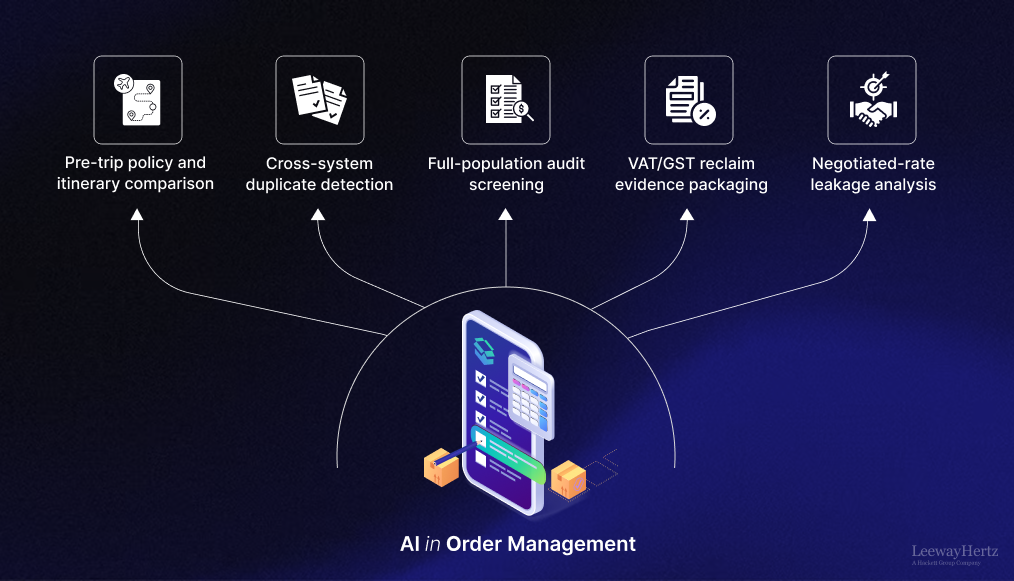
Order management is the governed process through which an organization receives customer demand, converts it into an executable sales order, confirms what it can supply and when, coordinates fulfillment, communicates changes, and closes the order against the appropriate commercial and operational records. It connects the customer-facing commitments made by sales with the inventory, production, warehouse, transportation, billing, credit, tax, and compliance systems responsible for carrying them out.
In many enterprises, however, the customer order is not a single clean record. The commercial intent may arrive as an X12 850 purchase order, a customer portal submission, an API payload, an email attachment, a sales representative request, a blanket-order release, or a marketplace transaction. The order may then need to be reconciled against customer master data, pricing agreements, product substitutions, requested delivery dates, credit status, available-to-promise quantities, export restrictions, warehouse capacity, and transportation constraints.
This fragmentation is what makes order management a suitable area for AI. The challenge is not simply capturing the order, but interpreting its content, connecting it with the relevant enterprise records, and identifying issues before the order moves forward. AI in order management is therefore not a generic chatbot placed over an order screen. It may involve document intelligence extracting line items from emailed purchase orders, anomaly detection identifying a unit-of-measure mismatch, predictive analytics estimating the risk of a requested delivery date being missed, or natural-language generation preparing a customer acknowledgment from approved order and availability records.
The most valuable AI opportunities emerge when order management is mapped beyond broad process labels and into the specific activities that make up the work. A goal such as “automate order management” does not identify which records the AI must use, which systems it must access, what output it should produce, or where human approval is required. At the process and sub-process level, these requirements become clear. Order ingestion, price validation, credit release, allocation, order rescheduling, shipment-status communication, and return authorization each rely on different artifacts, business rules, system dependencies, and decision boundaries.
This article, therefore, maps the order management operating model across functions, processes, and sub-processes to show where AI can be applied, what each opportunity requires, which decisions remain with people, and how the work can be structured into governed agentic workflows.
- How AI is transforming order management operations
- Why AI use cases in order management must be mapped at the sub-process level
- Order management operating model and AI opportunity mapping across order management processes
- High-value AI use cases in order management
- How agentic AI works in order management workflows
- How to prioritize AI use cases in order management
- Governance, risk, and responsible AI in order management
- How ZBrain operationalizes AI use cases in order management
- Future of AI in order management
How AI is transforming order management operations
Traditional order management systems are effective at recording structured transactions and applying predefined rules. The difficulty arises when order execution depends on incomplete documents, conflicting master data, unstructured customer instructions, changing supply conditions, and exceptions that span several systems.
Consider a customer order requesting 500 units across three delivery locations. The purchase order may contain customer-specific product codes, negotiated pricing, a delivery window rather than a single date, and routing instructions in a free-text note. The order management team may need to compare that order with the sales contract, product cross-reference table, inventory position, production plan, customer credit record, distribution-center capacity, and transportation lead time before issuing an acknowledgment.
AI can assist across five types of order management work:
-
Document-heavy work: Customer purchase orders, order forms, contracts, routing guides, tax certificates, export documents, bills of lading, advanced shipping notices, proofs of delivery, and return requests can be checked for missing fields, contradictory instructions, and inconsistent identifiers before a reviewer begins work.
-
Narrative-heavy work: Order acknowledgments, exception summaries, change explanations, escalation packets, customer-status updates, and return-disposition notes can be drafted from approved transaction and policy records.
-
Exception-heavy work: Price discrepancies, blocked orders, allocation conflicts, failed EDI transactions, delivery-date risks, short shipments, substitutions, duplicate orders, and return claims can be classified and prioritized for the responsible specialist.
-
Knowledge-heavy work: Customer agreements, substitution policies, allocation rules, incoterms, routing guides, credit policies, tax requirements, and trade-compliance procedures can be retrieved and compared with the order under review.
-
Workflow-heavy work: Multi-system processes such as credit release, order rescheduling, partial-shipment approval, cancellation handling, and return authorization can benefit from AI assembling the next work packet and routing it to the correct role.
The practical design rule is to apply a specific AI capability to a specific order artifact and define what changes in the work. AI may extract, compare, predict, classify, summarize, or prepare. A named employee must retain responsibility for commercial commitments, customer exceptions, credit decisions, compliance determinations, inventory allocation overrides, financial adjustments, and other risk-bearing actions.
Build governed AI workflows for order management
Design, validate, and scale AI workflows across order capture, order promising, fulfillment coordination, exception management, and returns, with defined review boundaries.
Why AI use cases in order management must be mapped at the sub-process level
An order-entry use case illustrates why broad labels are insufficient. A customer service representative may receive a purchase order and enter it into an ERP system, but that apparent activity can include document classification, customer identification, sold-to and ship-to validation, product-code translation, unit-of-measure conversion, duplicate detection, requested-date interpretation, price comparison, and exception routing.
Each of these activities has different inputs, system dependencies, failure modes, and owners.
A better approach is to map AI use cases to the order management operating model:
Function: A governed operational domain with its own accountability, such as order capture, commercial validation, order promising, or returns management.
Process: A workflow area within the function, such as order ingestion, pricing validation, availability checking, or return authorization.
Sub-process: A specific work activity, such as extracting purchase-order lines, matching customer product numbers, calculating an available-to-promise date, or verifying return eligibility.
AI-enabled opportunity: A specific capability applied to a specific artifact to change the work, such as document intelligence extracting line-level information from a purchase order or anomaly detection identifying an order quantity that conflicts with the customer’s standard pack size.
This detail determines which data must be available, where the AI output enters the workflow, which systems may be read or updated, and who must review the result. It also separates low-risk assistance, such as drafting an exception summary, from higher-risk recommendations, such as proposing which customer receives constrained inventory.
For example, requested-date interpretation depends on the customer purchase order, shipping calendar, lead-time rules, and delivery terms. Credit release depends on the order value, customer exposure, open receivables, credit limit, risk class, and credit policy. Export clearance depends on the parties, destination, product classification, end use, license requirements, and current restricted-party information. These activities belong to the same order lifecycle, but they require different AI designs.
Sub-process mapping turns a broad transformation objective into a set of bounded, testable, and governable workflows.
Order management operating model and AI opportunity mapping across order management processes
The operating model below covers the sales-order lifecycle for B2B manufacturers, wholesalers, and distributors.
Function 1: Order management strategy, policy, and governance
Defines how orders should be accepted, validated, promised, changed, fulfilled, and closed.
This function establishes the operating rules applied across order channels, customer segments, business units, and fulfillment models. It converts commercial and operational policy into decision rights, service levels, exception thresholds, and control requirements that downstream teams can execute consistently.
Teams involved: Order management leadership, sales operations, supply-chain planning, finance, credit, legal, compliance, customer service, enterprise architecture, data governance, and internal audit.
What AI helps with: Multi-source aggregation can compare operating procedures, customer agreements, service-level rules, and exception history. Classification can organize policy exceptions by cause and business impact. Natural-language generation can prepare revised operating procedures and control documentation from approved policy decisions.
What humans continue to own: Leaders set customer-service policy, approve allocation priorities, define commercial tolerance levels, assign decision rights, and authorize changes to controls. AI compares, summarizes, and drafts but does not establish policy, approve exceptions, or attest to control effectiveness.
| Process | Sub-process | Key AI-enabled opportunities |
|---|---|---|
| Operating-model design | Channel and order-type segmentation | Classification groups historical orders by channel, fulfillment model, customer segment, and exception profile to support differentiated operating rules. |
| Service-level definition | Predictive analytics compares order-cycle and delivery records with service commitments to identify service levels that frequently fail under current constraints. | |
| Policy management | Order acceptance rule design | Policy comparison checks proposed acceptance rules against contracts, credit standards, compliance requirements, and fulfillment capabilities. |
| Exception authority design | Multi-source aggregation connects exception values, causes, approvals, and outcomes to identify where decision rights are unclear or inconsistently applied. | |
| Policy and control governance | Control inventory and ownership | Natural-language generation prepares a control inventory from process maps, approval matrices, system rules, and audit findings. |
| Policy-change impact assessment | Simulation estimates which order types, customers, systems, and teams would be affected by a proposed rule change. |
Highest-value opportunities
-
Policy-change impact assessment, because one rule can affect multiple channels, customer segments, and systems.
-
Exception authority design, because unclear decision rights create delays and inconsistent commitments.
-
Control inventory preparation, because order controls are often distributed across procedures and system configurations.
Example agentic workflow
- A policy-analysis workflow begins with a proposed revision to the order-cancellation policy.
- The agent retrieves the current policy, customer-contract clauses, approval matrix, order history, and cancellation reason codes.
- It identifies affected customer segments, order statuses, financial thresholds, and system rules.
- It prepares an impact report and proposed control updates.
- Order management, finance, legal, and supply-chain owners review and approve or reject the proposed changes.
- Approved requirements are handed to the relevant process and system owners under existing change governance.
Function 2: Customer, product, and commercial master readiness
Ensures that the reference data required to create and execute an order is usable and aligned.
Order processing depends on accurate sold-to, bill-to, ship-to, payer, product, unit-of-measure, pricing, tax, and partner records. This function prepares and governs the master-data relationships that allow incoming demand to become a valid sales order.
Teams involved: Customer master data, product master data, sales operations, pricing, tax, customer service, data stewardship, finance, and IT integration teams.
What AI helps with: Entity resolution can connect customer names and addresses to approved master records. Classification can map customer product numbers to internal SKUs. Anomaly detection can identify duplicate accounts, invalid units of measure, and conflicting partner relationships.
What humans continue to own: Data stewards approve new records, customer hierarchies, product cross-references, tax classifications, and changes to material attributes. AI proposes matches and flags anomalies but does not create authoritative master records or approve material changes.
| Process | Sub-process | Key AI-enabled opportunities |
|---|---|---|
| Customer data readiness assessment | Sold-to, bill-to, ship-to, and payer validation | Entity resolution compares incoming customer identifiers and addresses with approved business-partner records and flags ambiguous matches. |
| Customer hierarchy maintenance | Graph analysis identifies inconsistent parent-child, buying-group, and delivery-location relationships across CRM and ERP records. | |
| Product data readiness assessment | Customer-product cross-reference | Classification maps customer item numbers and descriptions to internal SKUs using approved cross-reference and catalog data. |
| Unit-of-measure and pack conversion | Anomaly detection checks ordered quantities against conversion factors, minimum order quantities, case packs, and pallet configurations. | |
| Commercial data readiness check | Contract and price-record alignment | Document intelligence extracts customer, product, validity, and price conditions from approved agreements for comparison with ERP condition records. |
| Data quality management | Duplicate and incomplete record detection | Anomaly detection identifies near-duplicate customers, missing partner roles, expired certificates, and incomplete fulfillment attributes. |
Highest-value opportunities
-
Customer-product cross-reference, because mismatched item identifiers frequently block straight-through order entry.
-
Partner-role validation, because incorrect ship-to, payer, or bill-to assignments affect fulfillment and billing.
-
Unit-of-measure checking, because conversion errors can materially alter quantities and order value.
Example agentic workflow: Customer item-to-SKU mapping and master data validation
- The workflow begins when an incoming purchase order contains an unrecognized customer item number.
- The agent retrieves the customer’s product cross-reference, prior accepted orders, catalog descriptions, and unit-of-measure rules.
- It proposes ranked internal-SKU matches and explains the supporting evidence.
- A product-data steward or order specialist confirms the correct mapping.
- The approved cross-reference is passed to the master-data workflow.
- The order returns to validation under existing data-governance controls.
Function 3: Order-channel enablement and transaction integration
Maintains the channels and message exchanges through which customer demand enters the enterprise.
Orders may arrive through EDI, APIs, portals, e-commerce platforms, marketplaces, email, mobile applications, or sales-assisted entry. X12 maintains transaction sets for business exchanges, including the 850 Purchase Order, 855 Purchase Order Acknowledgment, 856 Ship Notice/Manifest, 860 Purchase Order Change Request, 869 Order Status Inquiry, 870 Order Status Report, and 810 Invoice. [1]
Teams involved: B2B integration, EDI operations, e-commerce, customer onboarding, API engineering, IT support, sales operations, and order management.
What AI helps with: Anomaly detection can identify message structure and data pattern failures. Classification can map errors to likely trading-partner, configuration, or master-data causes. Natural-language generation can prepare partner-facing issue summaries from technical logs.
What humans continue to own: Integration teams approve mapping changes, trading-partner configurations, production deployments, security credentials, and message reprocessing. AI diagnoses and prepares recommendations but does not alter production integrations without authorization.
| Process | Sub-process | Key AI-enabled opportunities |
|---|---|---|
| Trading-partner onboarding | Message and field requirement discovery | Document intelligence extracts segment, field, code-list, acknowledgment, and timing requirements from implementation guides. |
| Mapping validation | Schema comparison checks partner maps against internal canonical-order models and identifies unmapped or conflicting fields. | |
| Transaction monitoring | Failed-message diagnosis | Classification groups failed EDI or API transactions by syntax, mapping, reference data, authorization, or endpoint cause. |
| Duplicate transmission detection | Anomaly detection compares control numbers, purchase-order numbers, timestamps, line content, and partner identifiers. | |
| Channel performance analysis | Channel-specific exception analysis | Predictive analytics identifies channels, partners, or message versions associated with high rejection or manual-touch rates. |
| Change management | Partner-impact assessment | Multi-source aggregation identifies which customers, maps, tests, and downstream processes are affected by a schema change. |
Highest-value opportunities
-
Failed-message diagnosis, because unresolved integration errors prevent orders from entering the operating workflow.
-
Duplicate transmission detection, because replayed messages can create duplicate demand.
-
Mapping validation, because field-level inconsistencies propagate into pricing, delivery, and billing exceptions.
Example agentic workflow: EDI transaction failure diagnosis and controlled reprocessing
- The workflow begins with a failed X12 850 message and its validation log.
- The agent compares the message with the partner implementation guide, active map, code lists, and successful prior transactions.
- It identifies the probable failing segment and prepares a correction recommendation.
- An EDI analyst validates the diagnosis and chooses whether to correct the map, partner configuration, or source data.
- The message is reprocessed only after approval.
- The transaction result is recorded under existing integration-change controls.
Function 4: Order intake, extraction, and creation
Converts customer demand from multiple channels into a structured draft sales order.
This function captures the customer’s requested products, quantities, destinations, dates, references, and instructions. It preserves the source order while creating the structured record required for validation and execution.
Teams involved: Customer service, order entry, inside sales, digital commerce, EDI operations, shared services, and sales administration.
What AI helps with: Document intelligence can extract header, line, delivery, and reference data from purchase orders and attachments. Classification can identify order type and route nonstandard requests. Entity resolution can connect extracted values to approved customer and product records.
What humans continue to own: Order specialists confirm ambiguous data, resolve conflicting customer instructions, and approve manually entered or corrected order content. AI extracts and proposes, but does not commit to an uncertain order as an accepted customer obligation.
| Process | Sub-process | Key AI-enabled opportunities |
|---|---|---|
| Order receipt | Order and attachment classification | Classification identifies purchase orders, releases, changes, cancellations, schedules, drawings, tax documents, and routing instructions. |
| PO data extraction | Header-data extraction | Document intelligence extracts purchase-order number, order date, sold-to, ship-to, currency, payment terms, and requested delivery information. |
| Line-item extraction | Document intelligence extracts item number, description, quantity, unit of measure, price, requested date, and line-level instructions. | |
| Order creation | Order-type determination | Classification proposes standard order, blanket release, rush order, drop shipment, sample, replacement, or consignment transaction type. |
| Source-to-system field mapping | Semantic mapping connects extracted customer fields with ERP sales-order fields and records extraction confidence. | |
| Order intake control | Duplicate-order detection | Anomaly detection compares customer, purchase-order number, line content, total value, channel, and receipt time against existing orders. |
Highest-value opportunities
-
Line-item extraction, because manual transcription effort grows with order volume and document variability.
-
Duplicate-order detection, because duplicates can consume inventory and trigger erroneous fulfillment.
-
Attachment classification, because customer instructions are often distributed across several files.
Example agentic workflow: Email purchase order capture and ERP order creation
- The workflow begins when an emailed purchase order and a routing guide attachment enter the order mailbox.
- The agent classifies the files and extracts order-header, line, destination, and requested-date data.
- It maps customer product numbers to candidate internal SKUs and checks for duplicate orders.
- Low-confidence fields and unmatched items are placed in a review packet.
- An order-entry specialist confirms or corrects the draft order.
- The approved draft is created in the ERP and handed to order validation.
Function 5: Order validation and enrichment
Determines whether the draft order contains the information required for commercial and operational review.
Validation tests the sales order for completeness, consistency, permitted combinations, and alignment with customer-specific requirements. Enrichment adds approved reference information needed by later processes.
Teams involved: Order management, customer service, sales administration, master-data teams, pricing, tax, logistics, and sales account teams.
What AI helps with: Anomaly detection can flag unusual quantities, invalid dates, incompatible combinations, and missing references. Policy-grounded comparison can check the order against customer instructions and internal requirements. Natural-language generation can prepare a concise exception explanation.
What humans continue to own: Specialists resolve ambiguous customer intent, approve substitutions or corrections, and determine whether missing information can be accepted. AI identifies discrepancies and prepares options but does not alter the customer’s commercial request without confirmation.
| Process | Sub-process | Key AI-enabled opportunities |
|---|---|---|
| Purchase order completeness and required-field validation | Required-field checking | Rule-based validation and anomaly detection identify missing purchase-order references, destinations, contact details, requested dates, and item attributes. |
| Purchase order consistency validation | Header-to-line consistency checking | Anomaly detection identifies conflicting currencies, dates, ship-to locations, terms, and line-level instructions. |
| Product validation | SKU, status, and sales-area eligibility checking | Classification checks whether the product is active, saleable, permitted for the customer, and available in the requested sales organization. |
| Quantity validation | Minimum, multiple, and pack-size checking | Anomaly detection compares quantities with minimum order quantities, rounding profiles, case packs, and pallet multiples. |
| Date validation | Requested-date interpretation | Natural-language processing interprets delivery windows, “ship by” dates, “must arrive” dates, and customer calendar references. |
| Order enrichment | Order fulfillment data enrichment | Predictive recommendation proposes fulfillment attributes from approved customers, products, geography, and prior-order patterns. |
Highest-value opportunities
-
Requested-date interpretation, because a shipping date and delivery date represent different commitments.
-
Quantity validation, because pack and unit-of-measure errors affect availability and fulfillment.
-
Header-to-line consistency checking, because mixed instructions can create downstream execution failures.
Example agentic workflow: Draft order validation and discrepancy resolution
- The workflow begins with a draft order and its source purchase order.
- The agent runs completeness, product, quantity, destination, and date checks.
- It retrieves customer-specific ordering instructions and compares them with the draft.
- It prepares a discrepancy report with proposed corrections and evidence.
- An order specialist confirms the customer’s intent and approves any changes.
- The validated order is passed to commercial, credit, compliance, and availability checks.
Accelerate AI Solutions Development
Build fully functional solutions from your high-value use cases, based on specific operational needs and enterprise context.
Function 6: Pricing, terms, tax, and commercial validation
Confirms that the order reflects approved prices, discounts, charges, terms, and tax treatment.
Commercial validation connects the customer’s stated terms with contracts, quotations, price lists, rebate structures, freight terms, and ERP pricing conditions. It distinguishes evidence-supported variances from discrepancies that require sales or pricing review and approval.
Teams involved: Pricing, sales operations, customer service, tax, finance, sales account teams, deal desk, and contract administration.
What AI helps with: Document intelligence can extract prices and conditions from purchase orders, quotations, and contracts. Anomaly detection can identify unexplained differences. Multi-source comparison can assemble the records supporting a price or term.
What humans continue to own: Pricing managers approve overrides, sales leaders approve concessions, tax specialists determine disputed tax treatment, and authorized roles accept nonstandard commercial terms. AI compares and prepares but does not grant a discount, waive a charge, or change a contractual term.
| Process | Sub-process | Key AI-enabled opportunities |
|---|---|---|
| Price validation | Customer price comparison | Anomaly detection compares the ordered price with active contracts, quotations, price lists, condition records, and validity dates. |
| Discount validation | Discount and promotion eligibility checking | Classification checks customer, product, quantity, date, program, and agreement requirements against approved eligibility rules. |
| Charge validation | Freight, handling, and surcharge review | Multi-source aggregation compares the order with incoterms, routing rules, freight agreements, and applicable surcharge schedules. |
| Terms validation | Payment and delivery-term comparison | Document intelligence compares purchase-order terms with customer master records and approved contracts. |
| Tax validation | Exemption and jurisdiction checks | Rule-based analysis checks exemption certificates, ship-to jurisdiction, product tax category, and certificate validity. |
| Commercial exception handling | Deviation packet preparation | Natural-language generation prepares an approval packet showing the requested condition, approved baseline, financial effect, and supporting evidence. |
Highest-value opportunities
-
Customer price comparison, because price discrepancies frequently block order confirmation.
-
Commercial-exception packet preparation, because reviewers need consolidated evidence from several systems.
-
Tax-certificate validation, because expired or mismatched documentation can affect invoicing and compliance.
Example agentic workflow: Customer order price discrepancy investigation and resolution
- The workflow begins when the customer’s ordered price differs from the ERP-calculated price.
- The agent retrieves the applicable quotation, contract, price condition, customer hierarchy, order quantity, and validity dates.
- It classifies the discrepancy as a probable master-data error, expired agreement, quantity-break issue, or unapproved customer request.
- It prepares an exception packet with the financial difference.
- A pricing manager or authorized sales representative approves, rejects, or corrects the price.
- The approved outcome is recorded and returned to order validation.
Function 7: Credit, fraud, and trade-compliance review
Prevents an order from proceeding when the customer, transaction, product, destination, or exposure requires review.
This function applies financial risk and transaction-compliance controls before fulfillment. For U.S.-regulated exports, BIS guidance requires organizations to determine whether transaction parties are denied export privileges and to review prohibited end uses and end users. OFAC also expects organizations subject to U.S. jurisdiction to avoid unauthorized dealings with sanctioned parties and supports a tailored, risk-based compliance approach. [2]
Teams involved: Credit management, finance, trade compliance, export control, legal, fraud operations, sales, and order management.
What AI helps with: Predictive analytics can prioritize credit-review queues. Entity resolution can identify potential matches between transaction parties and restricted-party records. Classification can distinguish routine blocks from cases requiring specialist review.
What humans continue to own: Credit officers approve exposure, compliance specialists resolve screening matches, export officers determine licensing requirements, and authorized leaders approve releases. AI scores and assembles evidence but does not release a blocked order or make a legal determination.
| Process | Sub-process | Key AI-enabled opportunities |
|---|---|---|
| Credit control | Credit-limit and exposure checking | Predictive analytics combines order value, current exposure, payment history, overdue balance, risk class, and limit utilization to prioritize review. |
| Block-resolution packet preparation | Multi-source aggregation assembles the order, account exposure, open receivables, dispute status, guarantees, and prior release decisions. | |
| Fraud control | Order-pattern anomaly detection | Anomaly detection identifies unusual destination changes, quantities, product combinations, contact details, or ordering behavior. |
| Sanctions screening | Party-match review | Entity resolution compares sold-to, ship-to, payer, consignee, and other parties with current sanctions and denied-party information. |
| Export control | Product, destination, end-use, and license review | Classification organizes product classification, destination, end-use statement, customer, and license records for specialist assessment. |
| Compliance release | Hold disposition | Natural-language generation prepares the evidence, match rationale, unresolved questions, and recommended next step for an authorized reviewer. |
Highest-value opportunities
-
Credit-block packet preparation, because the required evidence is distributed across order, receivables, dispute, and customer systems.
-
Restricted-party match review, because false positives require careful entity comparison.
-
Fraud-pattern detection, because unusual orders may appear valid at the field level.
Example agentic workflow: Trade compliance hold investigation and resolution
- The workflow begins when an order is placed on a trade-compliance hold.
- The agent retrieves the parties, addresses, ownership information, destination, products, classification records, and current screening results.
- It compares possible matches and prepares evidence for and against each match.
- A trade-compliance specialist determines whether the match is cleared, escalated, or blocked.
- Only an authorized reviewer releases the order.
- The decision, evidence, and system update are retained under compliance and recordkeeping controls.
Function 8: Availability, order promising, and allocation
Determines what quantity can be supplied, from where, and by which date.
Order promising connects customer demand with on-hand inventory, inbound supply, production capacity, lead times, allocation rules, warehouse calendars, and transportation constraints. Available-to-promise, or ATP, generally evaluates the supply that can be committed. Capable-to-promise, or CTP, extends the assessment to production or capacity that could satisfy the request.
Teams involved: Order management, demand and supply planning, production planning, inventory control, warehouse operations, logistics, sales, and customer service.
What AI helps with: Predictive analytics can estimate delivery-date risk using historical execution patterns. Simulation can compare fulfillment scenarios. Classification can identify the cause of an availability shortfall, while optimization methods can prepare allocation options within approved rules.
What humans continue to own: Planners and authorized commercial leaders approve allocation overrides, customer-priority changes, substitutions, expedites, and nonstandard partial-fulfillment decisions. AI predicts and prepares scenarios but does not make a binding customer commitment or reallocate constrained supply without approval.
| Process | Sub-process | Key AI-enabled opportunities |
|---|---|---|
| Product availability check | ATP input validation and exception analysis | Anomaly detection checks the supply, demand, lead-time, calendar, and reservation inputs used by the ATP result for inconsistencies. |
| Capacity check | CTP scenario preparation | Simulation evaluates production, component, labor, and capacity scenarios against the requested date. |
| Source determination | Plant and warehouse selection | Predictive recommendation compares inventory position, handling capacity, transit time, cost, customer rules, and fulfillment history. |
| Constrained-supply allocation planning | Constrained-supply option preparation | Optimization prepares allocation scenarios using approved customer priority, service-level, contract, and fairness rules. |
| Product substitution | Substitute-product evaluation | Classification compares substitute products with specifications, customer approvals, pricing, and availability. |
| Promise date commitment | Promise date risk assessment | Predictive analytics estimates the probability that a proposed ship or delivery date will be missed. |
Highest-value opportunities
-
Promise-date risk assessment, because a technically valid ATP date may still be operationally fragile.
-
Constrained-supply scenario preparation, because allocation decisions affect several customers and commercial relationships.
-
Alternative-product assessment, because substitution requires product, contract, price, and customer approval context.
Example agentic workflow: Order availability shortfall assessment and resolution
- The workflow begins when ATP cannot satisfy the requested quantity and date.
- The agent retrieves inventory, inbound supply, production plans, open demand, customer priority, approved substitutes, and transportation lead times.
- It prepares options for partial shipment, alternate sourcing, revised dates, or approved substitution.
- A planner and order-management specialist review the operational feasibility.
- The account owner or authorized commercial role approves the customer-facing option.
- The selected option is recorded and passed to order confirmation.
Function 9: Order confirmation, change, and orchestration
Turns a validated and promised order into a controlled customer commitment and manages later amendments.
The order acknowledgment states what the seller has accepted, rejected, changed, or scheduled. Subsequent changes may affect price, quantities, destinations, delivery dates, reservations, production, warehouse work, transportation, and billing.
Teams involved: Order management, customer service, sales, planning, warehouse operations, transportation, pricing, finance, and EDI operations.
What AI helps with: Natural-language generation can prepare acknowledgments from approved order records. Change-impact analysis can identify affected lines and downstream activities. Classification can route changes by urgency and reversibility.
What humans continue to own: Authorized employees approve nonstandard commitments, customer-requested changes after cutoffs, cancellation charges, allocation effects, and amendments that affect price or delivery. AI drafts and assesses impact but does not alter a confirmed commitment without approval.
| Process | Sub-process | Key AI-enabled opportunities |
|---|---|---|
| Order confirmation | Acknowledgment preparation | Natural-language generation prepares an acknowledgment from approved quantities, dates, prices, substitutions, and exception decisions. |
| Order confirmation consistency check | Anomaly detection compares the acknowledgment with the approved sales order and source purchase order before transmission. | |
| Order change intake | Change-request extraction | Document intelligence extracts revised quantities, dates, locations, cancellations, and line references from customer requests or X12 860 messages. |
| Order change assessment | Downstream impact analysis | Graph analysis identifies affected inventory reservations, production orders, deliveries, warehouse tasks, transportation bookings, and invoices. |
| Order change approval | Cutoff and authority determination | Policy comparison identifies whether the requested change is permitted and which role must approve it. |
| Order orchestration | Dependency and status coordination | Multi-source aggregation tracks the completion of commercial, compliance, availability, delivery, and communication requirements. |
Highest-value opportunities
-
Change-impact analysis, because a small customer amendment may affect several committed activities.
-
Confirmation consistency checking, because the acknowledgment becomes the customer-facing statement of acceptance.
-
Cutoff and authority determination, because permissions differ by order status and financial effect.
Example agentic workflow: Customer order amendment assessment and approval
- The workflow begins with a customer request to reduce the quantity and change the delivery location.
- The agent extracts the requested amendments and identifies the affected order lines.
- It checks cutoff rules and evaluates inventory, production, warehouse, transportation, pricing, tax, and billing effects.
- It prepares the required approval packet and a draft customer response.
- Authorized operations and commercial reviewers approve, modify, or reject the change.
- Approved updates are posted to the order and communicated through the agreed channel.
Function 10: Fulfillment release and shipment coordination
Translates the confirmed order into controlled fulfillment instructions and maintains alignment through shipment.
This function does not physically pick, pack, or transport goods. It ensures that the systems and teams responsible for those activities receive complete, correctly sequenced, and authorized order information.
Teams involved: Order management, warehouse operations, transportation, logistics, inventory control, production, customer service, and carrier-integration teams.
What AI helps with: Anomaly detection can identify delivery blocks, incomplete routing data, and mismatches between the order and delivery documents. Predictive analytics can flag shipments at risk of missing cutoffs or delivery windows. Natural-language generation can prepare exception summaries.
What humans continue to own: Warehouse and logistics personnel approve release exceptions, delivery splits, shipment changes, expedites, and transportation alternatives. AI flags and prepares but does not direct physical execution or approve a risk-bearing shipment change.
| Process | Sub-process | Key AI-enabled opportunities |
|---|---|---|
| Release readiness assessment | Fulfillment-block review | Classification identifies credit, compliance, master-data, inventory, delivery, and documentation blocks preventing release. |
| Order-to-delivery record consistency validation | Order-to-delivery consistency checking | Anomaly detection compares order lines, confirmed quantities, destinations, dates, batches, and handling requirements with the delivery record. |
| Routing readiness assessment | Routing-guide compliance checking | Document intelligence compares shipment instructions with customer routing guides, carrier rules, labeling requirements, and appointment constraints. |
| Shipment coordination | Split and partial-shipment analysis | Simulation evaluates the service, cost, inventory, and customer effects of partial or consolidated shipments. |
| Shipment documentation | ASN preparation and validation | Data validation checks the advanced shipping notice content against delivery, handling-unit, carrier, and order records. |
| Delivery-risk management | Cutoff and ETA risk prediction | Predictive analytics identifies orders likely to miss warehouse cutoffs, carrier collection, appointment, or requested-delivery windows. |
Highest-value opportunities
-
Fulfillment-block review, because unresolved holds create queue aging and missed commitments.
-
Routing-guide compliance, because customer-specific instructions are often detailed and document-based.
-
ETA risk prediction, because earlier intervention creates more viable recovery options.
Example agentic workflow: Warehouse release block investigation and resolution
- The workflow begins when a confirmed order approaches its warehouse-release cutoff but remains blocked.
- The agent retrieves the block code, order history, credit and compliance status, inventory reservation, routing requirements, and fulfillment calendar.
- It identifies the unresolved dependency and prepares the relevant evidence.
- The responsible credit, compliance, planning, or order-management role decides whether the block can be cleared.
- The warehouse release proceeds only after the system records the authorized disposition.
- Subsequent delivery and shipment statuses are monitored under existing operations controls.
Function 11: Order status, exception, and customer communication
Maintains an accurate view of order progress and coordinates responses when execution departs from the commitment.
Order-status work connects sales-order, delivery, warehouse, production, shipment, carrier, and customer records. It distinguishes informational inquiries from exceptions requiring operational or commercial decisions.
Teams involved: Customer service, order management, sales, logistics, planning, warehouse operations, customer-success teams, and escalation management.
What AI helps with: Multi-source aggregation can assemble a current order narrative across systems. Classification can route inquiries and exceptions. Predictive analytics can identify orders likely to become late before a formal milestone is missed.
What humans continue to own: Customer-facing teams approve revised commitments, compensation, expedite decisions, and explanations involving contractual or commercial judgment. AI summarizes and drafts but does not promise a new date or authorize a concession.
| Process | Sub-process | Key AI-enabled opportunities |
|---|---|---|
| Order status inquiry | Cross-system status assembly | Multi-source aggregation connects order, delivery, warehouse, production, shipment, carrier, and invoice milestones. |
| Inquiry classification and routing | Classification distinguishes routine status requests, delivery risks, shortages, documentation requests, and commercial disputes. | |
| Exception detection | Milestone deviation monitoring | Anomaly detection identifies missing confirmations, overdue releases, unprocessed deliveries, stalled shipments, and inconsistent statuses. |
| Exception prioritization | Customer-impact scoring | Predictive analytics ranks exceptions by value, requested date, customer tier, contractual impact, and recovery window. |
| Recovery communication | Customer update preparation | Natural-language generation prepares an evidence-backed status update using approved dates, causes, and recovery actions. |
| Order exception escalation and decision packet preparation | Escalation packet preparation | Multi-source aggregation prepares the order history, commitments, current constraints, owners, options, and required decisions. |
Highest-value opportunities
-
Cross-system status assembly, because employees often spend time reconciling several incomplete views.
-
Customer-impact scoring, because not every delayed order has the same urgency or consequence.
-
Escalation packet preparation, because faster context assembly gives decision-makers more time to act.
Example agentic workflow: Delivery risk assessment and customer communication
- The workflow begins when predictive monitoring flags a confirmed delivery date at risk.
- The agent assembles the order, production, warehouse, shipment, carrier, and customer-commitment records.
- It identifies the probable cause and prepares recovery options already permitted by policy.
- An operations owner confirms feasibility, and an account or customer-service owner approves the revised message.
- The approved update is sent through the agreed customer channel.
- The communication and revised milestone are recorded in the order history.
Function 12: Billing handoff, closure, and reconciliation
Confirms that the executed order is ready for billing and that the lifecycle records agree before closure.
This function sits at the boundary between order management and downstream billing or accounts receivable. It verifies that the order, delivery, shipment, and billing-relevant records are complete and consistent.
Teams involved: Order management, billing, finance operations, customer service, warehouse operations, logistics, and revenue-accounting support.
What AI helps with: Anomaly detection can identify order-delivery-invoice mismatches. Classification can group billing blocks by cause. Multi-source aggregation can prepare the evidence required to resolve incomplete or inconsistent records.
What humans continue to own: Billing and finance personnel approve billing releases, credit or debit adjustments, order closure, and treatment of unresolved differences. AI reconciles and prepares but does not create or approve a financial adjustment.
| Process | Sub-process | Key AI-enabled opportunities |
|---|---|---|
| Billing readiness assessment | Billing-block diagnosis | Classification identifies missing proof of shipment, incomplete delivery, pricing hold, tax issue, customer reference, or master-data cause. |
| Reconciliation | Order-delivery comparison | Anomaly detection compares ordered, confirmed, delivered, canceled, returned, and open quantities at the line level. |
| Delivery-invoice comparison | Anomaly detection identifies quantity, price, freight, tax, currency, and reference differences before invoice release. | |
| Document readiness | Billing-document completeness | Document intelligence checks proof of delivery, customer purchase-order reference, shipment record, and other required artifacts. |
| Closure | Open-order residue review | Classification identifies stale quantities, incomplete rejection codes, unclosed deliveries, and residual reservations. |
| Closure packet preparation | Natural-language generation summarizes fulfilled, canceled, returned, invoiced, and unresolved order positions for reviewer confirmation. |
Highest-value opportunities
-
Order-delivery-invoice comparison, because discrepancies create customer disputes and corrective work.
-
Billing-block diagnosis, because a block code alone may not reveal the underlying cause.
-
Open-order residue review, because stale orders distort demand and operational reporting.
Example agentic workflow: Billing block investigation and order reconciliation
- The workflow begins when a delivered order remains blocked from billing.
- The agent retrieves the order, delivery, shipment, proof-of-delivery, pricing, tax, and billing records.
- It identifies the missing or inconsistent artifact and prepares the resolution packet.
- The responsible order, logistics, tax, pricing, or billing specialist resolves the exception.
- A billing-authorized role confirms release.
- The order is reconciled and closed only after the required records agree.
Function 13: Cancellation, return, and claims management
Manages customer requests to stop, reverse, or challenge part of the order lifecycle.
This function covers cancellations before fulfillment, return merchandise authorizations after delivery, shortage or damage claims, replacement orders, and disposition handoffs. It connects the original order with policies, contracts, shipment evidence, product condition, and financial consequences.
Teams involved: Customer service, returns management, order management, sales, warehouse operations, quality, logistics, finance, claims, and legal teams.
What AI helps with: Document intelligence can extract request details and evidence. Classification can determine the likely request category. Policy comparison can check eligibility, while anomaly detection can identify repeated or inconsistent claim patterns.
What humans continue to own: Authorized employees approve cancellation charges, return eligibility, exceptions, claim settlements, replacements, credits, and physical disposition decisions. AI classifies, compares, and prepares but does not authorize a return, settlement, refund, or write-off.
| Process | Sub-process | Key AI-enabled opportunities |
|---|---|---|
| Cancellation | Cancellation eligibility review | Policy comparison checks order status, production commitment, shipment status, contract terms, and cancellation cutoff. |
| Cancellation-impact assessment | Graph analysis identifies affected inventory, production, warehouse, transportation, billing, and customer commitments. | |
| Return intake | Return-request extraction | Document intelligence extracts order, item, quantity, reason, condition, dates, serial or lot information, and supporting evidence. |
| Return authorization | Policy and warranty comparison | Classification compares the request with return windows, warranty terms, exclusions, customer agreements, and prior authorizations. |
| Claims management | Shortage, damage, and delivery-claim assessment | Multi-source aggregation connects purchase order, shipment, ASN, proof of delivery, carrier events, images, and claim records. |
| Return and claim analysis | Repeat-return and claim anomalies | Anomaly detection identifies unusual claim frequency, repeated products, destinations, reasons, or evidence patterns. |
Highest-value opportunities
-
Return eligibility review, because policy, order, shipment, and product evidence must be considered together.
-
Claim-evidence assembly, because documentation is distributed across customer, warehouse, and carrier systems.
-
Cancellation-impact assessment, because the reversibility of an order changes as execution advances.
Example agentic workflow: Customer return eligibility assessment and authorization
- The workflow begins with a customer return request and supporting files.
- The agent extracts the order, product, quantity, reason, dates, and evidence.
- It retrieves the original order, delivery, warranty, customer agreement, return policy, and prior claims.
- It prepares an eligibility assessment and lists unresolved evidence.
- A returns specialist approves, rejects, or escalates the request.
- Any RMA, replacement, credit request, or warehouse instruction proceeds under the existing authorization process.
Function 14: Order quality assurance and control monitoring
Tests whether order processes and controls are operating as designed.
Quality assurance examines order accuracy, approval compliance, exception handling, acknowledgment quality, release controls, and closure discipline. It provides evidence for management review, internal audit, and corrective action.
Teams involved: Order quality, process excellence, internal controls, internal audit, customer service leadership, finance controls, compliance, and data governance.
What AI helps with: Anomaly detection can select unusual transactions for review. Classification can group control failures and recurring defect patterns. Natural-language generation can prepare test narratives and corrective-action summaries.
What humans continue to own: Control owners determine test scope, assess deficiencies, approve remediation, and attest to control performance. AI selects, compares, and drafts but does not conclude that a control is effective or close an audit finding.
| Process | Sub-process | Key AI-enabled opportunities |
|---|---|---|
| Transaction QA | Order-accuracy sampling | Anomaly detection selects orders with unusual values, overrides, changes, delays, or master-data patterns for review. |
| Control testing | Approval-path verification | Process mining compares actual price, credit, compliance, allocation, change, and return approvals with required paths. |
| Communication QA | Acknowledgment and update review | Language analysis checks customer communications for consistency with approved order facts and required content. |
| Defect analysis | Root-cause classification | Classification groups defects by channel, customer, product, process, system, policy, and ownership cause. |
| Return issue remediation and corrective-action planning | Corrective-action preparation | Natural-language generation prepares issue statements, evidence summaries, proposed owners, and follow-up requirements. |
| Evidence management | Audit-evidence assembly | Multi-source aggregation connects source artifacts, AI outputs, reviewer decisions, approvals, and system updates. |
Highest-value opportunities
-
Approval-path verification, because manual sampling may miss systemic bypasses.
-
Root-cause classification, because recurring defects often appear under inconsistent reason codes.
-
Audit-evidence assembly, because evidence is distributed across workflows and systems.
Example agentic workflow: Order change and override control testing and remediation
- The workflow begins with a monthly population of changed and overridden orders.
- The agent selects risk-based samples and retrieves the source order, change request, approval history, customer communication, and system updates.
- It compares the actual path with the required control.
- A control tester reviews the evidence and determines whether an exception occurred.
- The control owner approves any corrective action.
- Test results and remediation evidence are retained under the organization’s control framework.
Function 15: Order performance analytics and continuous improvement
Measures how effectively the operating model converts customer demand into accurate, timely, and controlled fulfillment.
This function connects operational metrics with process causes. Common measures include order-entry accuracy, first-pass yield, touchless-order rate, order-confirmation cycle time, fill rate, backorder rate, order-cycle time, on-time in-full performance, perfect-order performance, cancellation rate, return rate, and exception aging.
Teams involved: Order management analytics, sales operations, supply-chain analytics, customer service leadership, finance, process excellence, data teams, and executive management.
What AI helps with: Predictive analytics can identify drivers of delay and failure. Process mining can reveal rework and queue transitions. Simulation can estimate the operational effect of proposed policy or process changes.
What humans continue to own: Business leaders define metrics, validate causal interpretations, approve improvement priorities, and decide whether customer, policy, process, or system changes are appropriate. AI identifies patterns and prepares scenarios but does not set targets or authorize operating-model changes.
| Process | Sub-process | Key AI-enabled opportunities |
|---|---|---|
| Performance measurement | KPI calculation and validation | Anomaly detection identifies incomplete milestones, inconsistent timestamps, and denominator changes affecting reported metrics. |
| Flow analysis | Order-path and rework analysis | Process mining identifies loops, repeated blocks, handoffs, queue aging, and deviations from the intended process. |
| Order performance analysis | Performance driver identification | Predictive analytics estimates which customer, product, channel, plant, policy, or process factors contribute to missed outcomes. |
| Customer analysis | Service-pattern segmentation | Classification groups customers by ordering pattern, exception frequency, channel behavior, and service needs. |
| Improvement planning | Scenario simulation | Simulation estimates how changes to cutoffs, staffing, policies, allocation, or channel adoption may affect flow and service. |
| Benefit tracking | Intervention outcome review | Causal and comparative analysis assesses whether an approved process change produced the expected operational result. |
Highest-value opportunities
-
Order-path analysis, because the average cycle time can conceal repeated loops and queue delays.
-
Delay-driver analysis, because the visible exception may not be the underlying cause.
-
KPI validation, because inconsistent milestone definitions can undermine performance decisions.
Example agentic workflow: Order performance analysis and process improvement
- The workflow begins with the monthly order-performance dataset and approved KPI definitions.
- The agent validates timestamps and populations, then maps actual order paths.
- It identifies high-volume delay patterns and connects them with customers, products, channels, blocks, and handoffs.
- It prepares improvement scenarios and identifies assumptions.
- Process owners review the findings and approve any intervention.
- Approved changes enter normal policy, process, and system governance.
Accelerate AI Solutions Development
Build fully functional solutions from your high-value use cases, based on specific operational needs and enterprise context.
High-value AI use cases in order management
The strongest use cases improve a high-volume decision point or exception without allowing the AI system to make an uncontrolled commercial, compliance, financial, or fulfillment decision.
| Use case | Function | How AI creates high-value impact |
|---|---|---|
| Purchase-order extraction and draft creation | Order intake | Document intelligence converts heterogeneous purchase orders into reviewable header and line records, reducing transcription while preserving the source artifact. |
| Customer-product code matching | Master data readiness | Entity resolution maps customer item numbers to internal SKUs and surfaces low-confidence mappings for data-steward review. |
| Duplicate-order detection | Order intake | Anomaly detection identifies repeat transmissions across email, EDI, portals, and APIs before duplicate demand is committed. |
| Order completeness and consistency review | PO validation | Anomaly detection checks header, line, destination, date, and quantity relationships before downstream processing. |
| Price-discrepancy diagnosis | Commercial validation | Multi-source comparison assembles the contract, quotation, condition record, quantity break, and validity evidence behind a difference. |
| Credit-block resolution support | Credit management | Multi-source aggregation connects order value, exposure, overdue balances, disputes, guarantees, and prior releases for a credit officer. |
| Restricted-party match assessment | Trade compliance | Entity resolution compares transaction parties with current screening data and presents supporting and conflicting identifiers. |
| Promise-date risk prediction | Order promising | Predictive analytics estimates whether a proposed delivery date is operationally achievable, beyond the deterministic ATP response. |
| Constrained-supply scenario preparation | Constrained-supply allocation | Optimization prepares policy-constrained allocation options for the planner and commercial review. |
| Order-change impact analysis | Order orchestration | Graph analysis identifies reservations, production, delivery, warehouse, transport, billing, and customer communications affected by an amendment. |
| Fulfillment-block diagnosis | Fulfillment coordination | Classification identifies the probable owner and the missing evidence behind blocked releases. |
| Cross-system order-status assembly | Customer communication | Multi-source aggregation creates a current order narrative from ERP, planning, warehouse, transport, carrier, and billing milestones. |
| Billing-readiness reconciliation | Order closure | Anomaly detection compares order, delivery, shipment, and billing records before invoice release. |
| Return-eligibility assessment | Returns handling | Policy comparison connects the return request with the original order, delivery, warranty, customer agreement, and evidence. |
| Order-flow analysis | Performance analytics | Process mining identifies rework loops, queue aging, control bypasses, and repeated exceptions across the lifecycle. |
A use case earns high-value status when the underlying activity is frequent, artifact-rich, operationally consequential, and bounded by a clear review role. TAI creates the most value when applied to a clearly defined operational decision rather than a broader process. It comes from improving a specific handoff, comparison, forecast, or exception decision that affects downstream execution.
How agentic AI works in order management workflows
Agentic AI can coordinate multi-step order-management work when it operates within a defined sequence. The workflow should specify its starting artifact, permitted data sources, tools, intermediate checks, escalation conditions, approval point, and final system update.
Here are some examples:
Purchase-order intake and validation
-
Agent role: Convert a customer purchase order into a reviewable draft order.
-
Classify the email and attachments.
-
Extract header, line, delivery, and reference data.
-
Match customer and product identifiers to approved master records.
-
Check quantities, units of measure, dates, duplicates, and required fields.
-
Prepare a discrepancy packet for low-confidence or invalid fields.
-
An order specialist confirms the draft before order creation.
Credit-block resolution
-
Agent role: Prepare the evidence required for a credit officer to review a blocked order.
-
Retrieve the blocked order, customer exposure, credit limit, open receivables, overdue items, disputes, guarantees, and prior release decisions.
-
Identify which policy threshold caused the block.
-
Summarize the exposure and unresolved risk.
-
Route the packet to the assigned credit officer.
-
The credit officer releases, rejects, or escalates the order.
At-risk delivery management
-
Agent role: Detect delivery risk and prepare feasible recovery options.
-
Monitor promised dates against production, warehouse, shipment, carrier, and appointment milestones.
-
Estimate the likelihood of missing the customer commitment.
-
Retrieve permitted recovery options, including alternate source, partial shipment, or revised date.
-
Prepare an operational and customer-impact summary.
-
The operations team confirms feasibility, and an authorized customer-facing role approves the communication.
Return-authorization preparation
-
Agent role: Assemble a return request and compare it with the approved policy.
-
Extract the original order, item, quantity, reason, condition, dates, and evidence.
-
Retrieve delivery, warranty, return policy, customer agreement and prior claim records.
-
Identify missing documentation and policy exceptions.
-
Prepare an eligibility assessment.
-
A returns specialist approves, rejects, or escalates the request before any RMA or financial action is initiated.
The review boundary is the safety property. AI can coordinate evidence and prepare a recommendation, but an assigned person confirms every risk-bearing judgment before a commitment, release, allocation, adjustment, or authorization proceeds.
Accelerate AI Solutions Development
Build fully functional solutions from your high-value use cases, based on specific operational needs and enterprise context.
How to prioritize AI use cases in order management
Order management contains many potential AI opportunities, but not every opportunity is equally ready for implementation or carries the same level of risk. Prioritization should begin with the sub-process, not with the model or user interface.
| Criterion | What to ask |
|---|---|
| Volume and frequency | Does the activity occur often enough for AI support to reduce manual preparation or review effort at scale? |
| Artifact availability | Are the purchase orders, agreements, master records, status events, policies, and exception records available in usable systems? |
| Review boundary | Can an assigned role confirm the AI output before it changes a commercial commitment, allocation, compliance status, shipment, or financial record? |
| Blast radius | If the output is wrong, is the impact limited to a draft, recommendation, or triage queue rather than a live customer or system action? |
| Business impact | Can the use case be connected to a credible outcome such as fewer order-entry errors, lower exception effort, faster confirmation, reduced billing blocks, or improved delivery reliability? |
Differences in implementation readiness and risk often become visible through four recurring failure patterns. The initiative may be framed broadly as “automate order management” rather than focused on a bounded sub-process. The required data and process artifacts may be incomplete or unreliable. Straight-through execution may be prioritized without preserving necessary governance and review boundaries. Expected savings may also be estimated before baseline volumes, handling times, exception rates, and review effort are established.
The strongest initial projects are therefore high-volume, artifact-rich sub-processes with a clean review boundary. Purchase-order extraction, product-code matching, duplicate detection, order-validation checks, price-discrepancy diagnosis, block-packet preparation, status assembly, and billing-readiness reconciliation often fit this profile.
Governance, risk, and responsible AI in order management
AI-enabled workflows in order management can influence customer commitments, product availability decisions, credit exposure reviews, regulatory controls, delivery execution, billing readiness, and financial adjustment processes. Governance must therefore define what AI can access, prepare, recommend, and update at each point in the lifecycle.
Human-in-the-loop oversight: AI may extract an order, score a delivery risk, rank exceptions, draft an acknowledgment, or prepare an allocation scenario. Order specialists confirm source interpretation; pricing managers approve deviations; credit officers approve releases; trade-compliance specialists resolve matches; planners approve constrained-supply decisions; and authorized returns or finance roles approve adjustments.
Regulatory and standards alignment: Organizations can use the NIST AI Risk Management Framework as a cross-sector structure for governing, mapping, measuring, and managing AI risk. NIST describes the framework as voluntary and use-case agnostic, with governance operating across the AI lifecycle. Industry-specific controls should then be mapped to relevant trade, sanctions, tax, contractual, accounting, privacy, security, and records requirements.
Bias mitigation and evidence retention: Bias can enter allocation priorities, credit-risk scores, fraud detection, customer segmentation, exception ranking, or service recommendations. Organizations should test whether recommendations systematically disadvantage customers or channels without a valid policy basis. The source order, contract, master records, policy version, model output, reviewer disposition, and resulting update should remain inspectable.
Key governance requirements: The use-case inventory should distinguish low-risk extraction and summarization from higher-risk scoring, prioritization, or recommendation. Each use case needs an owner, risk tier, approved data sources, access rules, confidence thresholds, exception paths, approval gates, monitoring requirements, and escalation procedure.
Design principles: Outputs should be grounded in approved order, contract, master, policy, and operational records. Role-based access and least privilege should limit which customers, prices, products, credit records, and compliance data an agent can access. Tool permissions should prevent an agent from releasing an order, changing a commitment, reallocating supply, approving a return, or triggering a financial adjustment without confirmation.
Traceability and data security: The audit trail should record the source artifact, retrieved records, prompt or instruction version, model version, intermediate checks, confidence, reviewer decision, approval, exception, and system update. Sensitive customer, pricing, credit, product, and compliance data should remain protected under the enterprise security and retention framework.
How ZBrain operationalizes AI use cases in order management
Identifying use cases is only the first step. Order management teams need a controlled way to design, build, validate, deploy, govern, and scale AI workflows across order capture, order validation, pricing and discount review, product and configuration checks, inventory availability, credit and payment-term checks, tax and billing data review, fulfillment coordination, exception routing, order change management, shipment status tracking, customer communication, returns coordination, and enterprise reporting.
This is where ZBrain helps.
ZBrain is an end-to-end AI enablement platform that supports this lifecycle through four connected stages: ZBrain Analyzer, ZBrain Design, ZBrain Solution Builder, and ZBrain Governance. The platform provides a governed path from use-case analysis to deployed agentic workflows while maintaining policies, permissions, approval points, monitoring, and runtime evidence.
ZBrain Analyzer
ZBrain Analyzer helps teams examine selected order management processes, identify AI opportunities, and document the business context, systems, data, artifacts, roles, controls, and review requirements needed to evaluate each use case.
ZBrain Design
ZBrain Design creates a build-ready technical design for the selected use case. It generates the business requirements document, functional requirements, user journeys, architecture, workflow logic, data specifications, integration context, and governance considerations needed before development begins.
ZBrain Solution Builder
ZBrain Solution Builder enables teams to create, configure, and validate governed AI workflows for order management processes based on the technical design developed in ZBrain Design. It supports testing across routine, exception, customer, commercial, financial, fulfillment, and control scenarios before deployment.
ZBrain Governance
ZBrain Governance applies policies, access controls, human approval requirements, monitoring, and traceability throughout workflow execution. It provides guardrails, approval gates, escalation controls, kill switches, and audit trails to help organizations maintain oversight of AI outputs, reviewer actions, exceptions, and authorized system updates.
Future of AI in order management
Order management is likely to become less dependent on employees manually assembling context from separate applications. Customer demand may continue to originate in many channels, and inventory, production, warehouse, transportation, credit, and billing records may remain in their existing systems. A federated operating layer can connect these records when a workflow requires them, while preserving source authority and access controls.
Agentic workflows will extend beyond one-time extraction or status queries. An order-risk workflow could maintain the objective of protecting a requested delivery date, monitor relevant milestones, reformulate its analysis as conditions change, retrieve policy-permitted alternatives, prepare an escalation, and update the customer communication draft. A person would still confirm any revised commitment, allocation choice, expedite, or commercial concession.
The competitive advantage is also likely to shift away from selecting a single model. Different capabilities may be used for document extraction, entity matching, anomaly detection, forecasting, policy comparison, and language generation. The differentiating work will be the design of the full decision path: which artifact starts the workflow, which sources are authoritative, what the model may infer, what evidence it must show, and where a person must intervene.
Order management will not become reliable through autonomous action alone. Its future depends on better workflow design, stronger data and integration foundations, explicit decision rights, and controls that keep every customer commitment traceable to approved evidence.
Endnote
Order management is often described as the administrative bridge between a customer purchase order and product fulfillment. In practice, it is a broad operating system for converting demand into a controlled commercial and operational commitment.
The lifecycle begins before order entry. Customer, product, pricing, tax, partner, and integration data must already be usable. Once an order arrives, it must be extracted, validated, commercially checked, cleared for credit and compliance, matched with supply, confirmed, released, monitored, reconciled, and closed. Changes, cancellations, returns, claims, and quality controls extend the operating model beyond the standard fulfillment path.
This breadth explains why an enterprise should not begin with the objective of “automating orders.” The useful unit of design is the sub-process and its artifacts. A purchase-order extraction workflow starts from a different evidence base than an allocation workflow. A credit-release packet has a different reviewer and risk profile from a customer-status summary. A return-eligibility assessment requires different policies and records from a billing-readiness reconciliation.
AI is most useful when it connects the records required for a specific task, identifies what is missing or inconsistent, and prepares a reviewable output. The human role does not disappear. It becomes more explicit. People continue to make the commercial, financial, compliance, planning, and customer decisions for which the enterprise remains accountable.
The organizations that advance most effectively will build from an operating-model map, choose bounded opportunities, establish source authority, and define the review boundary before deployment. They will measure whether each workflow improves order accuracy, exception handling, confirmation speed, delivery reliability, billing readiness, or customer communication without weakening control.
To explore how ZBrain can help design, validate, deploy, and govern AI workflows across order management, contact the ZBrain team today.
Author’s Bio


Akash's ability to build enterprise-grade technology solutions has garnered the trust of over 30 Fortune 500 companies, including Siemens, 3M, P&G, and Hershey's. Akash is an early adopter of new technology, a passionate technology enthusiast, and an investor in AI and IoT startups.
Related Products

AI Agent
Discover the right AI agent for your use case! Explore our extensive range of AI agents tailored to tackle specific challenges.
Start a conversation by filling the form
Once you let us know your requirement, our technical expert will schedule a call and discuss your idea in detail post sign of an NDA.
All information will be kept confidential.
FAQs
What is AI in order management?
AI in order management is the application of AI capabilities such as document intelligence, entity resolution, anomaly detection, classification, predictive analytics, simulation, process mining, and natural language generation to specific order artifacts and decisions.
Examples include extracting purchase-order lines, matching customer product codes, identifying duplicate orders, explaining a price discrepancy, predicting promise-date risk, assembling an order-status response, or comparing a return request with approved policy.
Which AI use cases are most vital across order management?
The most important use cases vary by operating-model area:
-
Order intake: Purchase-order classification, header and line extraction, duplicate detection, and draft-order creation.
-
Validation and commercial control: Completeness checking, product matching, quantity validation, price comparison, and commercial-exception preparation.
-
Credit and compliance: Credit-block packets, order-pattern anomaly detection, restricted-party match assessment, and export-review preparation.
-
Order promising: ATP input validation, promise-date risk prediction, alternate-source comparison, substitution assessment, and constrained-supply scenarios.
-
Execution and customer service: Fulfillment-block diagnosis, delivery-risk detection, order-status assembly, escalation preparation, and customer-update drafting.
-
Closure and returns: Order-delivery-invoice reconciliation, billing-block diagnosis, return-eligibility review, and claims-evidence assembly.
-
Governance and improvement: Approval-path verification, root-cause classification, order-flow analysis, KPI validation, and audit-evidence preparation.
How does agentic AI work in an order management workflow?
An agentic workflow maintains a bounded objective and performs several permitted software steps. It may retrieve an incoming order, extract fields, match master data, run validation checks, identify exceptions, obtain supporting records, and prepare an approval packet.
The workflow should not independently make a risk-bearing commitment. A named role must approve customer commitments, credit releases, compliance dispositions, allocation changes, price exceptions, returns, and financial adjustments.
Which order management use cases should an organization implement first?
Strong initial candidates are high-volume, use well-defined source artifacts, and produce an output that a named employee can readily review. Purchase-order extraction, product-code matching, duplicate detection, completeness checking, price-discrepancy diagnosis, block-packet preparation, status assembly, and billing-readiness reconciliation often meet these conditions.
Use cases involving allocation, credit scoring, compliance recommendations, or customer concessions may also create value, but they require stronger validation, governance, and reviewer controls.
What data and systems are required for order management AI?
The required sources depend on the sub-process. They may include CRM, CPQ, ERP, OMS, EDI platforms, customer portals, product information management, customer and product master data, contract repositories, pricing systems, credit records, tax engines, trade-compliance tools, warehouse management, transportation management, carrier tracking, billing systems, and document repositories.
The enterprise must also determine which source is authoritative for each field. Connecting many systems does not resolve conflicting records unless source ownership is defined.
What governance controls are required for AI in order management?
Each use case should have a defined owner, approved purpose, permitted data sources, risk tier, access boundaries, tool permissions, confidence thresholds, review role, escalation path, audit requirements, monitoring measures, and stop mechanism.
Controls should prevent AI from independently accepting a nonstandard customer term, releasing a blocked order, reallocating constrained supply, changing a delivery commitment, approving a return, or initiating a financial adjustment. The organization should also retain the evidence that supported the AI output and the reviewer’s final disposition.
How does ZBrain operationalize AI use cases in order management?
ZBrain provides an end-to-end AI enablement platform for order management teams to identify, design, validate, deploy, govern, and scale AI workflows across order capture, order validation, pricing and discount review, product and configuration checks, inventory availability, credit and payment-term checks, tax and billing data review, fulfillment coordination, exception routing, order change management, shipment status tracking, customer communication, returns coordination, and enterprise reporting.
- ZBrain Analyzer: Helps teams examine selected order management processes, identify AI opportunities, and document the business context, systems, data, artifacts, roles, controls, KPIs, and review requirements needed to evaluate each use case.
- ZBrain Design: Converts selected use cases into build-ready technical designs, including business requirements, functional requirements, user journeys, architecture, workflow logic, data specifications, integration context, approval points, and governance considerations.
- ZBrain Solution Builder: Enables teams to create, configure, and validate governed AI workflows based on the design developed in ZBrain Design. It supports testing across routine, exception, customer, commercial, financial, fulfillment, and control scenarios before deployment.
- ZBrain Governance: Applies policies, access controls, human approval requirements, monitoring, traceability, escalation controls, kill switches, and audit trails throughout workflow execution.
ZBrain’s role is enablement rather than autonomous decision-making. It helps define where AI assists, augments, or acts within order management workflows, while final approvals and risk-bearing decisions remain with accountable roles across order management, sales operations, pricing, finance, tax, credit, fulfillment, customer service, returns, and enterprise controls.
Insights
AI in Third-Party Risk Management: Processes and Use Cases Across the Operating Model
AI is changing TPRM by helping teams convert scattered vendor records, questionnaires, evidence reports, monitoring feeds, contract clauses, and remediation updates into structured risk work products.
AI in Accounts Receivable Management: Function-Deep Use Cases, Operating Model, and Agentic Workflow Opportunities
AI is transforming accounts receivable by changing how teams read documents, classify exceptions, prioritize risk, match payments, prepare customer communications, assemble evidence, and support financial reporting.

What is LLMOps? Exploring the fundamentals and significance of large language model operations
LLMOps, or Large Language Model Operations, encompass the practices, techniques, and tools used to deploy, monitor, and maintain LLMs effectively.