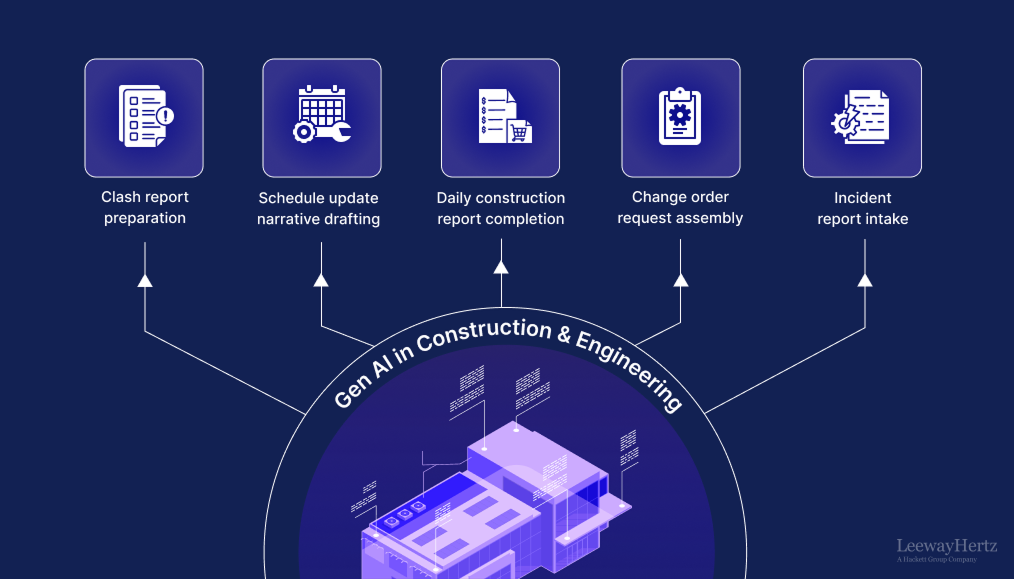
Construction work runs on records as much as on materials. A project team may price a change from one document while checking the latest drawing set in another, so delays often come from finding the right context before a decision can be made. This makes construction a practical fit for generative and agentic AI systems because much of the work depends on data, documents, approvals, and repeatable handoffs rather than isolated conversations. With global construction activity expected to remain near the US$10 trillion mark, reaching US$9.4 trillion in 2025 and US$9.8 trillion in 2026, even small reductions in review effort, coordination delays, or decision rework can create meaningful gains across large project portfolios.[1]
The opportunity is practical because much of the burden sits in work that people already repeat every week. Generative AI can prepare a first-pass summary of a request for information, helping the project manager spend less time reconstructing the issue and more time resolving the trade-off. An agentic workflow can route a draft change order request through the right internal checks, then pause for the contracts administrator to confirm scope, price, and contractual language before anything is issued. Safety teams can use a similar pattern to compare a job hazard analysis with a site-specific safety plan, creating a clearer review queue while preserving accountability for required actions.
These examples also show why a generic chatbot is not enough. If AI sits alongside project systems, it may answer a question about a specification section, but it cannot, by itself, determine whether a submittal package should change a procurement date or who must approve that decision. Embedding AI into document control, project controls, procurement, and safety processes gives each output a destination, a reviewer, and an audit trail. A reviewed draft matters only when it shortens the path to a controlled decision.
To identify those buildable opportunities, construction firms need to map work at the function, process, and sub-process levels. That is where each task connects to a system of record, a project artifact, an accountable role, and a control point. An AI-generated RFI summary, for example, can be evaluated against response time, contractual risk, and approval requirements when it is tied to the workflow. Outside that workflow, the same output is only an isolated productivity aid.
This article uses a construction operating model to break enterprise work into functions, processes, and sub-processes. It shows where generative AI can draft content, summarize records, support review, and reduce coordination effort while keeping production changes, customer-facing messages, and risk-bearing actions under human oversight.
- How generative AI is transforming construction operations
- Why construction AI use cases must be mapped at the sub-process level
- Construction operating model and generative AI opportunity mapping across construction processes
- High-value generative AI use cases in construction
- How agentic AI works in construction workflows
- How to prioritize generative AI use cases in construction
- Governance, risk, and responsible AI in construction
- How ZBrain operationalizes generative AI use cases in construction
- Future of generative AI in construction
How generative AI is transforming construction operations
Generative AI is useful in construction workflows where project decisions depend on fragmented information across schedules, RFIs, emails, contracts, and field updates. Rule-based automation can route an item when a status changes, while predictive models can flag the likelihood of a schedule slip. However, these systems often fall short when teams need a clear explanation of what is causing the delay, what assumptions remain open, and what action should follow.
GenAI addresses this gap by summarizing RFI responses, correspondence, and related project records into reviewable notes that project managers and field teams can use for decision-making. For example, it can help convert scattered updates into a delay note, highlight unresolved assumptions, and prepare supporting context before crews or resources are committed. When governed properly, agentic workflows can extend this capability by gathering relevant contract notice requirements, organizing the case package, and assigning it to project controls for review, while keeping final schedule or commercial decisions under human oversight.
The same pattern appears wherever construction work depends on interpreting project records rather than applying a single predefined rule. This becomes clearer when the work is viewed across different types of construction activities, each shaped by the kind of information teams need to interpret before deciding the next step:
- Document-heavy work: Submittal packages and RFIs, where a prepared review packet reduces manual page-turning for document control.
- Narrative-heavy work: Daily reports and delay notices, where drafted summaries give project management a clearer basis for weekly status reviews.
- Exception-heavy work: Rejected submittals and cost code mismatches, where grouped explanations help the responsible engineer or cost controller prioritize the next action.
- Knowledge-heavy work: Project specification questions and contract notice requirements, where retrieved excerpts reduce ambiguity before commercial obligations are interpreted.
- Workflow-heavy work: Change order review and pay application reconciliation, where governed routing shortens approval cycle time and keeps handoffs visible.
A practical design starts by assembling a case file around the issue; the system brings in supporting evidence, creates a draft output, and sends the package to the role accountable for the decision. Before any production change, owner-facing communication, or risk-bearing action is taken, the workflow owner, such as the project manager for schedule changes or the safety manager for safety actions, confirms the recommendation within the governed process. This controlled boundary makes GenAI practical for construction operations by reducing manual effort and cycle time while keeping review ownership and decision accountability clear.
Transform construction workflows
Streamline preconstruction, estimating, procurement, project controls, field operations, safety, quality, commercial management, and closeout with GenAI to improve efficiency, documentation quality, compliance, and speed to decision.
Why construction AI use cases must be mapped at the sub-process level
Broad use cases such as ‘AI for construction’ are useful for strategy discussions, but they are too imprecise for implementation because the same function can contain tasks with very different source documents, decision owners, review steps, and risk levels. At a pursuit handoff, “AI for construction” might mean reviewing a bid addendum against updated submission requirements, while another team means using AI to draft a delivery method fit assessment for a project strategy discussion. Those two use cases sound similar at the slogan level, but they rely on different inputs, sit in different systems, and require different reviewers before the work affects a bid position. That is why broad labels are difficult to translate into useful AI initiatives. They do not provide enough detail to define the workflow, assign governance, or measure business impact. The same work becomes practical only when it is named at the sub-process level, with a specific artifact, a defined review point, and an accountable owner.
A better approach is to map use cases to the construction operating model:
- Function: The major business, delivery, or control area, such as preconstruction, project management, engineering and design coordination, procurement, field operations, safety, cost control, contract administration, or quality management.
- Process: The workflow area within that function, such as bid management, pursuit handoff, RFI management, submittal review, change order management, schedule control, pay application review, safety planning, or closeout documentation.
- Sub-process: The specific work activity, such as checking addenda against bid requirements, preparing an RFI summary, reviewing a submittal package, drafting a change order narrative, reconciling cost code mismatches, comparing a job hazard analysis with a site-specific safety plan, or assembling closeout records.
- AI-enabled opportunity: The specific way AI can support that sub-process, such as extracting requirements from project documents, drafting a first-pass narrative, summarizing records, classifying exceptions, comparing documents, routing review tasks, or assembling supporting evidence for human review.
This level of detail matters because construction workflows are tied to specific drawings, specifications, contracts, schedules, cost codes, project controls systems, accountable roles, and approval paths. A generative AI workflow for RFI summarization is different from one for change order narrative drafting. A submittal review workflow is different from a pay application reconciliation workflow. A safety planning assistant is different from a project controls copilot.
By mapping AI opportunities at the sub-process level, construction firms can move from broad innovation ideas to executable workflows with clear business value, trusted source documents, review responsibilities, governance controls, and implementation paths.
Construction operating model and generative AI opportunity mapping across construction processes
The construction operating model below is organized into industry-native functions that practitioners recognize. Each function is decomposed into its major processes and their sub-processes, and each sub-process carries the AI-enabled opportunity that applies to it. These opportunities are best suited for software-led workflows where AI assists with analysis, preparation, and routing, while final review and approval remain with a human expert.
Function 1. Business development and pursuit management
When a bid invitation arrives with drawings, addenda, and commercial requirements spread across systems, pursuit teams need a fast way to decide whether the work fits. Business development and pursuit management covers opportunity qualification, delivery-method positioning, pursuit strategy, proposal governance, and handoff into preconstruction.
Generative AI is useful where pursuit teams must summarize bid packages, draft request for information (RFI) clarification language, and preserve assumptions for estimating. With governed retrieval and reviewer signoff, it helps reduce manual document reconciliation, shorten proposal cycle time, and improve the quality of go/no-go recommendations.
| Process | Sub-process | Key AI-enabled opportunities |
|---|---|---|
| Opportunity qualification and go/no-go governance | Delivery method fit assessment | Extract owner delivery requirements from specifications and addenda, compare risk allocation against approved delivery criteria, and flag misaligned pursuit structures for senior governance review. |
| Pursuit risk register review | Aggregate risks from the project risk register and baseline Critical Path Method (CPM) schedule, classify probability and impact, and summarize go/no-go implications for the pursuit steering committee review. | |
| General conditions opportunity assessment | Extract staffing and temporary facilities obligations from specifications, map them to the schedule of values under the Association for the Advancement of Cost Engineering (AACE) Total Cost Management Framework, and draft exposure notes for preconstruction manager review. | |
| Long-lead item and market capacity risk review | Retrieve long-lead references from the procurement log and CPM schedule, compare them with scheduling constraints, and flag market-capacity risks for operations sponsor review. | |
| Pursuit strategy and capture planning | Owner requirements and evaluation criteria mapping | Extract scoring factors from bid documents and RFI responses, classify them in the selection criteria matrix, and draft win-theme gap notes for pursuit manager review. |
| Bid scope, work package, and cost breakdown alignment | Map bid scope from specifications and the CPM schedule to the schedule of values, compare work-package alignment, and flag missing estimate buckets for estimator review. | |
| Value engineering workshop preparation | Retrieve candidate alternates from the building information model and prior change records, summarize cost and schedule tradeoffs, and draft an owner-facing review brief for preconstruction manager review. | |
| Scope qualification and contingency register | Compare specifications and addenda with the schedule of values, classify qualification and contingency items, and draft language that lowers commercial ambiguity for senior estimator review. | |
| Proposal and clarification management | RFI tracking for bid clarifications | Classify open RFI items by discipline and pricing impact, retrieve related specifications and addenda, and flag unanswered clarifications for pursuit manager review. |
| Addendum review and response compliance | Extract revised scope and instructions from each addendum, compare them with the proposal compliance matrix, and flag response changes for proposal manager review. | |
| Specification compliance mapping | Extract technical and submittal requirements from specifications, classify them in the compliance matrix, and flag mandatory response items for the proposal QA reviewer. | |
| Constructability review narrative development | Summarize constructability issues from drawings and coordination records, map them to review categories, and draft narrative evidence for operations sponsor review. | |
| Pursuit-to-preconstruction handoff | Bid assumptions and qualifications handoff | Extract bid assumptions from the proposal workbook and RFI responses, classify commercial risk under AACE guidance, and draft turnover notes for preconstruction manager review. |
| Procurement log kickoff | Retrieve equipment and subcontract scope from specifications and the schedule of values, map lead-time assumptions into the procurement log, and flag early-buy candidates for procurement manager review. | |
| Preliminary baseline CPM schedule assumptions review | Extract milestone dates and phasing constraints from addenda and drawings, map them to preliminary CPM schedule assumptions, and flag fragile logic ties for scheduler review. | |
| Estimate, risk register and addendum handoff | Aggregate estimate alternates and addendum impacts from pursuit files, compare cost and risk exposure under AACE guidance, and summarize unresolved handoff decisions for project sponsor review. |
Highest-value opportunities
RFI tracking for bid clarifications, addendum review, and bid assumptions turnover offer strong near-term value because they are high-volume workflows with clear review boundaries. Applying GenAI to these areas can reduce manual reconciliation, shorten proposal cycle time, improve compliance, and support a cleaner handoff into preconstruction.
Example agentic workflow
An example agentic workflow is the bid clarification response workflow. It prioritizes clarification items, retrieves RFI threads and addenda from document control systems, drafts response updates and proposal-compliance notes, routes exceptions through the pursuit workflow, and waits for pursuit manager confirmation.
Function 2. Preconstruction planning, estimating and value engineering
At the estimate kickoff, preconstruction teams often work from incomplete drawings while procurement and schedule assumptions are already forming. This function covers early scope definition, quantity takeoff, estimate development, constructability input, value engineering, procurement risk visibility, and the estimate-to-operations handoff.
Estimators, preconstruction managers, cost engineers, Virtual Design and Construction (VDC) leads, procurement managers, and operations reviewers need consistent assumptions across estimating and document platforms. Generative AI helps extract scope from specifications, summarize drawing changes, prepare clarification questions, and turn estimate assumptions into structured handoff records.
| Process | Sub-process | Key AI-enabled opportunities |
|---|---|---|
| Drawing, specification and quantity takeoff | Issued for construction (IFC) drawing scope review | Extract discipline-level scope from the issued construction drawing set, compare it with the addenda, and flag unresolved takeoff gaps for preconstruction manager review. |
| Specification takeoff mapping | Map specification requirements to takeoff line items, classify exclusions and alternates against work breakdown alignment, and flag ambiguous scope language for estimator review. | |
| WBS-based quantity takeoff | Extract quantities from the building information model and drawing set, map them under work breakdown alignment, and flag outliers for estimator review. | |
| Material submittal scope identification | Extract material submittal requirements from specifications, classify them into the submittal register, and flag early-procurement items for preconstruction manager review. | |
| Cost estimating and estimate basis | General conditions pricing | Retrieve general conditions cues from the CPM schedule and specifications, summarize staffing assumptions under AACE guidance, and flag pricing omissions for cost engineer review. |
| Labor, equipment, and material unit-rate development. | Aggregate historical unit rate notes from purchase orders and subcontracts, compare them with the current scope, and flag assumptions needing market validation for estimator review. | |
| Allowance and contingency pricing | Classify uncertain scope from addenda and RFIs against contingency categories, summarize key drivers, and flag unsupported allowances for preconstruction manager review. | |
| Cost breakdown estimate coding | Map estimate line items to the schedule of values and cost codes, compare mappings with work breakdown alignment, and flag uncoded scope for cost engineer review. | |
| Constructability review and value engineering | Constructability issue logging and RFI candidate review | Extract access and sequencing issues from coordination records, classify them under constructability categories, and draft RFI candidates for VDC lead review. |
| Value engineering workshop option review | Retrieve alternative materials from specifications and prior procurement records, compare them against workshop criteria, and summarize tradeoffs for owner representative review. | |
| Long-lead item procurement risk review | Screen the procurement log and CPM schedule for long-lead exposure, compare required-on-site dates, and flag early-buy needs for procurement manager review. | |
| Preconstruction project risk register review | Aggregate risk cues from RFIs and the procurement log, classify high-exposure assumptions, and flag priorities for preconstruction manager review. | |
| Estimate validation and operations turnover | AACE estimate review | Validate estimate basis narratives and contingency notes against AACE guidance, compare gaps with the schedule of values, and flag unsupported assumptions for senior cost engineer review. |
| Work breakdown and cost breakdown alignment | Map model elements and estimate lines to common control accounts, validate the mapping, and flag mismatches for project controls manager review. | |
| Schedule of values draft preparation | Draft a schedule of values from coded estimate lines, compare line structure with American Institute of Architects (AIA) G703 expectations, and flag unsupported front-loaded values for project accountant review. | |
| Cost-to-complete baseline assumptions | Summarize procurement and contingency assumptions from the CPM schedule and procurement log, map them to the forecast baseline, and flag weak assumptions for operations manager review. |
Highest-value opportunities
Specification takeoff mapping, quantity takeoff by work breakdown structure, and long-lead item procurement risk review offer strong value. Each combines high document volume with clear review boundaries across estimating, VDC, and procurement. These workflows help reduce takeoff reconciliation, shorten estimate turnaround, and improve missed-scope detection.
Example agentic workflow
An example agentic workflow is a preconstruction scope-to-estimate handoff. It plans the scope checklist, retrieves drawings and model coordination records from controlled repositories, drafts takeoff exceptions and RFI candidates, routes the package, and records preconstruction manager approval.
Function 3. Bid management and subcontractor procurement
During a buyout, one bidder may exclude access work while another includes it in a different line item. Bid management and subcontractor procurement covers bid package development, trade partner solicitation, addendum distribution, bid leveling, award, and purchase order release.
Generative AI helps teams compare bidder exclusions, summarize addenda, draft scope sheets, and ensure that subcontract agreements align with the bid package. This reduces manual comparison effort, shortens buyout cycle time, and improves award decisions before commitments are released.
| Process | Sub-process | Key AI-enabled opportunities |
|---|---|---|
| Bid package development | Specification and drawing scope package assembly | Extract scope requirements from specifications and drawings, map them to work packages, and flag missing trade coverage for bid manager review. |
| Bid form and pricing instruction preparation | Draft bid form instructions from specifications, classify requirements against procurement rules, and flag ambiguous pricing language for procurement manager review. | |
| Bidder addendum and RFI distribution tracking | Summarize addenda and RFI responses, compare affected references with the bidder distribution list, and flag missed recipients for bid coordinator review. | |
| Procurement log setup by bid package | Extract package milestones and due dates from specifications, map them into the procurement log, and flag incomplete buyout fields for procurement manager review. | |
| Trade partner solicitation and prequalification | Trade partner prequalification and capacity review | Retrieve Occupational Safety and Health Administration (OSHA) 300 log entries and performance history, summarize capacity risks against the CPM schedule, and flag constrained bidders for procurement manager review. |
| Long-lead item supplier identification | Extract long-lead materials from specifications and submittal requirements, compare supplier lead times with the procurement log, and flag float risks for procurement manager review. | |
| Labor standards and certified payroll applicability review | Classify bid scopes and wage classifications from specifications, compare subcontract clauses such as with Davis-Bacon and Related Acts requirements, and flag missing certified payroll obligations for legal counsel review. | |
| Subcontractor default risk review | Aggregate nonconformance history and lien waiver issues, summarize default indicators, and flag high-exposure award recommendations for procurement manager review. | |
| Bid leveling and buyout | Scope gap and exclusion analysis | Compare bidder exclusions against specifications and addenda, map missing inclusions through constructability review, and flag unpriced gaps for estimator review. |
| Bid tabulation and apples-to-apples leveling | Extract quantities and unit prices from bidder proposals, compare them against the schedule of values, and flag non-comparable line items for estimator review. | |
| Value engineering and alternates pricing | Summarize alternate proposals from bidder submissions, compare affected specifications with workshop records, and flag savings tied to performance or schedule tradeoffs for project manager review. | |
| Buyout savings and overrun tracking | Aggregate awarded amounts and pending change exposure from the procurement log, compare them with the cost-to-complete forecast, and flag buyout variances for project controls manager review. | |
| Subcontract and purchase order award | Subcontract agreement preparation | Draft subcontract exhibits from the leveled bid tab and addendum log, compare terms with delivery requirements, and flag scope or insurance gaps for legal counsel review. |
| Purchase order issuance | Draft purchase order line descriptions from the procurement log and supplier quote, compare delivery dates with CPM constraints, and flag mismatches for procurement manager review. | |
| Lien waiver and insurance requirement collection | Retrieve lien waiver templates and insurance requirements, classify missing documents against payment checkpoints, and flag packages that should not proceed for project administrator review. | |
| Schedule of values alignment for awarded scopes | Compare awarded scope descriptions with the schedule of values and AIA G703, map line items to control accounts, and flag pay application mismatches for project controls manager review. |
Highest-value opportunities
Scope gap analysis, bid tabulation, and subcontract agreement preparation are high-value because they are artifact-rich workflows with clear review boundaries for estimators, procurement, and legal. They reduce manual comparison effort while improving award quality and compliance before commitments are issued.
Example agentic workflow
An example agentic workflow is bid leveling and award package workflow. It sequences bid leveling from the procurement log, retrieves specifications and bidder proposals from governed platforms, drafts a comparison and subcontract exhibit, routes exceptions, and records procurement manager confirmation.
Function 4. Design management, BIM and VDC coordination
A field team can lose hours when a model view, a shop drawing, and an issued drawing are not aligned. Design management, Building Information Modeling (BIM), and VDC coordination manage design deliverables, coordination models, clash resolution, constructability input, RFIs, and submittals.
Generative AI helps link design decisions across drawings, specifications, RFIs, submittals, clash reports, and correspondence. It reduces technical search time, shortens coordination cycles, and gives design managers and project engineers clearer exception queues for review.
| Process | Sub-process | Key AI-enabled opportunities |
|---|---|---|
| Design deliverables and document control | Drawing revision and issue control | Compare drawing revisions, extract sheet deltas from transmittals, and flag superseded details for document controller review. |
| Specification and addendum version control | Extract addendum changes, map them to affected specification clauses, and flag conflicting issue dates for design manager review. | |
| Architect’s supplemental instruction distribution | Classify instruction impacts, retrieve linked drawing sheets, and draft targeted distribution notes for project engineer review. | |
| Design review comment workflow management | Summarize design review comments on drawings, classify open items by discipline, and flag overdue responses for design manager review. | |
| BIM execution and model management | BIM execution plan development | Draft BIM execution plan sections from delivery requirements, compare responsibility matrices, and provide a structured baseline for BIM manager review. |
| Federated model management | Aggregate model files, classify discipline ownership, and flag geometry or naming gaps for BIM manager review. | |
| Coordination model publishing | Validate coordination model publish packages, compare revision metadata against the BIM execution plan, and flag missing sign-offs for VDC coordinator review. | |
| Model issue log management | Extract coordination issue comments, classify root causes, and flag aging action items for VDC coordinator review. | |
| Clash detection and VDC coordination | Building information modeling coordination | Map model elements to trade scopes, summarize coordination model changes, and flag discipline conflicts for VDC coordinator review. |
| Clash detection and resolution tracking | Classify clash report entries, retrieve shop drawing and specification context, and propose resolution paths for VDC coordinator review. | |
| Clash report preparation | Summarize coordination model conflicts, organize screenshot notes, and classify items by trade and severity for BIM manager review. | |
| Constructability review issue tracking | Extract constructability comments, map each issue to drawings and specifications, and flag aging decisions for design manager review. | |
| RFI generation from unresolved clashes | Draft RFI questions from unresolved clash items, retrieve model views and specification references, and flag scope or schedule sensitivity for project engineer review. | |
| Submittal and shop drawing technical coordination | Specification-based submittal register setup | Extract submittal requirements from specifications, classify package types, and draft register line items for project engineer review. |
| Shop drawing coordination review | Compare shop drawing details against drawings and the coordination model, retrieve specification criteria, and flag interface exceptions for design manager review. | |
| Material submittal technical review | Compare material data sheets against specification requirements, extract deviations, and draft exception notes for project engineer review. | |
| Submittal workflow status tracking | Aggregate submittal package status from project management systems, classify overdue reviewer actions, and flag bottlenecks for document controller review. | |
| Coordination model update from approved submittals | Compare approved submittal data with coordination model elements, map accepted changes, and flag discrepancies for BIM manager review. |
Highest-value opportunities
Clash detection and resolution, RFI generation from unresolved clashes, and shop drawing coordination review are strong candidates because they connect dense technical evidence to clear reviewer decisions. They reduce manual triage, shorten coordination cycles, and improve the quality of design and field decisions.
Example agentic workflow
An example agentic workflow is unresolved clash to RFI workflow: It triages unresolved clashes, retrieves model views and controlled specifications, drafts an RFI with affected references, routes the draft, and confirms issuance only after project engineer approval.
Function 5. Project controls and CPM scheduling
Project controls and CPM scheduling teams own baseline schedules, schedule updates, progress measurement, earned value reporting, delay analysis, and recovery planning.
Generative AI helps convert daily construction reports and meeting notes into schedule update narratives. It also supports time impact analysis by assembling source-linked evidence, reducing manual evidence chasing while preserving scheduler and project controls review.
| Process | Sub-process | Key AI-enabled opportunities |
|---|---|---|
| Baseline CPM schedule development | CPM schedule logic development | Map activity descriptions from drawings, draft predecessor-successor logic, and flag open sequencing assumptions for scheduler review. |
| Work breakdown activity coding | Classify CPM activities against work breakdown controls, compare coding to the schedule of values, and flag misaligned activities for project controls manager review. | |
| Critical path and float analysis | Summarize critical path and float changes from the schedule, classify movement reasons, and flag decision-sensitive float consumption for project manager review. | |
| Procurement log and long-lead item integration | Extract long-lead dates from the procurement log, map them to CPM activities, and flag procurement constraints for procurement manager review. | |
| Baseline CPM schedule owner acceptance package | Draft the owner acceptance package from the schedule basis and milestone records, validate content against CPM expectations, and flag unresolved exclusions for owner representative review. | |
| Schedule update and progress measurement | Data date collection from daily construction reports | Extract installed quantities and obstruction notes from daily reports, compare them with CPM activities, and flag missing data date inputs for superintendent review. |
| Weekly work plan and lookahead reconciliation | Compare the weekly work plan with the three-week lookahead plan, classify variance reasons, and flag constraint gaps for superintendent review. | |
| Schedule update narrative drafting | Draft the update narrative from daily reports and RFI statuses, summarize critical movement, and flag unsupported explanations for project controls manager review. | |
| Milestone forecast and variance review | Compare milestone forecasts with the baseline CPM schedule, classify variance drivers, and flag unsupported forecast changes for project manager review. | |
| Earned Value Management (EVM) and performance reporting | EVM control account setup | Map the schedule of values to control accounts, compare planned value rules with the CPM schedule, and flag setup gaps for cost engineer review. |
| WBS-based progress evidence review | Extract percent complete evidence from daily reports and inspection records, classify it by work breakdown structure, and flag unsupported progress claims for superintendent review. | |
| Earned value report preparation | Aggregate approved progress and cost inputs into the earned value report, summarize variances, and flag incomplete support for project controls manager review. | |
| Cost-to-complete forecast reconciliation | Retrieve cost trend notes and schedule variance drivers, compare productivity assumptions, and flag inconsistencies for cost engineer review. | |
| WBS and cost breakdown alignment | Compare CPM activity codes with cost breakdown mappings, classify mismatches, and flag reporting breaks for project controls manager review. | |
| Delay analysis and recovery planning | Time impact analysis preparation | Retrieve contemporaneous RFI and daily report records, map them to affected CPM activities, and draft an evidence index for claims manager review. |
| Schedule compression evaluation | Compare overtime and resequencing options against critical activities, summarize feasibility, and flag conflicts with inspection requirements for project manager review. | |
| Acceleration plan development support | Draft acceleration options from work plan commitments and lookahead constraints, classify tradeoffs, and flag resource conflicts for superintendent review. | |
| Delay claim chronology and schedule support | Aggregate schedule updates and change records, summarize causation chronology under AACE guidance, and flag evidentiary gaps for claims manager review. | |
| Liquidated damages exposure review | Compare contractual milestones with forecast dates, summarize exposure under CPM scheduling, and flag unsupported mitigation assumptions for project sponsor review. |
Highest-value opportunities
GenAI can add strong value to data collection, schedule update, narrative drafting, and time impact analysis preparation because these tasks recur across update cycles and claim events. Prioritizing them reduces manual evidence chasing, shortens the schedule update cycle time, and improves review accountability.
Example agentic workflow
An example agentic workflow is the schedule update narrative workflow. It plans the weekly update scope, retrieves daily reports and schedule records, drafts a narrative with critical path movements, routes it for review, and records the project controls manager’s confirmation.
Function 6. Field operations and Last Planner production planning
Field teams need confirmed commitments, current drawings, open constraints, and clear safety instructions before daily work begins. Field operations and Last Planner production planning cover site mobilization, field execution, daily coordination, constraint removal, production planning, and production reporting.
Generative AI helps turn meeting notes, field observations, daily construction reports, and issue logs into clean action records. This reduces follow-up effort, shortens coordination cycles, and supports stronger accountability before field work changes.
| Process | Sub-process | Key AI-enabled opportunities |
|---|---|---|
| Site mobilization and readiness | Mobilization readiness tracking | Extract readiness items from subcontracts and drawings, map them to constructability requirements, and flag incomplete prerequisites for superintendent review. |
| Site-specific safety plan field rollout | Summarize trade-specific controls from the safety plan and job hazard analysis, classify briefing gaps, and flag rollout exceptions for safety manager review. | |
| Stormwater pollution prevention field setup | Compare stormwater control requirements with inspection checkpoints, classify setup gaps against Environmental Protection Agency (EPA) stormwater rules, and flag corrective actions for environmental manager review. | |
| IFC drawing field distribution control | Classify drawing revisions, compare them with addendum records, and flag crews using outdated drawings for project engineer review. | |
| Long-lead item receiving readiness planning | Retrieve long-lead milestones from the procurement log and purchase order, compare them with lookahead needs, and flag receiving constraints for field engineer review. | |
| Pull planning and lookahead planning | Pull planning session preparation | Map trade handoff commitments to the CPM schedule and weekly work plan, summarize dependency risks, and flag unclear predecessors for superintendent review. |
| Three-week lookahead plan preparation | Retrieve upcoming activities and open constraints, draft the three-week lookahead plan, and flag work packages lacking prerequisites for assistant superintendent review. | |
| Constraint log management | Classify open items from the RFI log and procurement log, map each to reason codes, and flag aging blockers for superintendent review. | |
| Weekly work plan commitment capture | Extract trade commitments from meeting notes, map them to acceptance criteria, and flag ambiguous quantities or handoffs for trade foreman review. | |
| Percent Plan Complete (PPC) tracking and target setting | Aggregate prior plan completions and variance notes, summarize recurring promise failures, and propose realistic improvement targets for project manager review. | |
| Daily huddles and production reporting | Daily huddle preparation and blocker review | Summarize commitments from the weekly work plan and job hazard analysis, classify blockers, and propose priority prompts for superintendent review. |
| Daily construction report completion | Draft daily report sections from approved meeting notes and field records, classify missing safety or quality entries, and route exceptions for assistant superintendent review. | |
| Labor, crew, and equipment reporting | Extract crew counts and work quantities from daily reports, map them to earned value cost codes, and flag anomalies for project controls manager review. | |
| Percent Plan Complete capture and variance coding | Compare completed tasks with planned commitments, classify variance reasons, and flag unreliable promises for superintendent review. | |
| Field issue and constraint resolution | Field RFI issue escalation | Extract field questions and drawing references from RFI drafts, compare them with controlled documents, and flag incomplete issue statements for project engineer review. |
| Submittal and material release constraint removal | Retrieve overdue submittal and procurement items, classify blockers against constraint codes, and flag commitments needed to protect installation dates for project manager review. | |
| Lean A3 problem solving | Summarize problem facts from daily reports and nonconformance records, draft root-cause hypotheses, and flag evidence gaps for superintendent review. | |
| Schedule recovery action planning | Compare missed commitments with near-critical CPM activities, summarize recovery options, and propose accountable action items for project manager review. |
Highest-value opportunities
AI can add strong value to constraint log management, daily construction report completion, and RFI field issue escalation because these are high-volume worksteps with clear review boundaries. It helps reduce manual follow-up, shorten coordination cycles, and strengthen compliance by converting fragmented field inputs into reviewer-ready actions.
Example agentic workflow
An example agentic workflow is a constraint-to-commitment workflow. It reviews open constraints and lookahead commitments, retrieves RFI and procurement status, drafts prioritized updates, routes exceptions through the project workflow, and confirms closure with the superintendent.
Function 7. Commercial management and change control
A field directive can become a costly dispute if scope, entitlement, cost, and time evidence are not captured early. Commercial management and change control owns change event capture, entitlement evaluation, pricing, negotiation, owner change orders, directives, contingency control, and commercial reporting.
Generative AI helps compare change requests against drawings, specifications, RFIs, daily reports, and subcontract backup. It improves entitlement quality, shortens package assembly, and helps commercial managers separate scope growth from rework or design development.
| Process | Sub-process | Key AI-enabled opportunities |
|---|---|---|
| Potential change order and change event management | Potential change order log maintenance | Extract change references from RFI records and daily reports, classify each item under change management, and flag missing entitlement fields for commercial manager review. |
| Change event scope definition | Summarize scope deltas from drawings and RFI responses, map them to change categories, and draft a scope narrative for project manager review. | |
| Drawing, specification, and addendum change comparison | Compare drawings and specifications, retrieve conflicting revision language, and flag likely scope growth versus design development for commercial manager review. | |
| Daily report change backup capture | Extract labor counts and progress notes from daily reports, classify entries against change event codes, and flag missing backup for project engineer review. | |
| Change order request pricing and negotiation | Change order request package preparation | Draft scope, entitlement, cost summary, and schedule impact sections from the change log, classify support, and flag missing attachments for the commercial manager review. |
| Changed work pricing support | Extract pricing backup from purchase orders and subcontracts, compare rates against AACE cost categories, and flag unsupported markups for cost engineer review. | |
| Allowance and contingency drawdown tracking | Aggregate approved change values and schedule of values allowances, map drawdowns, and flag forecast overrun patterns for the commercial manager review. | |
| Formal change order document preparation | Draft formal change order fields, such as AIA G701 change order details, from approved change requests and schedule of values data, validate amount and scope alignment, and flag missing approvals or signature gaps for contract administrator review. | |
| Change directive and supplemental instruction control | Architect supplemental instruction impact review | Compare instruction language with drawings and the CPM schedule, classify cost and time implications, and flag entitlement uncertainties for commercial manager review. |
| Construction change directive workflow | Draft directive summaries from instructions and daily reports, retrieve affected subcontract clauses, and flag disputed exposure for project sponsor review. | |
| Time impact analysis trigger review | Detect schedule-affecting language in change requests and daily reports, compare it with the CPM schedule, and flag events needing time impact analysis for project controls manager review. | |
| Field authorization tracking | Extract field-directed work references from daily reports and weekly work plans, classify authorization status, and flag work without signed backup for project manager review. | |
| Schedule of values and commercial status reporting | Schedule of values control | Validate schedule of values line descriptions against AIA G703 and approved changes, map revisions, and flag billing shifts for project accountant review. |
| Cost-to-complete forecast update | Retrieve approved changes and purchase order updates, summarize forecast exposure by line, and flag variance drivers for cost engineer review. | |
| Earned value report tie-out | Compare the earned value report with the pay application and schedule narrative, map variances, and flag progress mismatches for project controls manager review. | |
| Commercial risk register review | Summarize open commercial exposures from the change log and forecast, classify probability and impact, and flag aging owner-disputed items for project sponsor review. |
Highest-value opportunities
Change order request assembly, drawing and specification comparison, and time impact analysis triggers are strong AI candidates because they pair high-volume change intake with dense evidence sets. These sub-processes reduce document hunting, improve entitlement quality, and support negotiation readiness before owner-facing submissions.
Example agentic workflow
An example agentic workflow is the change order request assembly workflow. It builds an evidence checklist, retrieves change records and cost backup, drafts the change narrative and backup index, routes unsupported pricing, and records commercial manager approval.
Accelerate AI Solutions Development
Build fully functional solutions from your high-value use cases, based on specific operational needs and enterprise context.
Function 8. Subcontractor management and trade partner coordination
Subcontractor work can be delayed by open administrative, procurement, or compliance requirements, even when labor and materials are available. Subcontractor management and trade partner coordination cover kickoff, scope alignment, production commitments, submittal tracking, payment review, performance management, and closeout.
Generative AI helps summarize subcontract obligations, track RFI and submittal status, and prepare action lists from coordination meetings. It also reduces the document burden around pay applications, retainage, punch list work, warranty deliverables, and closeout evidence.
| Process | Sub-process | Key AI-enabled opportunities |
|---|---|---|
| Subcontract kickoff and scope alignment | Subcontract agreement scope review | Extract inclusions, exclusions, and notice obligations from the subcontract, compare them with specifications, and flag kickoff gaps for subcontract manager review. |
| Subcontract schedule of values alignment | Compare the schedule of values with the subcontract, classify missing or front-loaded line items, and route payment exceptions for project accountant review. | |
| JHA and safety plan requirement review | Extract task hazards from the job hazard analysis, compare them with safety plan requirements, and flag missing permits for safety manager review. | |
| RFI and submittal workflow orientation | Summarize RFI intake steps and submittal routing rules, classify trade-specific questions, and draft kickoff notes for project engineer review. | |
| Trade partner production coordination | Weekly work plan commitment review | Classify weekly commitments by crew and constraint status, compare them with the lookahead plan, and flag blocked promises for superintendent review. |
| Percent Plan Complete (PPC) performance review | Aggregate completed and missed commitments from work plans and daily reports, classify variance reasons, and flag recurring constraint patterns for project manager review. | |
| Daily huddle action item tracking | Extract owners and due dates from huddle notes, map them to constraint practices, and draft prioritized follow-ups for superintendent review. | |
| Schedule compression recovery planning | Compare schedule slippages with the CPM schedule, retrieve impacted trade commitments, and propose recovery actions for the project controls manager review. | |
| Submittal, procurement and delivery tracking | Trade partner submittal register tracking | Aggregate submittal register entries by trade partner, classify late or rejected items, and flag priority packages for project engineer review. |
| Shop drawing and material submittal status review | Compare shop drawings and material submittals with specifications, summarize reviewer comments, and flag resubmittal drivers for project engineer review. | |
| Procurement log update and validation | Extract promised ship dates and purchase order references, compare them with lookahead need dates, and flag outdated entries for procurement manager review. | |
| Long-lead item expediting | Retrieve long-lead purchase order and submittal records, compare commitments with the CPM schedule, and draft escalation notes for procurement manager review. | |
| Subcontract administration, payment and closeout | Pay application review | Compare AIA G702 and AIA G703 with the schedule of values, classify unsupported billings, and route exceptions for project accountant review. |
| Lien waiver and pay application matching | Extract pay periods and amounts from lien waivers, compare them with pay applications, and flag mismatches for accounts payable manager review. | |
| Retainage and backcharge tracking | Aggregate retainage balances and backcharge references from payment records, classify unresolved items, and flag cash-flow exposures for subcontract manager review. | |
| Punch list completion sign-off | Compare punch list items with inspection evidence, summarize open defects by trade, and flag disputed sign-offs for superintendent review. | |
| Warranty and O&M manual collection | Classify operation and maintenance manual submissions against the closeout checklist, flag missing warranty deliverables, and draft collection notices for closeout manager review. |
Highest-value opportunities
AI can add strong near-term value to submittal register management, pay application review, and warranty manual collection because these workflows run at high volume and have clear reviewer boundaries. They help reduce reconciliation effort, shorten approval cycles, and give project engineers, project accountants, and closeout managers defined decision points.
Example agentic workflow
An example agentic workflow is submittal and procurement readiness review. It reviews open submittal and delivery risks, retrieves register and procurement records, drafts a prioritized exception list, routes follow-ups, and records project engineer confirmation.
Function 9. Contract administration and claims management
When a delay issue emerges, the project team needs a traceable chronology before positions harden. Contract administration and claims management owns contract document control, formal correspondence, RFI administration, meeting records, claims documentation, delay support, and dispute-ready records.
Generative AI helps reconstruct facts from daily reports, meeting minutes, schedules, correspondence, and change records. It reduces manual fact gathering, improves entitlement analysis, and gives claims specialists and legal counsel source-linked materials for review.
| Process | Sub-process | Key AI-enabled opportunities |
|---|---|---|
| Contract document and correspondence control | CDE folder taxonomy management | Classify folder structures against the BIM execution plan, map drawing and submittal records to naming rules, and flag misfiled files for document controller review. |
| Construction drawing version control | Classify drawing files, compare revisions against transmittals, and flag superseded sheets for document controller review. | |
| Specification and addendum version control | Compare specification revisions, extract addendum references, and flag conflicting requirements for design manager review. | |
| Formal correspondence log management | Extract commitments and notice language from correspondence, classify related change entries, and flag late responses for contract administrator review. | |
| RFI and notice administration | RFI triage and response workflow | Classify each RFI by discipline, retrieve shop drawing and specification context, and draft routing notes for project engineer review. |
| RFI aging and escalation | Detect aging RFI items, compare due dates with workflow rules, and draft escalation summaries for project manager review. | |
| ASI linkage and impact review | Map instruction references to affected RFI and submittal records, compare scope language, and flag entitlement impacts for contract administrator review. | |
| Construction change directive notice tracking | Extract notice dates from directives, compare them with subcontract requirements, and flag missed response windows for claims specialist review. | |
| Claims preparation and delay documentation | Delay event chronology preparation | Aggregate events from daily reports and RFI files, map them to CPM activities, and draft a traceable chronology for claims specialist review. |
| Time impact analysis package preparation | Retrieve schedule narratives and change evidence, compare fragnet assumptions under CPM scheduling, and flag unsupported positions for scheduler review. | |
| Acceleration and schedule compression evidence preparation | Extract overtime and resequencing references from daily reports, map them to lookahead commitments, and draft evidence summaries for the project controls manager review. | |
| Liquidated damages exposure tracking | Compare substantial completion milestones with CPM dates, summarize exposure drivers, and flag mitigation gaps for project manager review. | |
| Daily construction report evidence binder preparation | Extract labor and obstruction entries from daily reports, retrieve related RFI links, and draft evidence binder indexes for legal counsel review. | |
| Meeting governance and decision records | Owner-architect-contractor meeting planning | Summarize meeting history, compare open RFI and submittal topics, and propose next-meeting focus areas for project manager review. |
| Meeting minutes and action item tracking | Extract decisions and due dates from meeting minutes, map action items to project records, and flag overdue commitments for contract administrator review. | |
| RFI and submittal-linked decision log management | Map decision log entries to RFI and submittal records, compare status changes, and flag missing rationale for project manager review. | |
| Meeting-driven project risk register review | Summarize open risks, retrieve supporting schedule and change evidence, and propose priority changes for project controls manager review. |
Highest-value opportunities
Delay claim chronology, time impact analysis packages, and daily construction report evidence binders stand out as strong AI opportunities. They combine high-volume project records with clear review boundaries for claims specialists, schedulers, and legal teams. Applying AI here can reduce manual fact reconstruction, strengthen entitlement analysis, and shorten the claims package cycle time.
Example agentic workflow
An example agentic workflow is the delay claim chronology workflow. It plans chronology sections from notice requirements, retrieves daily reports and schedule narratives, drafts a source-linked evidence index, routes exceptions, and requires claims specialist confirmation.
Function 10. Quality, commissioning, closeout and warranty management
Closeout often slows when test records, manuals, as-built drawings, and punch list evidence arrive in inconsistent formats. Quality, commissioning, closeout and warranty management covers quality planning, inspection and test plans, nonconformance handling, commissioning records, turnover packages, substantial completion, and warranty follow-through.
Generative AI helps extract inspection requirements, organize nonconformance evidence, draft corrective action summaries, and check turnover packages for completeness. With quality and closeout review, it reduces compilation effort, shortens closeout cycle time, and strengthens compliance traceability.
| Process | Sub-process | Key AI-enabled opportunities |
|---|---|---|
| Quality planning and inspection readiness | Inspection and test plan development | Extract hold points and acceptance criteria from specifications, map them to the inspection and test plan, and flag missing witness requirements for quality manager review. |
| Inspection and test plan scheduling | Map inspection activities to the lookahead plan, detect date conflicts, and summarize inspections at risk for superintendent review. | |
| Material submittal quality review | Extract acceptance criteria from specifications and material submittals, classify package gaps, and flag missing certificates for project engineer review. | |
| Code and specification inspection checklist development | Extract International Building Code inspection items and specification criteria, compare them with drawing references, and draft a traceable checklist for quality manager review. | |
| Field inspection and nonconformance management | Inspection checklist execution | Retrieve required inspection points, classify checklist entries against acceptance criteria, and flag incomplete evidence for inspector review. |
| Nonconformance report creation | Extract defect observations from daily reports and inspection photos, compare them with specifications, and draft a nonconformance report for quality manager review. | |
| Nonconformance corrective action management | Summarize root cause evidence, retrieve specification and subcontract obligations, and propose corrective action language for superintendent review. | |
| Recurring defect A3 problem-solving | Aggregate recurring defect patterns across nonconformance records, classify likely causes, and draft countermeasure options for quality manager review. | |
| Reinspection and closeout evidence validation | Validate reinspection photos and test records against the nonconformance report, and flag evidence gaps for inspector review. | |
| Commissioning and turnover management | Commissioning and turnover plan development | Draft plan sections from specifications and the closeout checklist, map system responsibilities, and flag missing handoff criteria for commissioning lead review. |
| Commissioning report compilation | Aggregate functional test records and inspection results, summarize exceptions, and draft commissioning report sections for commissioning lead review. | |
| Operation and maintenance manual collection | Classify manual submissions against the submittal register, extract missing warranty requirements, and flag incomplete vendor sections for closeout coordinator review. | |
| As-built drawing verification | Compare as-built markups with drawings and approved RFIs, and flag scope mismatches for project engineer review. | |
| Substantial completion package preparation | Validate the substantial completion package against the punch list and commissioning records, summarize exceptions, and flag contractual prerequisites for the project manager review. | |
| Punch list, closeout and warranty | Punch list management | Classify punch list items by trade and severity, retrieve drawing references, and flag blocker items for superintendent review. |
| Closeout checklist tracking | Aggregate closeout status across manuals and commissioning reports, summarize overdue packages, and flag owner acceptance blockers for closeout coordinator review. | |
| Warranty issue log management | Classify warranty issues by system and urgency, retrieve warranty terms, and draft response summaries for warranty manager review. | |
| Final lien waiver and retainage release review | Compare final lien waivers with AIA G702 and AIA G703 records, and flag missing releases for project accountant review. |
Highest-value opportunities
AI can add strong value to inspection and test plan development, nonconformance report creation, and operation and maintenance manual collection because these workflows use rich project artifacts and have clear review ownership. These workflows reduce manual compilation, shorten closeout cycle time, and improve compliance accountability without bypassing human approval.
Example agentic workflow
An example agentic workflow is commissioning turnover package readiness. It sequences turnover tasks from the closeout checklist, retrieves commissioning records and manuals, drafts a deficiency summary, routes exceptions, and records commissioning lead approval.
Function 11. Safety and environmental compliance
For high-risk work, supervisors need current hazards, controls, permits, and attendance records in one place. Safety and environmental compliance owns site safety planning, hazard analysis, orientation, daily safety execution, incident management, recordkeeping, corrective actions, stormwater controls, and environmental documentation.
Generative AI helps draft job hazard analyzes, summarize observations, classify incident narratives, prepare corrective action language, and organize stormwater inspection evidence. It reduces administrative burden while preserving human review for safety-critical judgments and regulated records.
| Process | Sub-process | Key AI-enabled opportunities |
|---|---|---|
| Safety program planning and orientation | Site-specific safety plan development | Draft safety plan sections from drawings and subcontract exhibits, compare required controls with OSHA construction regulations, and flag missing site rules for site safety manager review. |
| Job hazard analysis preparation | Extract work steps and exposures from work plans and drawings, map them to controls, and draft task-specific mitigants for site safety manager review. | |
| Toolbox talk program management | Retrieve upcoming activities from the lookahead plan, summarize hazard themes into toolbox talk scripts, and flag overdue attendance records for superintendent review. | |
| Construction safety compliance checklist development | Compare the safety plan and job hazard analysis library with construction regulations, such as OSHA, classify checklist gaps, and draft evidence requests for safety director review. | |
| Owner or agency-specific safety requirement review | Screen contract scope and safety plan content against owner, agency, or project-specific safety requirements, such as USACE safety requirements, and flag clauses requiring added controls for safety director review. | |
| Field safety execution and observation | Daily huddle safety briefing | Summarize imminent work from daily reports and the weekly plan, retrieve open hazard controls, and draft briefing prompts for superintendent review. |
| High-risk activity job hazard analysis review | Compare high-risk work steps with the lookahead plan and drawings, flag missing permits, and summarize residual risk for site safety manager review. | |
| Subcontractor safety orientation tracking | Validate orientation records against subcontract scope and weekly work plans, classify missing acknowledgments, and flag access holds for field supervisor review. | |
| Safety corrective action tracking | Classify field observations by hazard type, propose corrective action owners and due dates, and flag overdue high-severity items for site safety manager review. | |
| Incident, injury and recordkeeping | Incident report intake | Extract injury facts and witness statements from incident packets, summarize chronology, and flag missing evidence for site safety manager review. |
| OSHA 300 log maintenance | Extract case fields from approved incident packets, compare duty restriction notes with the OSHA 300 log, and flag incomplete entries for safety manager review. | |
| OSHA recordkeeping case classification | Classify incident narratives and medical treatment notes against OSHA recordkeeping rules, draft a rationale, and route it for safety director review. | |
| Root cause and corrective action workflow | Map incident facts to contributing factors, propose corrective actions, and flag weak controls for safety manager review. | |
| Environmental and stormwater compliance | Stormwater pollution prevention plan implementation | Retrieve site controls from the stormwater plan, compare them with lookahead work, and flag controls affected by upcoming earthwork for environmental manager review. |
| National Pollutant Discharge Elimination System (NPDES) stormwater inspection | Extract photos and rainfall notes into the inspection form, classify deficiencies against EPA stormwater rules, and flag permit-sensitive findings for qualified stormwater inspector review. | |
| Erosion and sediment control corrective action | Detect erosion issues in inspection photos and daily reports, map them to stormwater requirements, and propose repairs for environmental manager review. | |
| Environmental permit documentation tracking | Aggregate permit conditions and inspection records into the documentation log, compare required submissions with stormwater rules, and flag missing artifacts for environmental manager review. |
Highest-value opportunities
Job hazard analysis preparation, OSHA recordkeeping case classification, and stormwater inspection support are well-suited for AI because they involve high-volume, evidence-heavy worksteps with clear review boundaries. Applying AI here reduces preparation effort, shortens incident disposition, and strengthens compliance by presenting traceable evidence.
Example agentic workflow
An example agentic workflow is the job hazard analysis preparation workflow. It reviews upcoming high-risk work, retrieves work plans and prior hazard records, drafts work steps and controls, routes the package, and waits for the site safety manager’s confirmation.
Function 12. Finance, project accounting and cost control
Month-end billing often requires pay application lines to be reconciled with change orders, lien waivers, and cost forecasts. Finance, project accounting, and cost control cover job setup, cost codes, budgets, commitments, billing, owner pay applications, payment controls, retainage, forecasting, and financial control evidence.
Generative AI helps reconcile pay applications, lien waivers, schedules of values, change orders, purchase orders, and forecast narratives. This reduces assembly effort, shortens billing and payment cycles, improves working capital visibility, and gives finance reviewers clearer exception queues.
| Process | Sub-process | Key AI-enabled opportunities |
|---|---|---|
| Job setup, budget and cost code control | Work breakdown and cost code alignment | Extract cost code candidates from drawings and specifications, map them to work breakdown alignment, and flag unmapped scope for project accountant review. |
| Contract budget and schedule of values setup | Extract budget line descriptions from the schedule of values, compare them with approved cost codes, and flag duplicates for project controller review. | |
| Allowance and contingency budget setup | Extract allowance scope from specifications and the schedule of values, classify contingency drivers, and flag unsupported reserves for project manager review. | |
| General conditions budget setup | Extract duration and staffing assumptions from the CPM schedule, compare them under AACE guidance, and flag budget gaps for cost engineer review. | |
| Billing and owner pay applications | AIA G702 pay application preparation | Draft AIA G702 from AIA G703 totals, compare billed-to-date amounts against the schedule of values, and flag certification exceptions for billing specialist review. |
| AIA G703 Continuation Sheet preparation | Draft AIA G703 line items from the schedule of values, map current billings, and flag overbilling for billing specialist review. | |
| Pay application backup assembly | Retrieve daily reports and lien waivers, classify them against pay application lines, and flag missing support for project accountant review. | |
| Retainage billing and release | Extract retainage terms from subcontracts and pay applications, compare release requests with lien waiver status, and flag disputed balances for project controller review. | |
| Change order billing alignment | Compare each AIA G701 with the change log and schedule of values, map approved amounts, and flag unbilled changes for billing manager review. | |
| Subcontractor accounts payable and compliance | Subcontractor pay application routing | Classify subcontractor pay application lines against the subcontract and schedule of values, retrieve waiver status, and flag routing exceptions for accounts payable manager review. |
| Purchase order invoice matching | Compare invoice lines with the purchase order, extract quantity and price variances, and flag tolerance breaches for accounts payable manager review. | |
| Lien waiver and pay application matching | Compare each lien waiver with the pay application and subcontract, classify waiver type, and flag coverage gaps for project accountant review. | |
| Insurance and subcontract compliance review | Extract insurance certificate limits and expiration dates, compare required endorsements, and flag missing coverage for accounts payable manager review. | |
| Forecasting, financial reporting and controls | Cost-to-complete forecast preparation | Aggregate actual costs and open commitments into the cost-to-complete forecast, compare trends under AACE guidance, and draft variance narratives for project manager review. |
| Earned value report reconciliation | Compare the earned value report with the CPM schedule and forecast, map variances, and flag inconsistent percent-complete assumptions for the project controls manager review. | |
| Committed cost and procurement log reconciliation | Compare purchase orders and subcontracts with the procurement log, classify commitments, and flag duplicated costs for cost engineer review. | |
| Financial control evidence review | Retrieve approval histories and pay application support, classify evidence against internal control requirements, such as Sarbanes-Oxley controls where applicable, and flag control gaps for controller review. |
Highest-value opportunities
AI can add strong value to pay application backup assembly, lien waiver matching, and cost-to-complete forecast preparation because these workflows run at high volume and have clear review boundaries. These opportunities reduce reconciliation effort, shorten billing cycles, improve working capital visibility, and replace unstructured document searches with exception queues.
Example agentic workflow
An example agentic workflow is owner pay application package review. It plans the monthly billing package, retrieves pay application and waiver records, drafts exception notes, routes missing support, and records billing manager confirmation.
Function 13. Workforce planning and resource coordination
Lookahead plan changes require resource teams to assess crew availability, allocation impacts, idle time risk, and overtime exposure. Workforce planning and resource coordination cover labor demand forecasting, crew allocation, equipment coordination, staffing levels, labor standards coordination, productivity reporting, and resource conflict resolution.
Generative AI helps convert schedules, lookahead plans, daily reports, and field notes into manpower forecasts and resource action lists. It supports faster dispatch decisions, stronger labor compliance, and clearer accountability before crew moves or payroll submissions are finalized.
| Process | Sub-process | Key AI-enabled opportunities |
|---|---|---|
| Labor demand forecasting | Baseline CPM schedule manpower loading | Extract activity durations and trade codes from the CPM schedule, map labor assumptions to work breakdown controls, and flag underloaded critical-path activities for resource manager review. |
| Lookahead labor demand forecasting | Aggregate crew counts and constraints from the lookahead plan, classify demand changes, and draft redeployment actions for superintendent review. | |
| Schedule compression crew forecast | Compare acceleration scenarios with the CPM schedule, map added crews to schedule logic, and flag stacked-trade risks for project sponsor review. | |
| Skilled trade availability review | Retrieve planned trade demand from the lookahead plan, compare it with subcontract staffing commitments, and flag availability gaps for field operations director review. | |
| Crew and equipment dispatch | Daily crew assignment planning | Draft daily crew assignments from the weekly work plan and daily report, classify open constraints, and flag incomplete handoffs for superintendent review. |
| Mobilization and demobilization planning | Summarize upcoming starts and finish milestones from the CPM schedule, map crew moves to handoffs, and draft move notices for project manager review. | |
| Equipment allocation by work package | Map equipment requests to work breakdown controls, compare planned usage with the lookahead plan, and flag conflicts for equipment coordinator review. | |
| Daily construction report manpower capture | Extract headcounts and trade hours from daily reports, validate entries against weekly assignments, and flag missing cost-code detail for project controls manager review. | |
| Labor standards and workforce compliance | Prevailing wage and labor standards review | Extract classifications and wage determinations from subcontracts and certified payroll packages, compare them against applicable labor standards, such as Davis-Bacon requirements, and flag likely underclassification for labor compliance manager review. |
| Certified payroll package coordination | Validate classifications and hours in certified payroll packages, compare exceptions with daily manpower logs, and draft notices for payroll compliance specialist review. | |
| Site-specific safety orientation tracking | Classify orientation records against safety plan acknowledgments, retrieve missing training evidence, and flag access holds for safety manager review. | |
| JHA role sign-off tracking | Screen signoff sheets for missing roles, compare assigned workers with the weekly work plan, and draft reminders for site safety supervisor review. | |
| Productivity and capacity reporting | Crew-level Percent Plan Complete reporting | Aggregate completed and missed commitments from weekly plans and daily reports, classify variance reasons, and summarize crew reliability trends for superintendent review. |
| Earned value labor productivity reporting | Extract labor hours and installed quantity narratives from daily reports, map variances to cost accounts, and draft productivity explanations for project controls manager review. | |
| Labor cost-to-complete forecasting | Compare labor burn rates with earned value progress, retrieve risk drivers from the schedule narrative, and flag forecast inflection points for project accountant review. | |
| General conditions staffing variance review | Summarize staffing charges from pay application and schedule of values records, compare variances, and flag sustained overruns for project sponsor review. |
Highest-value opportunities
Three-week lookahead labor demand, daily crew assignment boards, and certified payroll package coordination should be prioritized because they repeat daily or weekly and have clear reviewer boundaries. Applying AI to these workflows can reduce manual replanning, shorten dispatch cycle time, strengthen labor compliance, and improve accountability before assignments or payroll submissions are finalized.
Example agentic workflow
An example agentic workflow is the lookahead labor demand workflow. It reviews open constraints and critical activities, retrieves schedule and labor cost records, drafts a shortage and redeployment list, routes it to the resource manager, and records confirmation.
Function 14. Technology, data, AI platform and governance
A governed AI workflow cannot answer an RFI reliably if drawings, specifications, and prior decisions are misclassified or inaccessible. Technology, data, AI platform and governance function owns the systems portfolio, integrations, common data environment standards, data governance, analytics, cybersecurity, access controls, model lifecycle governance, and auditability.
Generative AI helps when governed retrieval, extraction, summarization, classification, comparison, and agentic workflow orchestration must work across project records. Adoption depends on data readiness, workflow integration, security controls, evaluation discipline, and human approval before production change or risk-bearing action.
| Process | Sub-process | Key AI-enabled opportunities |
|---|---|---|
| Construction application portfolio and integration architecture | Construction project management platform workflow administration | Extract workflow metadata from RFI and submittal records, classify configuration gaps, and draft administration change tickets for construction systems owner review. |
| Scheduling and project controls integration | Compare activity and milestone fields across schedule and earned value records, classify mismatches, and summarize exceptions for the project controls manager review. | |
| BIM and design coordination platform integration | Map object properties from the model and clash records, compare naming conflicts against the BIM execution plan, and flag integration breaks for BIM manager review. | |
| ERP and project accounting integration | Extract line-item metadata from AIA pay application records, compare it against the schedule of values controls, and flag posting exceptions for project controller review. | |
| Procurement and subcontractor platform integration | Classify supplier and cost-code fields from procurement records, map them to work breakdown alignment, and flag commitment delays for procurement manager review. | |
| Project data governance and common data environment | Common data environment permissions and role-based access | Classify access requests for drawings and pay applications by role, compare permissions against International Organization for Standardization and International Electrotechnical Commission (ISO/IEC) 27001 requirements, and flag over-entitlement for information governance manager review. |
| RFI, submittal and change log data standards | Extract required fields from RFI and change logs, validate status values against workflow rules, and flag data defects for project data steward review. | |
| Work breakdown and cost breakdown master data management | Map cost codes and scope descriptions from forecast and earned value records, compare them against master data standards, and flag orphaned records for cost controls lead review. | |
| Joint venture and subcontractor document exchange controls | Classify external sharing requests for subcontracts and drawings, compare recipients against information security controls, and flag restricted exchanges for document control manager review. | |
| Record retention for closeout and claims | Retrieve retention metadata from as-built drawings and commissioning records, validate completeness, and draft exception lists for records manager review. | |
| Data, analytics and AI platform enablement | AI platform operations and data pipeline monitoring | Aggregate ingestion logs tied to RFI and earned value records, summarize freshness gaps against National Institute of Standards and Technology (NIST) AI risk guidance, and flag platform incidents for AI platform owner review. |
| Retrieval knowledge base management for drawings, specifications, and RFIs | Extract citation-ready passages from drawings and specifications, classify them under RFI workflow rules, and flag conflicting references for content QA lead review. | |
| Model evaluation and human approval workflow | Compare model outputs on RFI and pay application test cases against NIST generative AI guidance, summarize citation failures, and flag release risks for model risk officer review. | |
| Governed agentic workflow orchestration | Propose governed workflow plans for RFI and change handling, retrieve required records, draft task handoffs, and route exceptions for construction process owner review. | |
| Prompt and model version control | Classify prompt changes used for specifications and change requests, compare outputs across model versions, and flag regression patterns for AI product owner review. | |
| Cybersecurity, privacy and AI risk governance | Cybersecurity controls mapping | Map access and logging controls for model and pay application repositories to the NIST Cybersecurity Framework, and draft evidence requests for cybersecurity lead review. |
| ISO/IEC 27001 control evidence review | Classify information assets containing submittal packages and manuals, compare control ownership against ISO/IEC 27001, and flag missing treatment evidence for information security manager review. | |
| SOC 2 Trust Services Criteria evidence review | Aggregate change and access evidence for project repositories, retrieve supporting logs against System and Organization Controls 2 (SOC 2) criteria, and summarize exceptions for compliance manager review. | |
| NIST Artificial Intelligence Risk Management Framework review | Screen AI use cases that draft RFIs and classify changes, compare risks against NIST generative AI guidance, and draft mitigation summaries for model risk committee review. | |
| EU Artificial Intelligence Act applicability assessment | Classify AI capabilities that analyze safety and incident records under the EU Artificial Intelligence Act, retrieve applicability criteria, and flag obligations for legal counsel review. |
Highest-value opportunities
Retrieval knowledge bases, RFI and change log data standards, and model evaluation workflows offer strong near-term value because they sit on high-volume project records with clear review boundaries. They reduce manual search and cleanup effort, shorten response cycles, strengthen compliance, and preserve accountable approval before production use.
Example agentic workflow
An example agentic workflow is governed by the RFI knowledge workflow. It plans the response path from a new RFI, retrieves controlled drawings and related decisions, drafts a citation-backed package, routes conflicts to the design manager, and records confirmation before publication.
Accelerate AI Solutions Development
Build fully functional solutions from your high-value use cases, based on specific operational needs and enterprise context.
High-value generative AI use cases in construction
High-value generative AI use cases in construction rarely begin with a generic productivity prompt. They usually emerge where project teams must repeatedly interpret drawings, specifications, RFIs, submittals, change records, schedules, cost data, and field reports before a controlled decision can move forward.
The strongest opportunities share a common pattern: they start with high-volume project records, operate inside existing construction workflows, and produce outputs that can be reviewed quickly by the role already accountable for the decision. In practice, this means AI is most valuable when it prepares review packets, drafts structured narratives, compares project artifacts, classifies exceptions, or routes issues to the right reviewer without removing human control.
| Use case | Function | Why is it high-value |
|---|---|---|
| Addendum review and response compliance | Business development and pursuit management | Bid teams must process repeated addenda across active pursuits, and missed revisions can create noncompliant or commercially exposed submissions. Gen AI can compare addendum changes against the response matrix, surface required updates, and shorten compliance review while the pursuit manager confirms final exceptions before submission. |
| Specification section takeoff mapping | Preconstruction planning, estimating, and value engineering | Estimators review large volumes of specification language during each estimate, and missed scope requirements can lead to pricing gaps or bid qualifications. AI can map specification requirements to work breakdown structure codes, reduce manual lookup, and highlight ambiguous scope for chief estimator approval. |
| Bid tabulation and apples-to-apples leveling | Bid management and subcontractor procurement | Procurement teams compare multiple trade bids per package, often with exclusions, alternates, and inconsistent pricing formats. AI can normalize bid inputs, flag non-comparable items, and reduce leveling time while the senior buyer signs off on the recommended award file. |
| Clash report preparation | Design management, building information modeling (BIM), and virtual design and construction (VDC) coordination | Coordination teams repeatedly convert model issue exports into meeting-ready reports, and poorly grouped clashes can slow trade decisions. Gen AI can group conflicts by trade, severity, and location, draft coordination narratives, and help VDC teams focus meetings on issues that affect constructability, sequencing, or rework risk. |
| Schedule update narrative drafting | Project controls and critical path method (CPM) scheduling | Monthly schedule updates require clear explanations of critical path movement, float consumption, and variance drivers. AI can summarize schedule changes into a draft narrative, reduce manual reporting effort, and help project controls teams identify decision-sensitive delays before the project controls manager approves the update. |
| Daily construction report completion | Field operations and production planning | Field teams create daily records from shift notes, huddle outcomes, manpower inputs, and field observations, often after the workday ends. AI can draft daily construction report sections, identify missing safety or production entries, and reduce administrative burden while the superintendent confirms the record before filing. |
| Change order request assembly | Commercial management and change control | Change events depend on evidence spread across drawings, RFIs, daily reports, subcontract records, and pricing backup. AI can assemble the draft request, organize support, and shorten preparation time while the commercial manager validates scope, entitlement, and pricing before submission. |
| Request for information triage and response workflow | Contract administration and claims management | Projects receive many field questions tied to drawings, specifications, submittals, and prior responses, and delayed routing can affect schedule, cost, and notice positions. AI can classify each RFI by topic, discipline, due date, and likely impact, then route it for faster response control while the contract administrator accepts the triage before distribution. |
| Pay application backup assembly | Finance, project accounting, and cost control | Payment cycles repeat monthly, and incomplete backup can delay billing, create rework, or weaken support for billed progress. AI can check pay application backup against the schedule of values, lien waivers, daily reports, and approved change records while the project accountant approves the package before submission. |
| Incident report intake | Safety and environmental compliance | Safety teams must convert incident narratives, witness statements, photos, and medical notes into complete and defensible records. AI can structure the intake record, surface missing evidence, and draft a recordability rationale for review while the safety manager confirms the log entry before filing. |
A construction use case becomes high-value when its business impact is clear and its review boundary is well defined. If the work arrives often, uses controlled project records, and produces a draft that a specific role can approve quickly, it is a better first candidate than ambiguous automation.
How agentic AI works in construction workflows
On a construction project, bottlenecks often emerge when a field question, drawing revision, or scope exception crosses document control, estimating, project controls, and delivery teams. In an agentic workflow, AI follows a governed sequence: it plans the next step, retrieves only approved project records, prepares a reviewable draft, routes exceptions to the right workflow, and stops until the assigned role confirms. Tool access stays limited to approved systems, which helps teams reduce manual assembly without widening access to source records.
Here are some examples:
Bid clarification response workflow
-
Agent role: prioritizes clarifications by due date and pricing exposure.
-
Retrieves: request for information (RFI) threads and addenda from approved bid records.
-
Drafts: response updates and proposal compliance notes.
-
Routes: exceptions to the bid workflow for pursuit manager confirmation.
Preconstruction scope-to-estimate handoff
-
Agent role: builds the scope-review checklist from the current handoff status.
-
Retrieves: drawing sets and specification sections from approved document control.
-
Drafts: takeoff exceptions and RFI candidates for estimator review.
-
Routes: the package through the project workflow, where the preconstruction manager confirms assumptions.
Bid leveling and award package workflow
-
Agent role: sequences bid leveling from the procurement log.
-
Retrieves: bidder proposals and subcontract templates from approved procurement records.
-
Drafts: a leveled bid comparison and subcontract exhibit.
-
Routes: exceptions to the estimator and legal reviewer, then the procurement manager confirms.
Unresolved clash to request for information workflow
-
Agent role: orders unresolved clashes by coordination priority.
-
Retrieves: clash reports and model views from approved coordination tools.
-
Drafts: an RFI with affected sheets and trade impacts.
-
Routes: to the RFI triage workflow, where the project engineer confirms issuance.
The review boundary is the safety control where the agent prepares evidence and drafts, and the accountable workflow owner confirms before any production change.
Accelerate AI Solutions Development
Build fully functional solutions from your high-value use cases, based on specific operational needs and enterprise context.
How to prioritize generative AI use cases in construction
Construction teams should sequence generative AI use cases, not collect them as an inventory. Score each candidate on business value and feasibility, then confirm where GenAI can draft, extract, compare, or summarize with a named role reviewing before any cost, schedule, contract, or client-facing action.
| Criterion | What to ask |
|---|---|
| Volume and frequency | How often does the project team repeat this workflow, such as submittal review or RFI triage, across active jobs? |
| Artifact availability | Are the required specifications and drawings current, searchable, and tied to the right project scope? |
| Review boundary | Which construction role, such as the project manager or contract administrator, can confirm the output before it changes a schedule, cost item, or contract notice? |
| Blast radius | If the AI output is wrong, could it affect safety documentation, payment timing, subcontractor obligations, or client communication? |
| Business impact | Does the use case reduce manual review effort, shorten coordination cycle time, improve working capital visibility, or strengthen compliance evidence? |
Most AI programs in construction stall because the first wave of use cases is selected at the wrong level of detail. Common issues include use cases defined too broadly, missing or unusable data, governance steps that are introduced too late, and savings estimates that are quantified before the workflow is validated. A stronger approach is to rank use cases at the sub-process level, confirm that the required artifacts are usable, and assign review accountability before scaling. The strongest first projects are the high-volume, artifact-rich, cleanly reviewed sub-processes flagged in the operating model above.
Governance, risk, and responsible AI in construction
Governance makes AI usable in live construction work because project outputs often affect cost, schedule, safety, quality, and contractual position. An AI-generated summary, recommendation, or draft is only valuable when it is tied to trusted source records, clear approval rights, and an auditable workflow. Responsible AI governance helps construction firms define where AI can assist, where human review is mandatory, and how risks such as incomplete evidence, data leakage, inaccurate citations, or unsupported decisions are controlled.
Human-in-the-loop (HITL) oversight: A bid deadline can compress review time, but accountability cannot move to the model. AI may draft an addendum response summary or classify scope gaps for review, yet the preconstruction manager, estimator, procurement manager, or project controls manager confirms before any owner-facing response, estimate change, trade partner decision, or schedule assumption affects the work.
Regulatory and standards alignment: Governance should combine cross-sector AI risk guidance with construction-specific obligations. Frameworks such as the NIST AI Risk Management Framework, NIST’s generative AI guidance, the NIST Cybersecurity Framework, and ISO/IEC 27001 can help structure AI risk controls, access management, monitoring, and evidence retention. For U.S. construction workflows, governance should also reflect OSHA construction safety requirements, EPA stormwater and NPDES obligations where applicable, and FAR Part 36 for federal construction or architect-engineer contracts. For firms operating in or serving the EU, the EU AI Act may introduce additional requirements around risk classification, oversight, transparency, and documentation.
Bias mitigation and evidence retention: Bias often appears when a proposal team over-anchors on a prior project narrative, or when trade partner prequalification favors familiar firms without enough current evidence. To reduce that risk, a reviewer should retain the drawings and specification sections used for the output, while the procurement manager keeps the prequalification record and clarification history tied to the decision. This improves decision quality because the final judgment can be challenged against source artifacts, not just against a polished AI summary.
Key governance requirements: Construction firms need a use-case inventory, risk tiering, approval gates, and monitoring that reflect where a wrong output can change cost, compliance, or contractual exposure. Higher-risk workflows include project risk register review for pursuit go/no-go, estimate validation, addendum review and response compliance, trade partner solicitation. Monitoring should track rejected outputs and reviewer overrides, since those signals show where the model is drifting away from approved construction practice.
Design principles: Answers should be grounded in approved construction sources, such as the current specification section compliance matrix or the request for information log, so reviewers can see why the model proposed a position. Least privilege and role-based access control should limit each workflow to the records the user is allowed to see, while scoped tool access prevents an agent from changing a bid package or procurement log without confirmation by the responsible manager. This keeps cycle time gains from reading and drafting while preserving accountability at the control point.
Traceability and data security: Every governed workflow should leave an audit trail with prompts, sources, model version, reviewer disposition, and approvals, so internal audit and project controls can reconstruct how a risk-bearing recommendation was handled. Those records should be reviewable under NIST Cybersecurity Framework (CSF) 2.0, ISO/IEC 27001:2022, SOC 2 Trust Services Criteria, and Sarbanes-Oxley Section 404, where financial reporting controls apply. Data protection matters because bid strategy, estimate basis, supplier pricing, and owner correspondence are commercially sensitive, so encryption, retention limits, and access reviews should be built into the workflow from the start.
How ZBrain operationalizes generative AI use cases in construction
Identifying use cases is only the first step. Construction and engineering organizations need a controlled way to design, build, validate, deploy, govern, and scale generative AI workflows across preconstruction, design coordination, engineering review, estimating, bid management, project planning, scheduling, procurement, contract administration, document control, field execution, safety, quality, cost control, change management, risk management, commissioning, equipment management, and enterprise reporting.
This is where ZBrain helps.
ZBrain is an end-to-end AI enablement platform that supports this lifecycle through four connected stages: ZBrain Analyzer, ZBrain Design, ZBrain Solution Builder, and ZBrain Governance. The platform provides a governed path from use-case analysis to deployed agentic workflows while maintaining policies, permissions, approval points, monitoring, and runtime evidence.
ZBrain Analyzer
ZBrain Analyzer helps teams examine selected construction and engineering processes, identify generative AI opportunities, and document the business context, systems, data, artifacts, roles, controls, and review requirements needed to evaluate each use case.
ZBrain Design
ZBrain Design creates a build-ready technical design for the selected use case. It generates the business requirements document, functional requirements, user journeys, architecture, workflow logic, data specifications, integration context, and governance considerations needed before development begins.
ZBrain Solution Builder
ZBrain Solution Builder enables teams to create, configure, and validate governed generative AI workflows for construction and engineering processes based on the technical design developed in ZBrain Design. It supports testing across routine, exception, project, design, engineering, safety, quality, commercial, and control scenarios before deployment.
ZBrain Governance
ZBrain Governance applies policies, access controls, human approval requirements, monitoring, and traceability throughout workflow execution. It provides guardrails, approval gates, escalation controls, kill switches, and audit trails to help organizations maintain oversight of AI outputs, reviewer actions, exceptions, and authorized system updates.
Accelerate AI Solutions Development
Build fully functional solutions from your high-value use cases, based on specific operational needs and enterprise context.
Future of generative AI in construction
Bid handoff often exposes fragmented project information, such as contract clauses in one system and schedule assumptions in another. This fragmentation supports the shift toward federated platforms with shared orchestration, governance, observability, and integration.
In this model, an RFI assistant is not a standalone experiment. It runs on a common orchestration layer that routes the draft summary, governance records the source documents, and observability shows which evidence the model used. When a proposed response could affect cost or schedule, the project controls manager confirms it before the production record changes. Because integration reaches approved project management and document management systems, contractors and owners can reduce repeated setup and manual reconciliation, which lowers operating costs while giving compliance teams clearer review accountability.
With that federated base in place, the next possibility is the rise of long-horizon agentic workflows sustained across multi-step goals, which matters in construction because a commercial issue often unfolds over days rather than on one screen. A governed agentic workflow could keep a change order package moving by comparing the relevant contract clause with the project record, then pausing when cost support is missing so the cost engineer can add evidence.
That reliance on shared controls and defined pauses leads to the third trajectory: the primacy of workflow design over model selection as frontier models converge. When several approved frontier models can produce a credible draft and explain their source trail, construction organizations will gain more from designing the handoff than from debating small model differences. An RFI workflow, for example, needs clear entry criteria and reviewer roles because ambiguity there creates delay, even if the model is strong. For a payment application, the project accountant can use an AI-prepared comparison against the contract terms, but the commercial manager confirms any approval recommendation before payment status changes, which makes the future of construction AI less about choosing a single model and more about building governed work patterns that shorten cycles without weakening control.
Endnote
Construction work rarely breaks along neat software boundaries. That is why the article framed the operating model from function to process to sub-process, then placed generative and agentic AI where the work actually happens. The point was not to treat AI as a generic assistant, but to connect it to defined construction tasks where reading, review, and coordination slow the business down.
Its value was most evident in documentation-intensive workflows. When an addendum arrives late, AI can extract changed obligations and summarize what the bid team must revisit, which reduces manual review effort. In a specification section compliance matrix, it can classify requirements, compare them with the draft response, and prepare notes for review, but the estimator or proposal manager confirms the output before it changes a bid, reaches an owner, or affects a risk-bearing decision.
Initial projects should focus on high-volume, artifact-rich sub-processes with clear review paths, because they make value and feasibility easier to judge. A practical next step is request for information (RFI) tracking for bid clarifications, scored against expected effort reduction, decision quality, data readiness, and the clarity of reviewer accountability. That keeps the first deployment close to existing work rather than forcing the organization to redesign the operating model around the tool.
Governance remains part of the operating model, not an afterthought. AI should sit inside the US regulatory and assurance framework, including the National Institute of Standards and Technology AI Risk Management Framework (NIST AI RMF), contract controls, and construction quality standards. Traceable prompts, sources, outputs, and reviewer decisions give project controls and compliance teams a clear record of why an AI-assisted recommendation was accepted, changed, or rejected.
As agentic workflows mature, the model can move from one-off drafts to governed multi-step work, such as routing a clarification summary through review and updating a controlled register after approval. The advantage will go to construction functions that map AI to specific sub-processes, keep human accountability visible, and scale only the workflows that prove value under control.
Build targeted GenAI solutions for construction with ZBrain. Identify high-value workflows, validate data and governance fit, and scale AI across preconstruction, project controls, field operations, document management, subcontractor coordination, safety, quality, claims, finance, and closeout operations. Contact the ZBrain team today!
Author’s Bio


Akash's ability to build enterprise-grade technology solutions has garnered the trust of over 30 Fortune 500 companies, including Siemens, 3M, P&G, and Hershey's. Akash is an early adopter of new technology, a passionate technology enthusiast, and an investor in AI and IoT startups.
Related Products

AI Agent
Discover the right AI agent for your use case! Explore our extensive range of AI agents tailored to tackle specific challenges.
Start a conversation by filling the form
Once you let us know your requirement, our technical expert will schedule a call and discuss your idea in detail post sign of an NDA.
All information will be kept confidential.
FAQs
What is the difference between generative AI and agentic AI in construction?
Generative AI and agentic AI support different levels of work in construction. Generative AI primarily creates or summarizes content based on user input, such as turning a dense specification section into a submittal review brief or drafting an RFI narrative for review. Agentic AI goes further by planning and coordinating multi-step workflows across project systems, such as checking the RFI log, retrieving relevant contract clauses, preparing a draft action, routing it to the project engineer, and tracking the review step.
The key difference is that generative AI helps produce an output, while agentic AI helps move a governed process forward. Generative AI is useful for drafting, summarizing, and extracting information. Agentic AI is useful when the work requires context retrieval, workflow routing, exception handling, accountability tracking, and human review. In both cases, AI should support construction professionals and should not issue design direction, approve scope changes, or make cost commitments without approval from the engineer of record, project manager, or another authorized reviewer.
Why should construction AI use cases be defined at the sub-process level?
Construction work often breaks down at the handoff between estimating and field execution. This is where sub-process mapping becomes important. It allows AI use cases to be defined at a level where work is already structured, repeatable, and reviewable. It also reflects a practical constraint in construction delivery, where skilled talent shortages limit organizational capacity and make manual review bottlenecks more costly over time.
Defining AI at the sub-process level ensures that each use case is anchored to a specific workflow step rather than a broad function. For example, selecting a bounded activity such as change order notice drafting provides a clear output, a defined reviewer, and a controlled decision point for the project manager. This shortens commercial cycle time while maintaining accountability.
It also reduces implementation risk by preventing AI from being connected to downstream systems like project controls before contract data, approvals, and permissions are properly established.
Which construction functions benefit most from generative and agentic AI?
Preconstruction and estimating teams usually see early value because bid documents and scopes of work create heavy comparison workloads. Project controls and document control benefit from schedule narrative summaries or RFI classification, reducing routing effort before the project controls manager updates the forecast. Procurement and contract administration benefit from scope comparison and change order package assembly, with the senior buyer or project manager confirming commercial positions. Safety and quality teams apply AI more cautiously to job hazard analysis drafts or punch list classification, with the safety manager or quality manager retaining sign-off.
Which genAI use cases are most vital in construction?
The most vital genAI use cases in construction are those that reduce document review effort, shorten decision cycles, and improve control over cost, schedule, safety, quality, and contractual risk. High-value areas include:
-
Addendum review and bid response compliance: AI can compare addenda against bid requirements, response matrices, and proposal documents to flag required updates before submission.
-
Specification takeoff and scope mapping: AI can extract requirements from specifications and map them to work breakdown structures, estimate line items, or trade packages to reduce missed scope.
-
Bid leveling and subcontractor procurement: AI can compare bidder exclusions, alternates, unit rates, and scope gaps to support faster apples-to-apples bid evaluation.
-
RFI triage and response workflow: AI can classify RFIs by discipline, retrieve drawing and specification context, and route them to the right reviewer to reduce response delays.
-
Submittal and shop drawing review support: AI can compare submittals, shop drawings, and material data sheets against specification requirements and flag deviations for review.
-
Clash report and VDC coordination support: AI can summarize clash reports, group issues by trade or severity, and prepare coordination narratives for BIM and VDC teams.
-
Schedule update narrative drafting: AI can summarize critical path movement, float changes, and schedule variance drivers for project controls review.
-
Daily construction report completion: AI can draft daily report sections from field notes, huddle records, manpower inputs, and safety observations, reducing administrative burden on field teams.
-
Change order request assembly: AI can gather supporting records from RFIs, drawings, daily reports, and pricing backup to draft change request packages for commercial review.
-
Pay application backup assembly: AI can check billing support against the schedule of values, lien waivers, daily reports, and approved change records to reduce payment rework.
-
Safety incident report intake: AI can structure incident narratives, witness statements, photos, and medical notes into a review-ready incident packet while preserving safety manager oversight.
-
Closeout and turnover documentation: AI can track O&M manuals, warranties, commissioning reports, as-builts, punch lists, and substantial completion requirements to reduce closeout delays.
These use cases are vital because they operate on recurring, high-volume project records and produce outputs that can be quickly reviewed by accountable roles such as estimators, project engineers, superintendents, project controls managers, safety managers, and commercial managers.
How should human oversight work for AI in construction safety and project controls?
On a live construction site, AI review must stop before an instruction changes work methods or worker exposure. For safety documents, AI may draft a job hazard analysis summary, but the site safety manager approves the control measures before the crew uses it. For design questions, AI may prepare an RFI draft, but the project engineer reviews it and the engineer of record confirms the response. For cost or time impacts, the project manager or contract administrator signs off before any change order notice or schedule update is submitted.
How should construction teams prioritize genAI use cases?
Construction teams should prioritize genAI where a slow document step is blocking a field or commercial decision. Weekly planning is a useful screen because a significant amount of work laid out in a weekly work plan actually gets completed, so summaries should focus on constraints and missed commitments. Score candidates on data readiness and reviewer clarity, then start where the superintendent or contract administrator already owns approval. That keeps early work tied to shorter cycle time or stronger compliance rather than broad experimentation.
What does ZBrain provide for construction AI programs?
ZBrain provides an end-to-end AI enablement platform for construction and engineering organizations to identify, design, validate, deploy, govern, and scale generative AI workflows across preconstruction, design coordination, engineering review, estimating, bid management, project planning, scheduling, procurement, contract administration, document control, field execution, safety, quality, cost control, change management, risk management, commissioning, equipment management, and enterprise reporting.
- ZBrain Analyzer: Helps teams examine selected construction and engineering processes, identify generative AI opportunities, and document the business context, systems, data, artifacts, roles, controls, KPIs, and review requirements needed to evaluate each use case.
- ZBrain Design: Converts selected use cases into build-ready technical designs, including business requirements, functional requirements, user journeys, architecture, workflow logic, data specifications, integration context, approval points, and governance considerations.
- ZBrain Solution Builder: Enables teams to create, configure, and validate governed generative AI workflows based on the design developed in ZBrain Design. It supports testing across routine, exception, project, design, engineering, safety, quality, commercial, and control scenarios before deployment.
- ZBrain Governance: Applies policies, access controls, human approval requirements, monitoring, traceability, escalation controls, kill switches, and audit trails throughout workflow execution.
ZBrain’s role is enablement rather than autonomous decision-making. It helps define where generative AI assists, augments, or acts within construction and engineering workflows, while final approvals and risk-bearing decisions remain with accountable roles across project management, engineering, estimating, procurement, contracts, field operations, safety, quality, cost control, risk management, commissioning, equipment management, and enterprise operations.
How can construction teams start with genAI without over-investing?
On a construction project, start with a tightly bounded document workflow that already has a clear reviewer, such as submittal intake. Use approved specifications and prior project records to test retrieval quality before connecting AI to project management software. Keep the pilot read-only until the project engineer or document control manager accepts the summaries against the source documents. The project manager should approve expansion only after the workflow shows shorter review cycles or less manual rework.
Related Services/Solutions
ChatGPT Developers
Our ChatGPT developers are proficient in building custom OpenAI model-powered solutions designed to improve conversational experiences, streamline data access, and boost customer engagement for enhanced business outcomes.

Enterprise AI Development
Maximize your business potential with our enterprise AI development services. We build custom solutions tailored to your unique needs for optimized operations and streamlined workflows.
Generative AI Development
Leverage our generative AI development services to streamline workflows, boost productivity and drive innovation, while ensuring seamless integration with your existing systems.
Related Insights
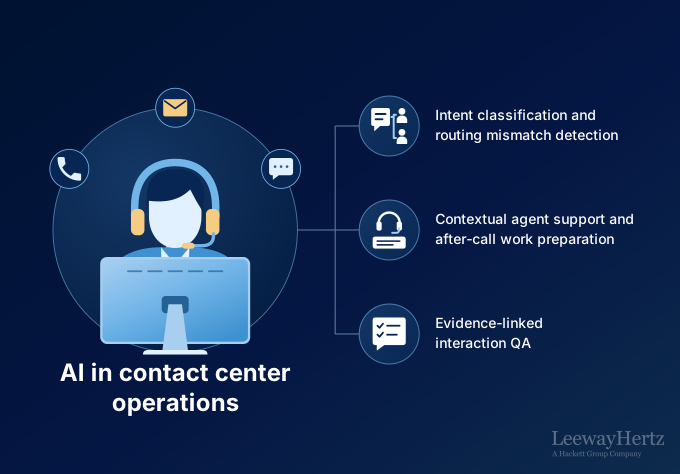
AI in Contact Center Operations: Use Cases & Agentic Workflows
Explore how AI supports contact center operations across routing, workforce management, quality assurance, coaching, compliance, escalation, and performance governance.
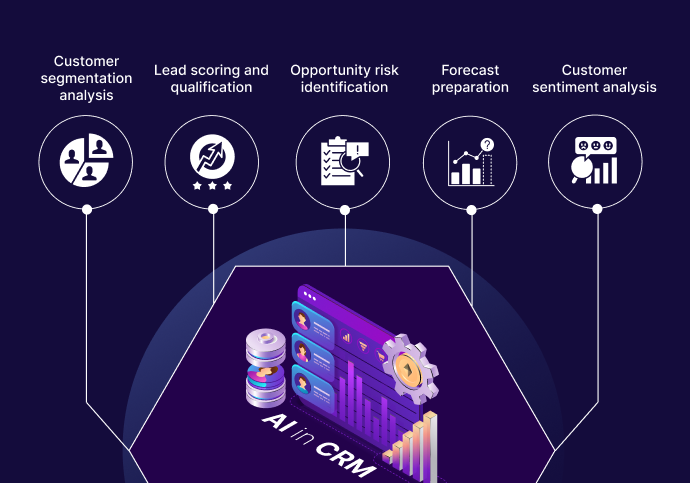
AI in Customer Relationship Management: Processes, Use Cases, and Enterprise Operating Model
AI opportunities in CRM become clearer when the operating model is decomposed across functions, processes, and sub-processes.

Agentic AI in customer service: Integration approaches, implementation frameworks and measurable business impact
Agentic AI transforms customer service by enabling autonomous agents to handle specific operational functions and coordinate to deliver seamless customer experiences

Customer service automation: Enhancing efficiency and customer satisfaction
Customer service automation transforms how businesses handle customer interactions by leveraging advanced technologies such as AI-driven chatbots, machine learning, and integrated software systems.

Adopting AI for customer success: Shaping a new era of user assistance
Customer success is a strategic approach where businesses proactively guide customers through a product journey to ensure they achieve their desired outcomes, thereby enhancing customer satisfaction, loyalty, and advocacy.

Generative AI in travel: Navigating the future of tailored tourism
Generative AI allows travel companies to provide real-time updates and personalized recommendations to travelers, guiding them through the complex world of travel information.

AI in fleet management: Use cases, benefits, architecture, technologies and solution
AI-driven fleet management systems use real-time data on traffic and road conditions to calculate the most efficient vehicle routes.

Conversational AI: Use cases, types and solution
Conversational AI is a subset of artificial intelligence that enables human-like interactions between computers and humans using natural language.

AI in LTV model: Applications and ML techniques
AI and ML have reshaped the way businesses estimate and leverage LTV, offering unprecedented accuracy, insights, and personalized strategies.