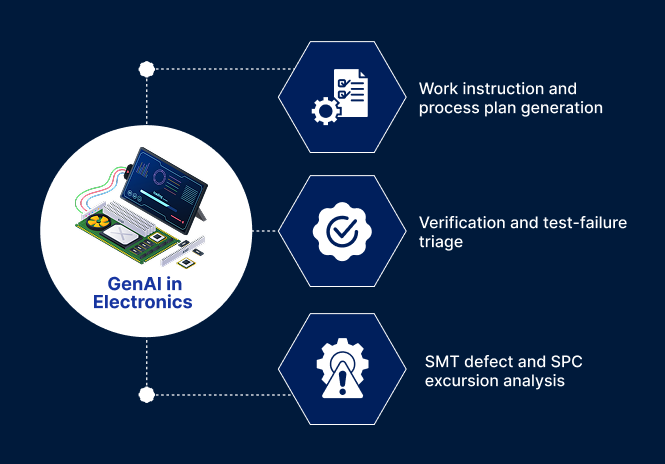
Electronics is one of the preferred industries for generative and agentic AI because its work sits at the intersection of design data, engineering documents, component decisions, regulatory evidence, manufacturing exceptions, and high-volume production workflows.
Manufacturing is a well-suited field for generative AI and agentic AI because its work depends on engineering documents, shop-floor records, quality evidence, supplier submissions, compliance requirements, and operational decisions.
Hospitality is one of the industries best suited to generative and agentic AI because hospitality work sits at the intersection of guests, documents, data, service standards, exceptions, and around-the-clock operational execution.
Generative AI is reshaping asset management by incorporating advanced predictive capabilities, fundamentally altering decision-making in finance for more informed investments.
The value of generative AI in supply chain management comes from embedding AI across workflows spanning planning, sourcing, procurement, manufacturing, warehousing, transportation, fulfillment, and finance.
This article maps the healthcare operating model, detailing functions, processes, and sub-processes where generative and agentic AI can deliver workflow-specific value.