
Generative AI: Use cases, applications, solutions and implementation
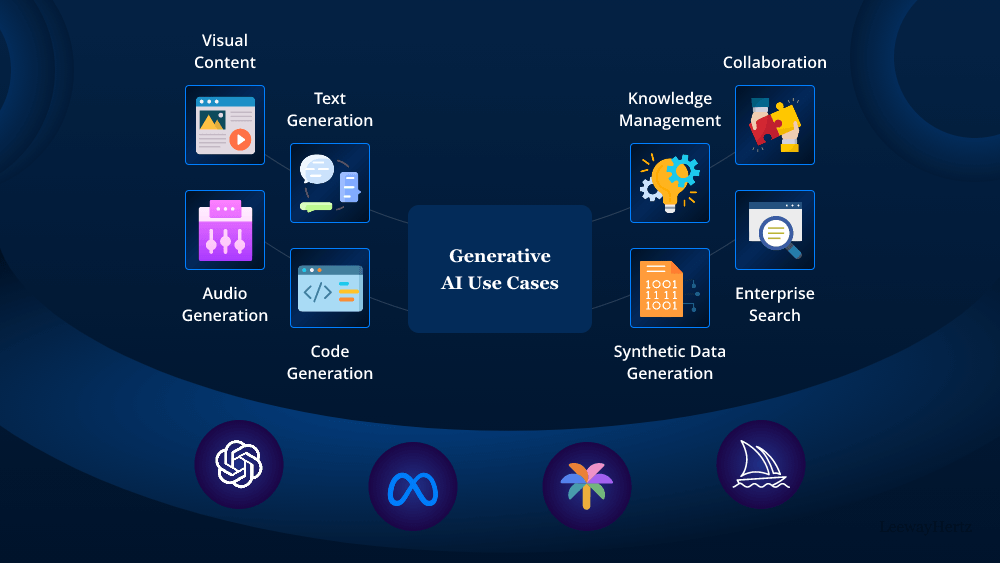
Generative AI demonstrates versatile applications across diverse industries, leveraging its capacity to create novel content, simulate human behavior, and generate innovative outputs based on learned patterns.


Generative AI in asset management: Redefining decision-making in finance
Generative AI is reshaping asset management by incorporating advanced predictive capabilities, fundamentally altering decision-making in finance for more informed investments.

AI for startups: Its use cases and role in steering success for early-stage businesses
AI empowers startups to overcome resource constraints, outperform competitors, enhance customer experiences, and make data-driven decisions.

How attention mechanism’s selective focus fuels breakthroughs in AI
The attention mechanism significantly enhances the model’s capability to understand, process, and predict from sequence data, especially when dealing with long, complex sequences.

What is LLMOps? Exploring the fundamentals and significance of large language model operations
LLMOps, or Large Language Model Operations, encompass the practices, techniques, and tools used to deploy, monitor, and maintain LLMs effectively.

Testing LLMs in production: Why does it matter and how is it carried out?
Testing large language models in production helps ensure their robustness, reliability, and efficiency in serving real-world use cases, contributing to trustworthy and high-quality AI systems.

Ensuring ML model accuracy and adaptability through model validation techniques
As businesses lean heavily on data-driven decisions, it’s not an exaggeration to say that a company’s success may very well hinge on the strength of its model validation techniques.

Conversational AI: Use cases, types and solution
Conversational AI is a subset of artificial intelligence that enables human-like interactions between computers and humans using natural language.

ModelOps: An overview, use cases and benefits
ModelOps, short for Model Operations, is a set of practices and processes focusing on operationalizing and managing AI and ML models throughout their lifecycle.

Topic modeling in NLP: Extracting key themes/topics from textual data for enhanced insights
Topic modeling is a popular technique used in natural language processing and text mining to uncover latent themes and structures within a collection of documents.

Responsible AI: Bridging the gap between innovation and integrity
At its core, responsible AI intends to place individuals and their objectives at the forefront of AI system design, emphasizing values such as fairness, reliability, and transparency.

AI in data integration
AI plays a crucial role in data integration by speeding up decision-making, processing vast amounts of data efficiently, and enhancing intelligence through autonomous learning.

AI for content creation: A shift from manual effort to algorithmic ingenuity
In the ever-evolving landscape of content creation, AI has emerged as a formidable ally, reshaping the way we generate, curate, and deliver content.


Follow Us


